
 English
 русский
 Español
 Português
 عربى
عربى


Fiber Optic Distribution Cable: Complete Guide to Types, Uses and Selection
When a network engineer routes fiber from a central distribution box to 24 separate workstations, the cable pulled through the building riser is usually not a patch cord. It is a distribution cable: a single outer jacket carrying multiple individually buffered optical fibers, engineered to take one bundle of signals and split it across many endpoints.
Selecting the wrong indoor cable leads to messy terminations, wasted rack space, and higher installation cost. The good news is that distribution cable specifications are straightforward to evaluate once you know which parameters matter. Whether you are building a new FTTH neighborhood, upgrading a data center, or replacing riser cables in an office building, the distribution cable you choose directly affects installation time, ongoing maintenance effort, and the cost per fiber. These are the kinds of decisions where a few extra minutes of specification review pay off for the life of the network.
What Is a Fiber Optic Distribution Cable?
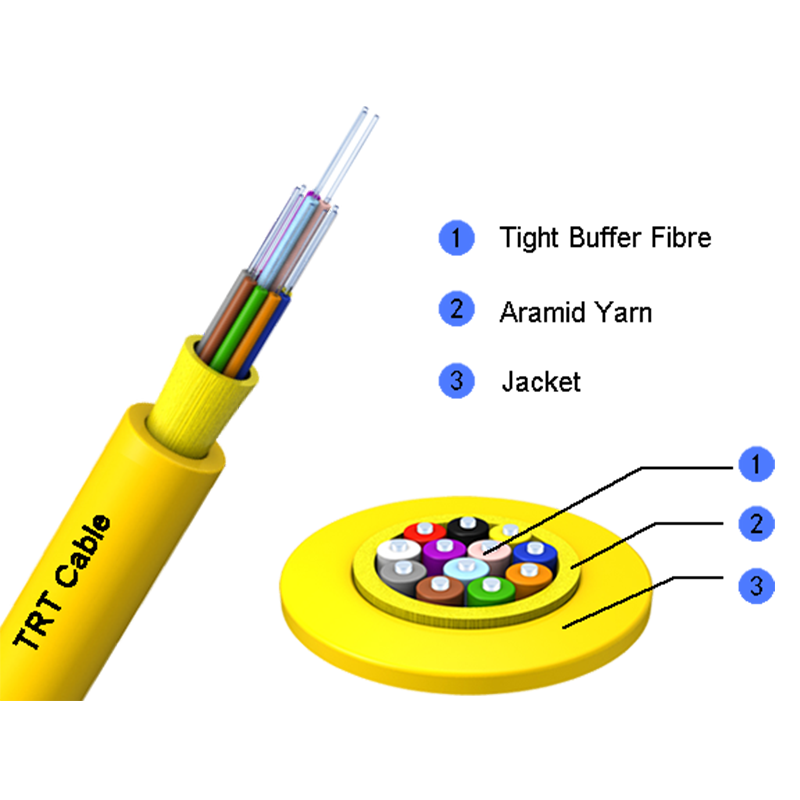
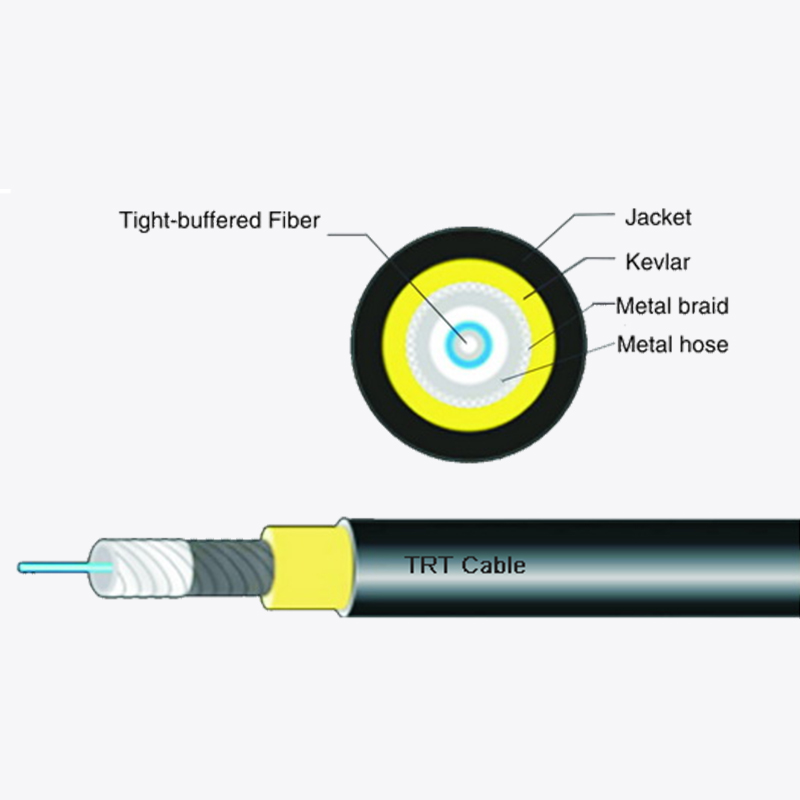
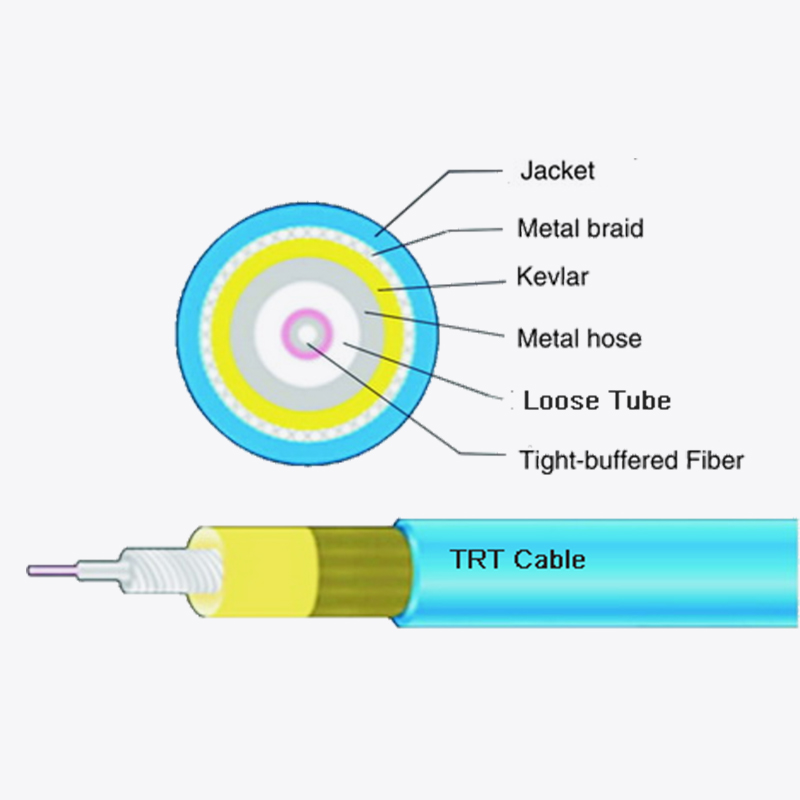
A fiber optic distribution cable is an indoor multi-fiber cable with all fibers packed under one common jacket. It is optimized for short-span runs inside buildings, data centers, and communication rooms, where space is limited and connector density is high. The construction typically consists of a central strength member if needed, individually tight-buffered fibers, aramid yarn for tensile strength, and a flame-retardant outer jacket. Design details such as fiber spacing and jacket thickness vary between manufacturers.
The multipurpose distribution cable from TRTCABLE is a representative example: it packs 24 fibers into a compact indoor design for efficient routing between distribution points and terminal equipment.
 24-Fiber Multi-Purpose Indoor Distribution Cable with Tight BufferThis compact distribution cable houses 24 tight-buffered fibers with aramid yarn strength members, ideal for routing between distribution points and terminal equipment in indoor applications.View Product →
Distribution Cable vs Breakout Cable: Key Differences
Distribution cable and breakout cable are often confused because both address indoor multi-fiber needs. The core difference is how each cable protects individual fibers and how it is terminated.
A distribution cable bundles multiple tight-buffered fibers inside a single jacket. It is cost-efficient and compact, but at the termination point it requires a fanout kit to separate the fibers for connectorization. A multipurpose breakout fiber optic cable provides each fiber with its own jacket and strength member, so individual fibers can be terminated with connectors directly, with no extra fanout hardware. The cost per fiber is typically higher for breakout cable because each sub-unit requires its own protective layer. For projects with many connections in a dense area, distribution cable usually provides a more cost-effective solution.
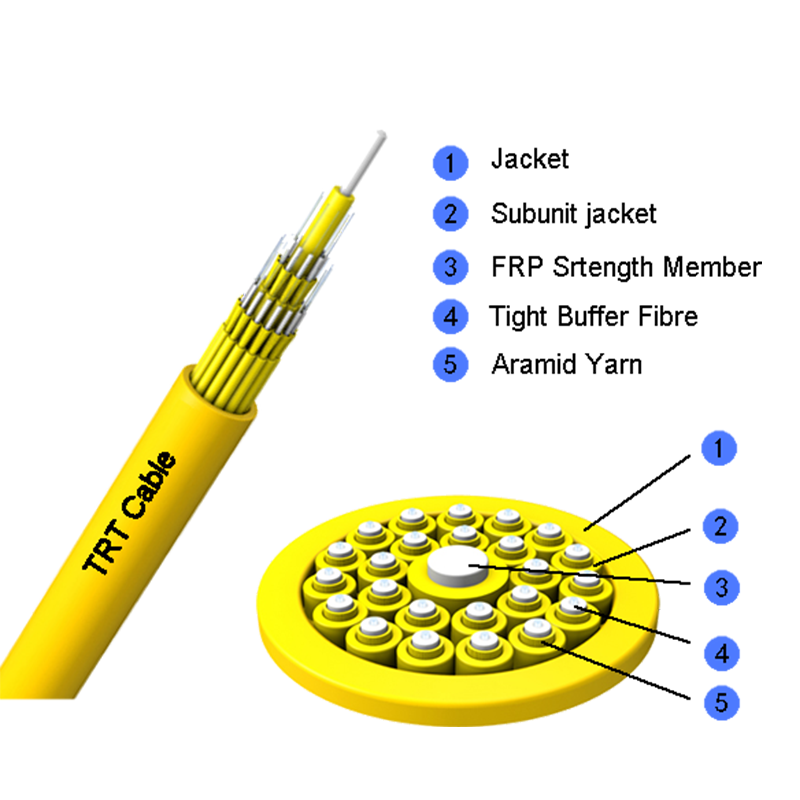 Multi-Purpose Breakout Fiber Optic Cable for Direct TerminationEach fiber is individually jacketed with its own strength member, allowing direct connectorization without fanout kits, suitable for dense connections requiring straightforward termination.View Product →
Key difference: Distribution cable packs many fibers in one sheath for compact, splice-friendly runs; breakout cable wraps each fiber individually so it can accept a connector at the cable end without additional hardware.
Our breakout cable vs distribution cable guide walks through this comparison with practical installation examples.
Applications of Distribution Cables in Real Networks
Distribution cables solve a concrete engineering problem: how to route multiple optical signals from a distribution point to many endpoints without pulling one cable per connection. This makes them valuable in several everyday scenarios.
Data Centers and Communication Rooms
In data centers, a distribution cable connects the main distribution frame to individual racks, carrying 12 or 24 fibers per run. This keeps cable tray space under control and simplifies the patch cord pattern at each rack.
FTTH and Access Networks
In FTTH deployments, a distribution cable links the street-level distribution box to a building terminal box. The tight buffer fiber optic cable used in this segment resists the handling stresses of riser installation and indoor routing.
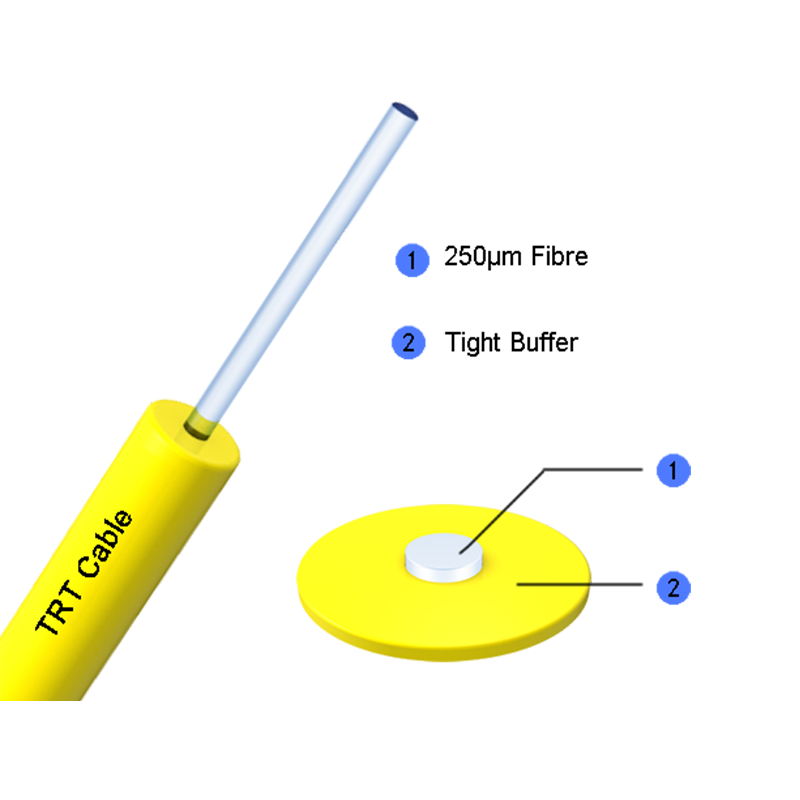 Tight Buffered Fiber Optic Cable for Indoor DistributionBasic indoor cable element with easy stripping and flame-retardant properties, commonly used as components for patch cords, pigtails, and communication equipment serving.View Product →
Enterprise and Smart Building Cabling
For office campuses, schools, and hospitality buildings, distribution cables centralize fiber routing. Expansion later becomes a matter of adding patch cords instead of pulling new cable.
Key Specifications to Compare Before You Buy
Not every distribution cable is identical. Before placing an order, verify that the cable meets your minimum technical requirements across these five dimensions.
| Specification | Typical Range | What It Affects |
|---|---|---|
| Fiber Count | 4 to 24 fibers | Maximum number of concurrent connections |
| Fiber Type | OS2 / OM3 / OM4 | Transmission distance and bandwidth |
| Jacket Material | PVC / LSZH | Fire safety and indoor code compliance |
| Outer Diameter | 4.8 to 8.0 mm | Cable tray capacity and bend performance |
| Operating Temperature | -20 C to 70 C | Performance in hot or cold environments |
These ranges are typical for indoor distribution products. Always request the complete specification sheet from the manufacturer before committing to a bulk purchase.
Jacket grade is especially important in building environments. Choose PVC for general riser runs, LSZH for low-smoke areas, or Plenum rated jackets for air-handling spaces.
How to Choose the Right Distribution Cable for Your Project
Selecting a distribution cable starts with three questions: how many fibers do you need today, where will the cable run, and how will you terminate it. Answer these clearly and the shortlist becomes much shorter.
Step 1: Count Your Fibers
Map the number of endpoints the cable will serve and add at least 20 percent spare capacity. A 24-fiber cable might feel like overkill for 8 active connections, but it gives you headroom for growth without a reinstallation.
Step 2: Inspect the Installation Route
Riser runs through buildings demand LSZH or plenum-rated jackets in many jurisdictions. Tight bends in cable trays favor a smaller outer diameter and a lower bend radius. For broader guidance, see how to choose the right fiber optic cable types.
Step 3: Confirm Termination Strategy
If you plan to splice the cable to pigtails, any standard connector type works at the far end. If you rely on fanout kits, verify the kit matches the cable diameter and fiber spacing exactly. A mismatch means wasted connectors and rework.
Installation and Maintenance Best Practices
Even a well-built distribution cable degrades if it is installed improperly. These practices help you keep insertion loss low and service life long.
- Pull from the cable reel, not the jacket, and never exceed the rated tensile load.
- Respect the minimum bend radius during installation and after termination.
- Clean connector end faces with fiber-safe wipes and dust-free caps before mating.
- Label both ends of every cable run to simplify fault isolation later.
- Store unused fibers in a protected splice tray so they stay ready for future use.
After installation, run an OTDR trace or insert loss test on every terminated fiber to confirm the cable is performing within expected limits. Record the test results for the project file. A cable that is pulled correctly and kept clean can deliver stable loss performance for more than 20 years of continuous service.
Frequently Asked Questions
Q1: What is the maximum fiber count available in a distribution cable?
Standard distribution cables are commonly offered from 4 to 24 fibers. Higher-count designs up to 48 or 72 fibers exist in multipurpose distribution formats, but they require larger cable diameters and careful duct management.
Q2: Can I use a distribution cable outdoors?
No. An indoor distribution cable is not intended for direct outdoor exposure. For outdoor spans, select a loose tube or armored outdoor cable and transition to an indoor distribution cable at the building boundary.
Q3: What is the difference between tight-buffer and loose-tube cable?
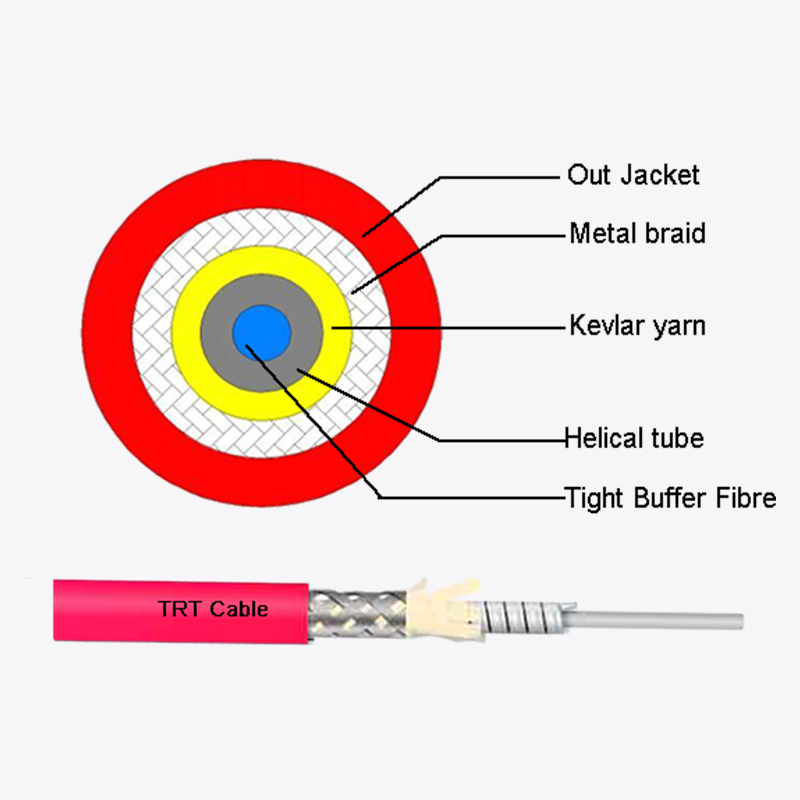
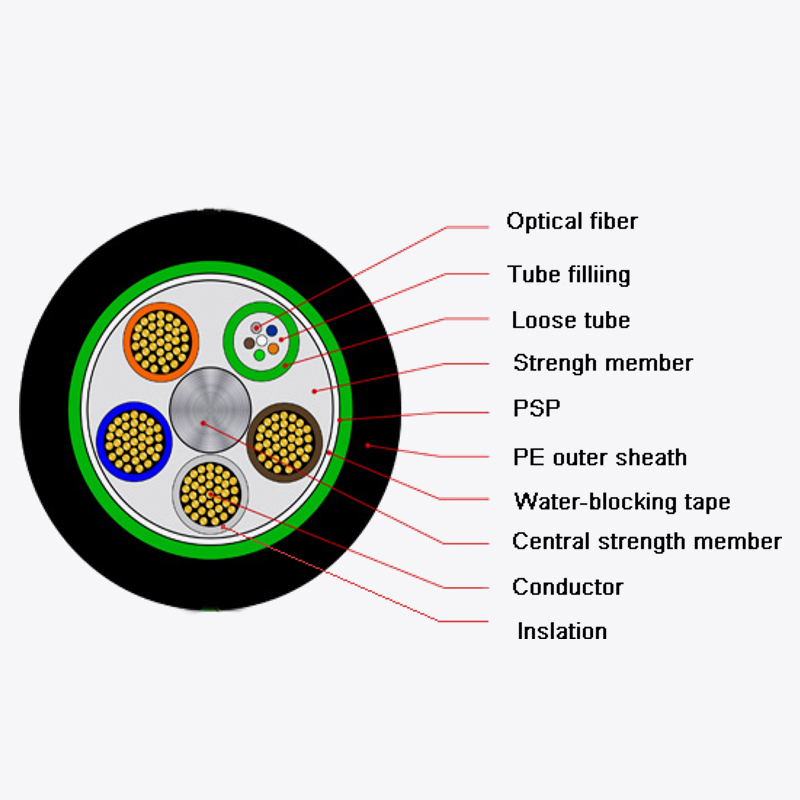
Tight-buffer cables have a direct coating around each fiber, making them easier to handle indoors where the cable is frequently moved or routed. Loose-tube cables let the fiber expand and contract freely, which makes them preferable for outdoor and long-distance transmission.
Q4: Do distribution cables support both single-mode and multimode fibers?
Yes. Distribution cables are available with single-mode (OS2) or multimode (OM3/OM4) fibers. Single-mode is common in FTTH and long-reach networks, while multimode remains popular for short-range data center connections.
 Address:Zhong'an Road, Puzhuang Town, Suzhou City, Jiangsu Prov., China
 Phone:+86-189 1350 1815
 Tel:+86-512-66392923
 Fax:+86-512-66383830
 Email:[email protected]
 Wechat: xiaobin18913501815
 whatsapp: +86 18913501815

 0
0