
 English
 русский
 Español
 Português
 عربى
عربى


Fiber Optic Cleaning Solution: Types, Selection Criteria, and Best Practices
A newly delivered 10G SFP+ transceiver fails insertion loss testing on the bench even though it passes factory inspection. After removing the dust cap and inspecting the connector endface, a technician finds a thin film of oily residue left behind by manufacturing or handling. The quickest and cheapest fix is not a new module, but the right fiber optic cleaning solution. A clean endface is the foundation of every reliable optical link.
The performance of an optical link is often decided at the endface.
Contamination on an endface cannot always be seen with the naked eye. It causes back reflection and attenuation that degrade transmission performance. Understanding how to select and use a fiber optic cleaning solution reduces the risk of link downtime and rework.
What Is a Fiber Optic Cleaning Solution?
A fiber optic cleaning solution is a solvent-based or water-based formulation designed to remove dust, finger oils, adhesives, and other contaminants from the polished endface of a fiber optic connector. It is different from a household cleaner or a generic degreaser. It is balanced to evaporate with minimal residue and to remain compatible with the ferrule, epoxy, and housing materials used in optical connectors.
Fiber endfaces are usually made from zirconia ceramic or silica glass. Solvents that attack plastics, soften adhesives, or leave conductive residues will harm the connector over time. Field technicians need a product that cleans reliably in a wide range of temperatures and humidity levels. A clean single-mode connector typically shows insertion loss below 0.5 dB. Contamination can add several tenths of a decibel, which may push a link beyond its optical budget.
| Contaminant type | Removed by solution? | Key note |
|---|---|---|
| Dust and fines | Yes | Loosened and carried away by the wipe |
| Finger oil | Yes | Needs a solvent to dissolve the grease |
| Adhesive residue | Yes | Solvent softens the bond for wiping |
| Metal particles | Limited | Use filtered compressed air first |
| Fluid film | Partial | Inspect under magnification after cleaning |
Optical adapters are another common hiding place for contamination. A clean patch cord will pick up dust when inserted into a dirty fiber optic adapter. Inspecting and cleaning the adapter bore is part of any reliable maintenance process.
 Optical Adapter for Cleaning and Inspection in Fiber NetworksThis optical adapter supports common connector types and ensures stable performance across temperature and humidity variations. Inspecting and cleaning the adapter bore prevents contamination transfer to patch cords.View Product →
Fiber Optic Cleaning Solution vs Isopropyl Alcohol (IPA)
Isopropyl alcohol (IPA) is the most common solvent in a field toolkit, but it was never formulated for precision optics. It is flammable, evaporates very quickly, and often leaves fine streaks on polished connectors. A dedicated fiber optic cleaning solution is designed for optical applications: it controls evaporation, minimizes residue, and is tested against the materials used in connectors.
| Property | Fiber optic cleaning solution | Isopropyl alcohol |
|---|---|---|
| Residue | Low to no residue | Can leave streaks |
| Flammability | Often non-flammable | Highly flammable |
| Evaporation rate | Controlled | Very fast |
| Material compatibility | Tested on connector materials | May affect some plastics |
| Packaging | Pens, wipes, sealed packets | Bulk bottles |
| Intended use | Optical endfaces | General cleaning |
Using a dedicated solution is especially important when a connector is mated directly to a clean endface. Reading about how to choose the right fiber optic patch cord helps you see how connector quality interacts with cleaning in the overall link budget.
How to Select the Right Fiber Optic Cleaning Solution
Selecting a fiber optic cleaning solution is a practical purchasing decision. There is no single product that fits every environment, but a few criteria help narrow the choice.
Key selection criteria
- Formulation: choose either solvent-based cleaning liquids for fast evaporation, or water-based formulas for lower VOC content.
- Evaporation rate: the solvent should evaporate quickly enough to avoid streaks, but slowly enough to dissolve oils.
- Residue level: opt for low-residue or no-residue products, especially for high-density data center links.
- Packaging: cleaning pens and pre-saturated wipes are convenient for field work; lint-free wipes with a dedicated solvent are better for benchtop use.
- Material compatibility: check the datasheet for compatibility with ceramic ferrules, PC and PBT housings, and epoxy.
- Compliance: low-VOC or halogen-free products simplify restrictions in many project environments.
Practical scenarios
- Data center: use an anti-static cleaning pen with a lint-free tip to clean the connector endface before insertion.
- FTTH field termination: pre-saturated wipes in sealed packets keep solvent fresh in outdoor conditions.
- Quality control and lab: lint-free wipes with controlled solvent provide consistent results in inspection routines.
Best Practices for Using Fiber Optic Cleaning Solution
Cleaning a fiber endface is not difficult, but the technique matters. The goal is to remove contamination without adding any new particles.
Recommended cleaning sequence
- Remove the dust cap from the connector.
- Use a dry, lint-free wipe to remove loose dust and fibers.
- Apply the cleaning solution to a fresh, lint-free wipe or use a cleaning pen.
- Wipe the endface in one direction. Do not scrub back and forth.
- Inspect the endface with a fiber optic inspection scope.
- If the inspection shows residual contamination, repeat with a new wipe.
- Allow the endface to dry completely before inserting it into an adapter.
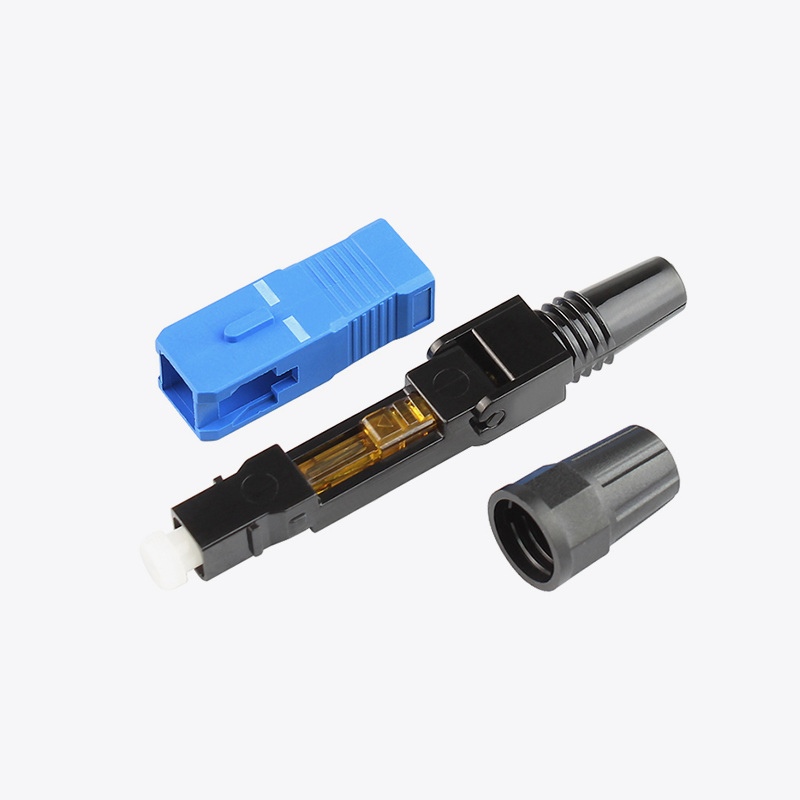
For field-installed connectors, the process becomes even more important. When a technician terminates a fiber optic quick connector at a subscriber location, the endface is exposed to dust, humidity, and handling. Cleaning the endface immediately before connection minimizes the risk of recontamination.
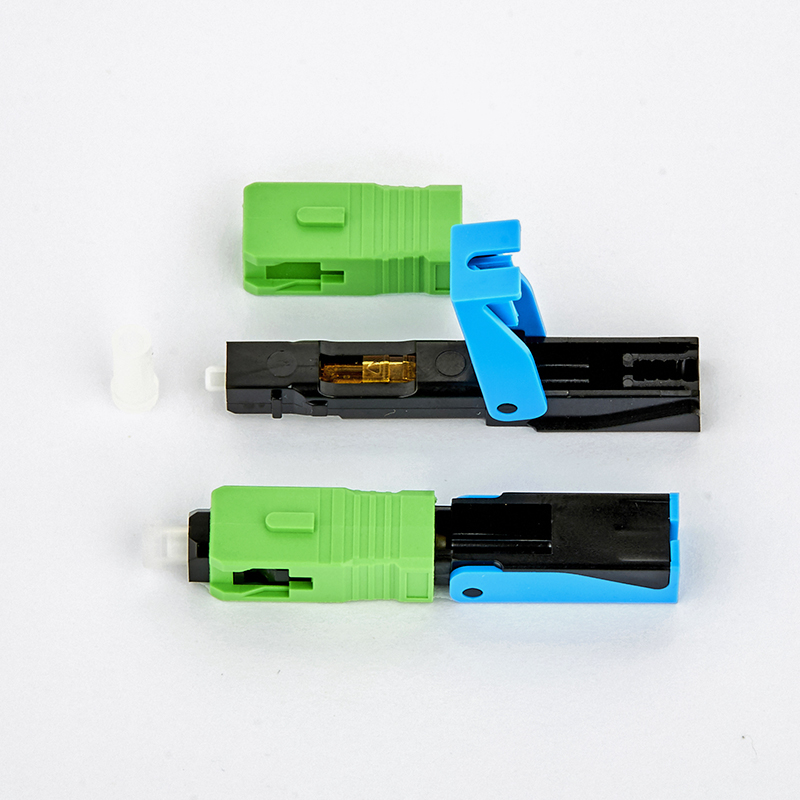 Field-Installable Quick Connector for Fast Fiber TerminationThis quick connector enables rapid, reliable field termination with low insertion loss and high repeatability. Cleaning the endface before connection is critical to maintain signal quality in FTTH or data center installations.View Product →
Use a dedicated cleaning solution for both FTTH and Data Center applications.
Common Mistakes That Reduce Cleaning Effectiveness
Even experienced installers make avoidable mistakes. These errors reduce the effectiveness of cleaning and can cause signal degradation.
- Reusing the same wipe: a used wipe can put particles back onto a clean endface.
- Using paper towels or cotton swabs on the fiber: their fibers can scratch the ferrule or leave lint.
- Using IPA or acetone: these solvents are not designed for precision optical surfaces.
- Blowing on the endface: moisture from the mouth leaves new contamination.
- Cleaning without inspecting: the only reliable check is a magnified inspection.
- Skipping the drying step: solvent residue can attract dust and affect performance.
Frequently Asked Questions About Fiber Optic Cleaning
Q1: Can I use isopropyl alcohol instead of a dedicated fiber optic cleaning solution?
Isopropyl alcohol is not recommended for precision optical endfaces. It is flammable, can leave streaks, and may soften adhesives or plastics used in some connectors. A dedicated solution is tested for this application.
Q2: How often should I clean fiber optic connectors?
Clean each connector every time it is connected, particularly when the dust cap has been off or the connector has been handled. If insertion loss increases or link faults appear, inspect and clean the endface immediately.
Q3: Can fiber optic cleaning solution damage the connector?
No, as long as the solution is formulated for optical use and is compatible with the connector materials. Avoid mixing different solvents or using industrial degreasers.
Q4: What is the difference between wet and dry cleaning?
Wet cleaning uses a solution to dissolve oils and sticky residues. Dry cleaning removes loose dust without fluid. In practice, a dry wipe first, then a wet wipe, then a dry wipe gives the best result.
Optical network performance is not only about the cable, the connector, or the box. It is about the consistency of the process around every connection. Manufacturers who control endface quality during production, such as those that supply SC to SC fiber optic patch cords, help reduce contamination-related faults at the source.
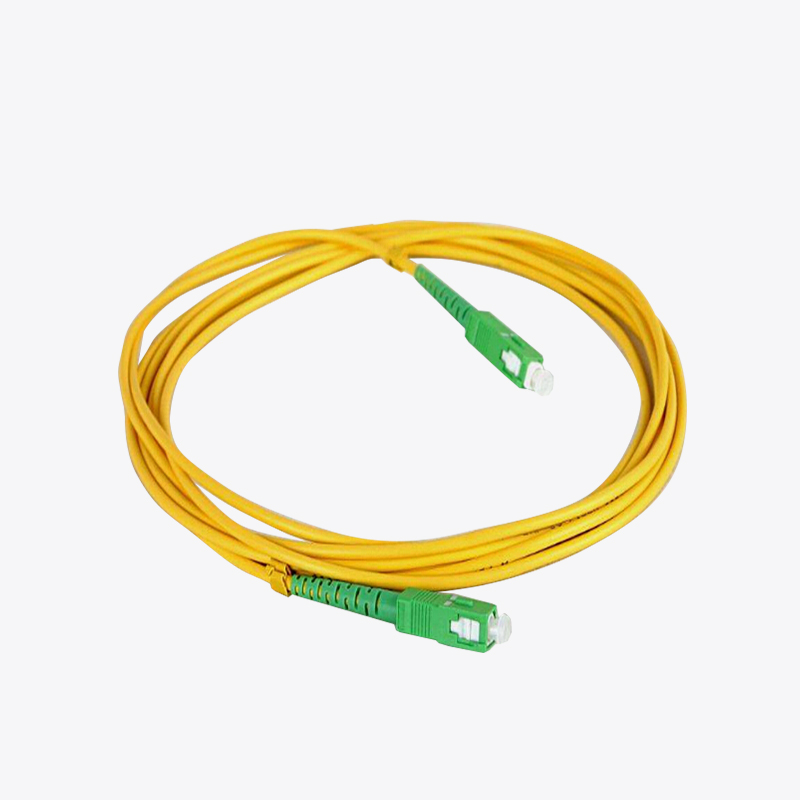 Simplex SC-SC Patch Cord for Consistent Network PerformanceThis simplex patch cord offers controlled endface quality during production, reducing contamination-related faults. It supports reliable connections across various optical communication applications.View Product →
On the field side, the smallest and most effective action is to keep a reliable fiber optic cleaning solution in every installation kit and to inspect the endface before the connector is inserted. A clean endface is the least expensive insurance for link reliability.
 Address:Zhong'an Road, Puzhuang Town, Suzhou City, Jiangsu Prov., China
 Phone:+86-189 1350 1815
 Tel:+86-512-66392923
 Fax:+86-512-66383830
 Email:[email protected]
 Wechat: xiaobin18913501815
 whatsapp: +86 18913501815

 0
0