
 English
 русский
 Español
 Português
 عربى
عربى


How to Choose the Right Fiber Optic Patch Cord for Your Network
Optical Transmission Frameworks and Infrastructure Roles
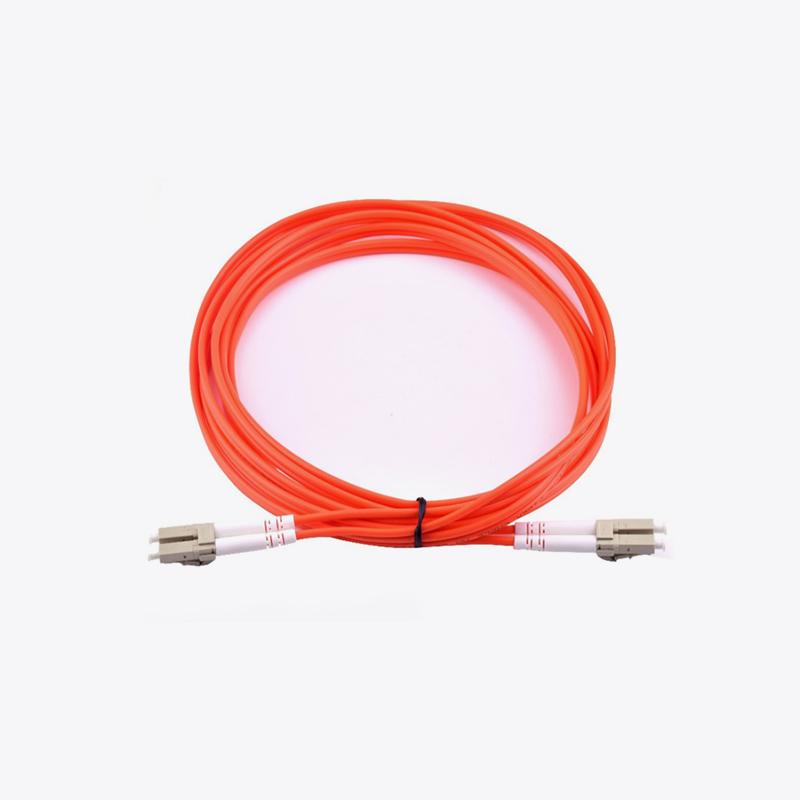
Modern data networks rely heavily on robust physical layers where data integrity hinges entirely on interconnect components. A patch cord, alternatively designated as a fiber optic patch cable, serves as the critical physical bridge between optical transceivers, patch panels, and active enterprise routing equipment. Within telecom distribution frames and high-density hyperscale data centers, these components preserve signal continuity across highly complex network segments.
Selecting an inappropriate fiber optic jumper cable directly elevates optical insertion losses, shifts back-reflection parameters, and induces systemic channel downtime. To optimize physical infrastructure, deployment engineers must look deep into transmission properties, physical tolerances, geometric concentricity, and mechanical jacket specifications. This comprehensive structural evaluation guarantees sustained bit-rate transmission across core distribution layers and external network terminations.
When engineering modern network paths, transmission budgets are calculated with strict margin limits. Every individual mating point introduces structural variations that can cause attenuation. The integration of precision-polished connectors alongside optimized internal core geometries forms the foundation of reliable gigabit and terabit physical networks globally.
Core Geometric Architectures: Single-Mode vs. Multi-Mode Systems
The primary architectural division within commercial fiber routing separates single-mode infrastructures from multi-mode counterparts. Implementing a single mode fiber optic patch cable involves utilizing a highly confined transmission core measuring exactly 9 micrometers in diameter, enveloped by a standard 125-micrometer outer cladding. This incredibly narrow core restricts light wave propagation to a single spatial mode, completely eliminating modal dispersion across long physical lengths.
Consequently, fiber optic patch cables single mode layouts support expansive long-haul topologies, operating primarily at 1310 nanometer and 1550 nanometer laser wavelengths with minimal internal signal decay. Conversely, multimode fiber optic patch cables incorporate much wider core profiles, typical dimensions standardizing at either 50 micrometers or 62.5 micrometers. This structural expansion allows multiple light modes or rays to propagate concurrently down the optical pathway.
While multi-mode waveguides are highly cost-effective for short horizontal runs inside localized equipment rooms, they are strictly limited by modal dispersion effects. Over extended paths, varying arrival times of separate light paths cause significant pulse-spreading, which can disrupt data streams. Modern installations utilize laser-optimized multi-mode variations, specifically OM3 and OM4 grades, to support high-density 10G to 400G applications over limited internal distances.
| Optical Metric Specification | Single-Mode (OS2) | Multi-Mode (OM3) | Multi-Mode (OM4) |
|---|---|---|---|
| Standard Core Diameter | 9 Micrometers | 50 Micrometers | 50 Micrometers |
| Cladding Outer Profile | 125 Micrometers | 125 Micrometers | 125 Micrometers |
| Typical Attenuation Rate | 0.35 dB per km at 1310nm | 3.0 dB per km at 850nm | 3.0 dB per km at 850nm |
| Max Structural Reach | Up to 40 Kilometers | Up to 300 Meters | Up to 550 Meters |
Connector Configurations and Interface Form Factors
Beyond the optical medium itself, terminal hardware terminations determine the insertion loss performance across routing interfaces. Network administrators must match specific connector housings to their existing active patch hardware. The lc lc fiber optic cable is widely deployed in high-density enterprise environments. Utilizing a 1.25-millimeter ceramic ferrule, the Lucent Connector (LC) design effectively doubles panel density compared to legacy configurations.
In alternative enterprise environments, the sc fiber optic patch cable maintains a highly stable connection footprint. The Subscriber Connector (SC) features a 2.5-millimeter ceramic ferrule and incorporates a push-pull mechanical latching system, making it popular across telecommunication distribution blocks. Selecting between these form factors is usually dictated by the specific ports on SFP, SFP+, or QSFP optical transceivers installed within the network core.
Assess the physical spacing on your switch or patch panel to choose between small form-factor options like LC or larger connections like SC.
Match simplex configurations against duplex or multi-fiber array designs based on the specific transceiver interface.
Select PC, UPC, or APC end-face geometries to satisfy return loss budgets and prevent back-reflections.
When selecting a fiber optic cable patch configuration, physical strand counts must also be evaluated. Simplex variants contain a single isolated fiber conductor, making them ideal for unidirectional data paths or bi-directional systems that split transmission wavelengths. Conversely, a duplex fiber optic cable incorporates two parallel fiber elements within a unified outer sheath, creating independent transmit and receive channels for robust full-duplex communication networks.
Physical End-Face Polishing Geometries and Return Loss Dynamics
Optical performance is not dictated solely by core diameter; the geometric profile of the connector mating point is equally critical. To minimize back-reflections that can degrade laser transmission stability, manufacturers employ specialized polishing techniques on the internal ceramic ferrules. Ultra Physical Contact (UPC) polishing yields a slightly radiused end-face, optimizing physical core contact and achieving a return loss specification of approximately -50 decibels or better.
Where return loss criteria are highly stringent, Angled Physical Contact (APC) polishing must be implemented. In an APC configuration, the ceramic ferrule end-face is precision-ground to an exact 8-degree angle. This deliberate tilt causes backward-reflected light waves to escape directly into the surrounding outer cladding rather than traveling straight back into the transmission source. This configuration achieves an excellent return loss profile exceeding -60 decibels.
Engineers must ensure that UPC and APC styles are never combined or mated together within the same physical link. Because their mechanical profiles are entirely mismatched, coupling an angled connector with a flat connector damages the delicate internal fiber cores, creating high insertion loss and rendering the signal path completely unstable.
Structural Integrity and Environmental Jacket Specifications
The protective outer layer enclosing an optical waveguide determines its survival and reliability within varying environmental conditions. For typical internal horizontal distribution runs and data center cabinet patching, standard Polyvinyl Chloride (PVC) jackets are frequently deployed. However, vertical rising paths traversing open structural columns demand specialized Riser-rated (OFNR) components to satisfy facility safety requirements.
Where cables run through horizontal ventilation plenums or air handling spaces, Plenum-rated (OFNP) outer jackets must be used. These specialized materials exhibit strict self-extinguishing properties and generate minimal smoke during thermal combustion events. Meanwhile, corporate spaces and high-density computing rooms increasingly require Low Smoke Zero Halogen (LSZH) materials to prevent toxic gas emissions in the event of an infrastructure fire.
Furthermore, indoor/outdoor transitions require outer jacket styles built to withstand moisture absorption and continuous ultraviolet exposure. Choosing the correct jacket material directly affects path longevity, protecting the interior glass components from mechanical stress, shifting ambient temperatures, and structural micro-bending.
Calculating Optical Budgets and Deployment Mitigation Strategies
Before ordering data center components, engineers should complete a strict link loss budget analysis. This process sums all structural loss values across the optical path, including internal fiber attenuation, link adapter connections, and structural splicing points. Calculating total link margins ensures the installation delivers sufficient optical power to receiving transceiver modules.
To ensure high performance across complex network links, operators should implement these technical practices:
- Strict Inspection Protocols: Use specialized video scopes to inspect all connector ends before mating. Even tiny airborne dust particles inside adapter housings can degrade signal transmission.
- Enforce Bending Radius Limits: Maintain standard bend radius constraints, typically ten times the cable's outer diameter, to eliminate micro-bending losses.
- Document Channel Layouts: Tag both ends of patch lines with tracking indicators to simplify troubleshooting and maintenance over time.
- Maintain Clean Connections: Use lint-free wipes and specialized solvents to clean connector faces before every installation or modification.
By enforcing these testing and handling protocols, network operators can maximize link uptime and protect high-speed transport networks from structural signal degradation.
Strategic Integration Layout and Factory Production Insights
High-quality assembly processes at the manufacturing facility are essential for long-term optical field reliability. Precision engineering ensures consistent core-to-cladding concentricity, keeping insertion loss below strict thresholds. Every high-grade Patch Cord must undergo strict physical testing, including interferometric evaluation of end-face geometries and optical loss validation before deployment.
When designing distribution topologies, network planners should integrate these verified factory assemblies to establish highly reliable links between primary distribution panels and active switches. High-quality physical components reduce hardware stress, lower error rates, and provide an enduring physical layer that easily accommodates future bandwidth upgrades.
Ultimately, selecting high-quality interconnect components protects critical data links and ensures continuous availability across modern high-speed corporate communication networks.
Frequently Asked Questions
Q1: What differentiates single-mode from multi-mode fiber patch cables?
Single-mode variations feature a narrow 9-micrometer core optimized for long distances using 1310nm or 1550nm laser light sources. Multi-mode options utilize a wider 50 or 62.5-micrometer core designed for short runs, utilizing 850nm or 1300nm LED or VCSEL light sources.
Q2: Can UPC and APC fiber connectors be mated together inside a patch panel?
No, they cannot. UPC connectors feature a flat, radiused mating surface, whereas APC connectors are angled at 8 degrees. Mating these two distinct profiles prevents the fiber cores from aligning properly, causing high attenuation and potentially damaging the delicate physical ends.
Q3: How does an LSZH cable jacket compare to a standard PVC outer jacket?
Low Smoke Zero Halogen (LSZH) jackets are designed for enclosed public and corporate spaces. In a fire, they produce minimal smoke and no toxic halogen gases. Standard PVC jackets are more flexible and cost-effective but release toxic smoke if combusted.
Q4: What are typical primary causes of high insertion loss during patch cord installation?
High insertion loss is most commonly caused by dust or oils contaminating the connector end-faces, exceeding the cable's minimum bend radius, or choosing mismatched core diameters or connector interfaces.
Q5: Why is return loss performance critical in high-speed optical data links?
Return loss measures how much light reflects back toward the source transmitter. High back-reflections can destabilize laser sources and introduce signal noise, meaning higher return loss figures (such as those provided by APC finishes) are essential for maintaining clean, high-speed data paths.
 Address:Zhong'an Road, Puzhuang Town, Suzhou City, Jiangsu Prov., China
 Phone:+86-189 1350 1815
 Tel:+86-512-66392923
 Fax:+86-512-66383830
 Email:[email protected]
 Wechat: xiaobin18913501815
 whatsapp: +86 18913501815

 0
0