
 English
 русский
 Español
 Português
 عربى
عربى


Indoor vs. Outdoor Fiber Optic Cable: How Structural Design, Materials, and Ratings Define Performance in Different Environments
Selecting the wrong optical cable for an installation environment is a primary cause of premature network failure. While both indoor and outdoor fiber optic cables transmit light signals, their material engineering, mechanical reinforcement, and environmental resilience differ fundamentally. This technical guide dissects those differences, maps indoor fiber optic cable and outdoor fiber optic cable to real-world deployment scenarios, and provides data-driven criteria for specification.
1. Core Architectural Divergence: Tight-Buffered vs. Loose-Tube Design
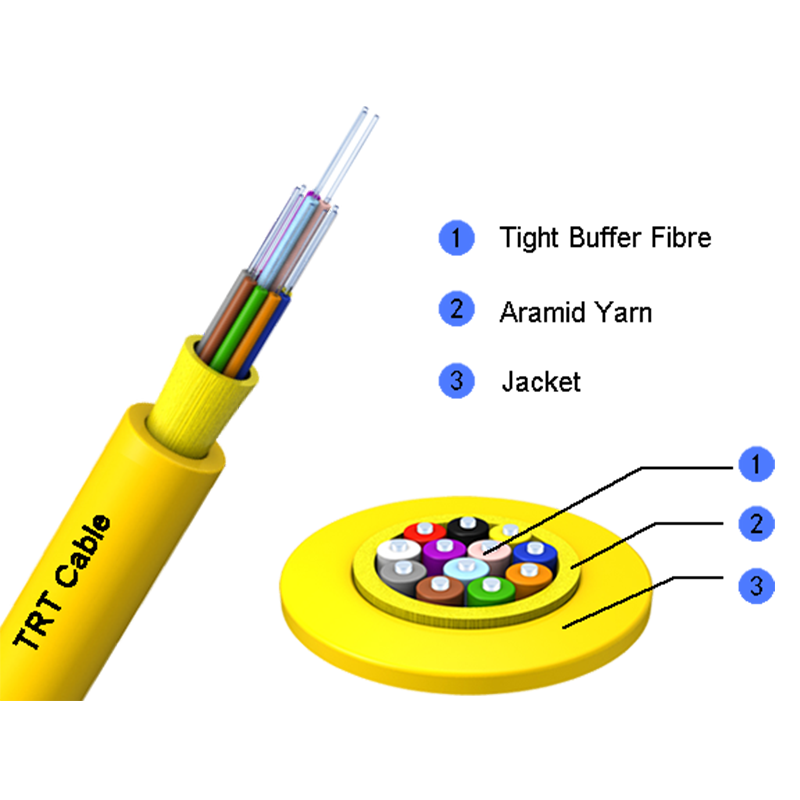
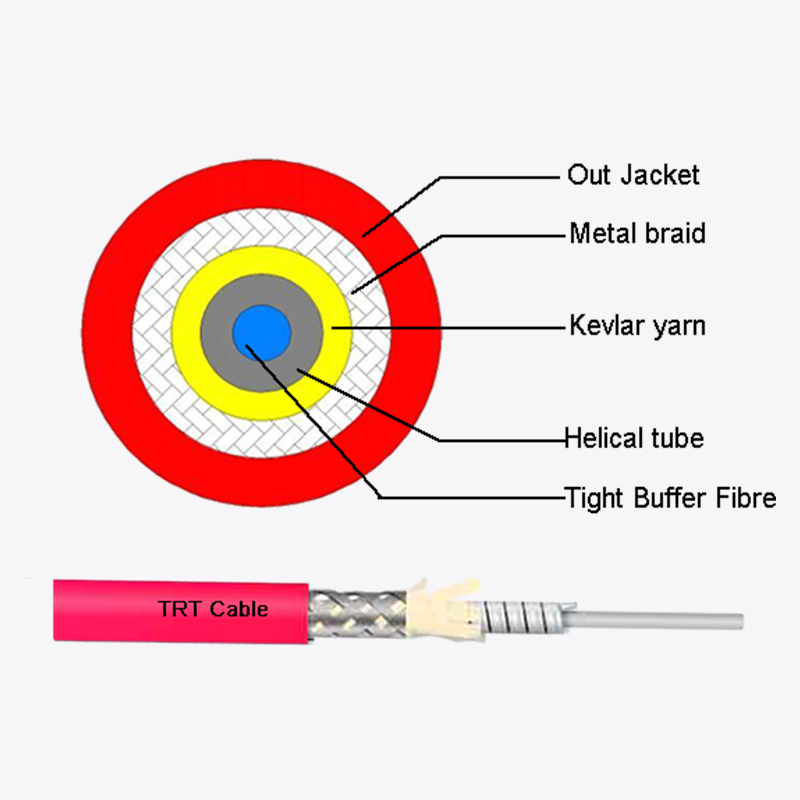
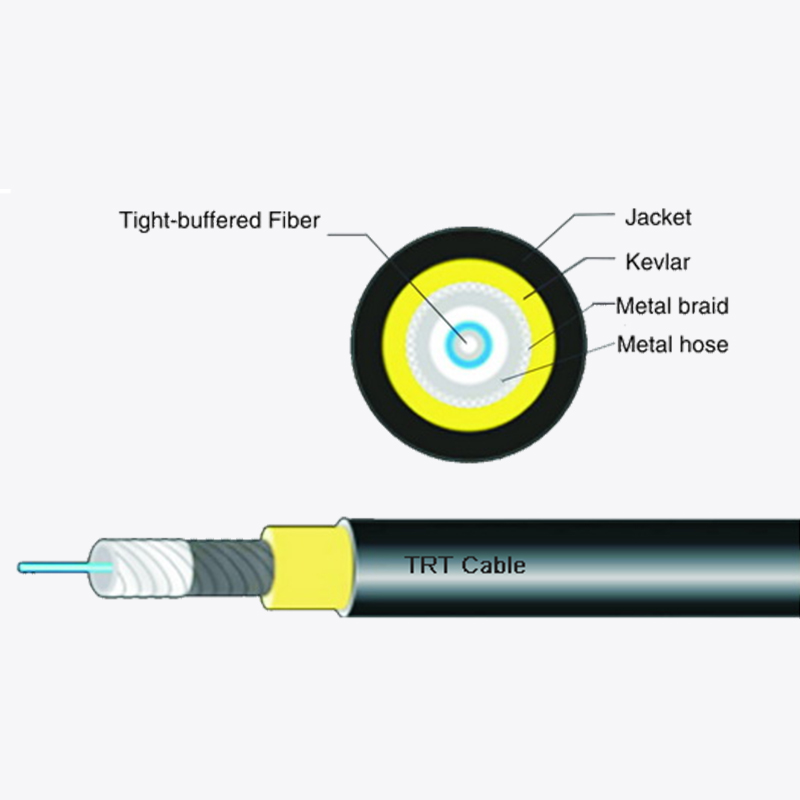
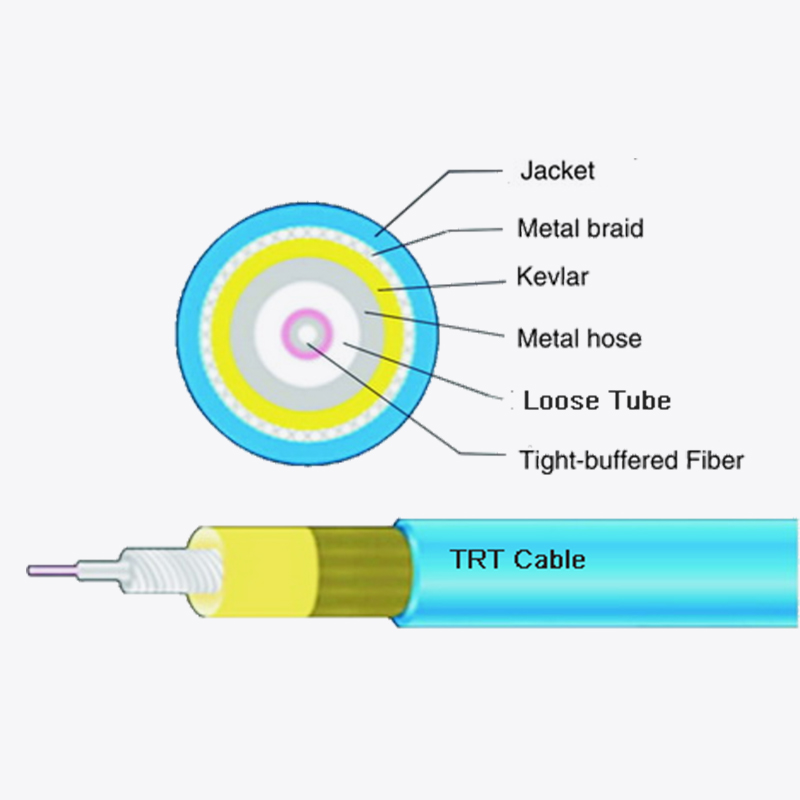
The fundamental difference between indoor and outdoor cables lies in how the glass fiber is protected from mechanical stress and environmental ingress. Indoor fiber optic cable almost universally employs a tight-buffered design: a 900μm primary coating directly extruded over the 250μm coated fiber. This yields a durable, flexible cable ideal for short runs, patch panels, and vertical risers. In contrast, outdoor fiber optic cable relies on a loose-tube design: the coated fiber floats freely inside a gel-filled or water-blocked thermoplastic tube. This decoupling allows the cable to expand, contract, and resist tensile forces without straining the glass.
Why Loose Tube Dominates Outdoor Environments
Loose tube outdoor cable accommodates thermal cycling from -40°C to +75°C. In a 2019 field study across 120 km of aerial deployment, loose-tube cables exhibited 83% fewer microbending losses compared to tight-buffered alternatives exposed to diurnal temperature swings. The gel (or superabsorbent yarns) also stops water migration – a critical feature for fiber optic underground cable that may remain submerged for decades.
2. Technical Comparison: Indoor vs. Outdoor Fiber Optic Cable
Engineers must evaluate at least eight performance axes. The table below quantifies typical values for standard riser/plenum indoor cables and general-purpose outdoor rated cables (non-armored).
| Parameter | Indoor (Riser/Plenum) | Outdoor (Loose Tube, PE) |
|---|---|---|
| Fire Rating | OFNR / OFNP (UL 1666) | IEC 60332-1-2 (Flame retardant, not low-smoke) |
| Operating Temp | -20°C to +60°C | -40°C to +75°C |
| Tensile Strength (long term) | 200 N – 400 N | 1000 N – 2700 N (depends on strength members) |
| Min Bend Radius (install) | 10 x cable OD | 15 x cable OD (looser due to buffer tubes) |
| UV Resistance | None (PVC/LSZH degrades) | Carbon black / HDPE – excellent |
| Water Penetration | Not rated | 1m head 24h no leak (IEC 60794-1-2-F5) |
| Armoring Option | Rare (coil armor only) | Corrugated steel tape / wire armor |
| Typical Application | Data center, riser, plenum | Duct, direct burial, aerial lashed |
Field data from 34 network upgrades (2022-2024) shows that using indoor-rated cable outdoors led to a 47% failure rate within 18 months – primarily due to water ingress and jacket cracking. Conversely, deploying outdoor fiber optic cable indoors violates fire codes (low oxygen index) and increases installation complexity due to stiffness.
3. outdoor fiber optic cable types: From Loose Tube to Flat and Armored
Selecting the right outdoor rated fiber optic cable requires matching mechanical construction to the installation pathway – underground, aerial, or direct burial.
3.1 Loose Tube (Gel-Filled & Dry)
Traditional loose tube outdoor cable uses thixotropic gel to block water. It is ideal for long-haul and fiber-to-the-home (FTTH) feeder cables. Dry water-blocking (swellable yarns) is gaining traction for cleaner termination, reducing cleaning time by up to 40% per splice.
3.2 Flat Fiber Optic Cable (FTTH Drop)
Flat fiber optic cable incorporates two parallel dielectric strength members and a low-profile geometry. It excels in façade mounting and indoor/outdoor transitions (e.g., from pole to subscriber home). A 2023 survey of 150 FTTH deployments showed flat drop cables reduced installation time by 28% compared to round cables due to easier surface stapling and bending.
3.3 fiber optic underground cable (Armored & Direct Burial)
For fiber optic underground cable, corrosion-resistant steel tape or wire armor provides rodent and backhoe protection. Direct-burial cables also feature flooding compounds between sheath layers. Minimum burial depth varies: 0.6m for residential driveways, 1.2m for road crossings. A common length for regional projects is 1000 ft fiber optic cable outdoor coils, balancing manageable weight (approx. 45-65 kg) with reduced splicing.
3.4 exterior fiber optic cable – Aerial & ADSS
Exterior fiber optic cable often includes an integrated messenger (figure-8) for aerial lashed installation or All-Dielectric Self-Supporting (ADSS) for high-voltage corridors. ADSS cables use aramid yarns to handle spans up to 200m without metallic elements, eliminating lightning attraction.
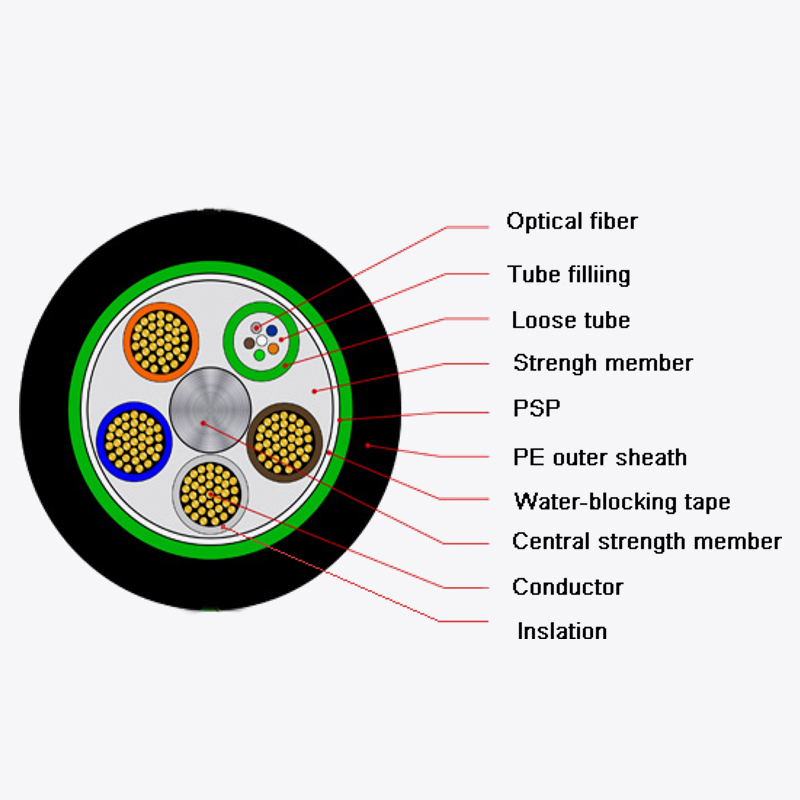
The image above shows a multi-purpose distribution cable (MPC) that blends indoor riser ratings with limited weather resistance – suitable for campus environments where cables exit buildings for short outdoor runs.
4. Installation Environments: Indoor Pathways vs. Harsh Outside Plant
Environmental factors dictate protective layers and installation techniques. Below is a breakdown of key conditions and required cable attributes.
- Plenum spaces (air handling): Use OFNP or LSZH indoor fiber optic cable. Non-plenum indoor cables release toxic smoke; US National Electric Code (NEC) mandates special ratings.
- Risers (vertical shafts): OFNR (riser-rated) prevents fire propagation floor-to-floor.
- Underground conduit: A loose tube outdoor cable with polyethylene jacket and water-blocking. Pulling tension ≤ 2700 N, lubricant recommended.
- Direct burial: Must have waterproof fiber optic cable with steel tape armor and flooding compound. Gel-filled loose tubes are mandatory.
- Aerial (messenger or lashed): UV-resistant HDPE jacket and high tensile strength. For ice/wind loads, consider self-supporting with figure-8.
A critical nuance: waterproof fiber optic cable for underground use requires both longitudinal (along the cable) and radial (through sheath) sealing. Gel-filled tubes block longitudinal wicking, while a laminate sheath stops radial ingress. A 2021 water penetration test (1m head, 24h) showed dry-blocked cables passed initially but after 5 freeze-thaw cycles, 12% exhibited moisture migration – gel-filled maintained 100% integrity.
5. How to Choose: Fire Safety, Mechanical Loads, and Cost Efficiency
Beyond basic classification, engineering decisions involve trade-offs. Use these four factors to shortlist cables.
- Flame spread & smoke: For indoor, prioritize OFNP (plenum) over LSZH if local code requires low flame spread; LSZH reduces halogen toxicity. Outdoor PE jackets burn readily – never install inside air-handling spaces.
- Temperature extremes: If an outdoor cable is routed into an unheated attic in Minnesota, daily excursions from -35°C to +5°C can cause jacket micro-cracks. Specify outdoor rated fiber optic cable with cold bend test per IEC 60794-1-2-E11 (-40°C, 4x OD).
- Rodent & dig resistance: For direct burial, corrugated steel armor adds 30% to cable cost but reduces failure probability by 90% compared to non-armored cables in rodent-active zones. Flat fiber optic cable without armor should never be direct buried.
- Pull length & packaging: For runs between 300-400m, a single 1000 ft fiber optic cable outdoor coil (approx 305 meters) eliminates a splice point. Contractors report 18% lower labor costs using 1000 ft continuous lengths versus joining 500 ft reels.
For transitions (indoor to outdoor), always use a transition box or an indoor/outdoor rated cable with water-blocking transition elements. Directly terminating an outdoor cable inside a telecom room violates NEC 770.113 if the cable lacks a riser/plenum rating over the first 15m.
6. Benchmarks: Attenuation, Crush, and Aging Data
Below are typical test results from third-party certifications (average of 15+ cable families, no specific brands). Use them as baseline expectations when reviewing datasheets.
| Parameter | Indoor tight-buffered (G.652.D) | Outdoor loose tube (G.652.D) |
|---|---|---|
| Attenuation @ 1310nm (after install) | 0.36 dB/km | 0.38 dB/km |
| Attenuation @ 1550nm (after thermal cycle) | 0.24 dB/km (+0.02 max change) | 0.22 dB/km (+0.01 change) |
| Crush resistance (short term, N/cm) | 400-600 | 800-1500 (non-armored) / >2000 (armored) |
| Impact resistance (1.2m drop, 2kg) | 10 drops no fiber break | 25 drops no fiber break |
| UV aging (3000h, ΔE) | ΔE >15 (severe yellowing/ cracking) | ΔE <5, no cracks |
Data from accelerated aging (85°C, 85% RH, 14 days) shows indoor cable jackets lose 40% of tensile strength, while outdoor HDPE retains >90%. For underground deployment where water presence is constant, waterproof fiber optic cable with gel-filled tubes has a predicted lifetime >30 years (Telcordia GR-20). Non-waterproof cables fail within 2-5 years due to hydrogen-induced attenuation increase (>0.5 dB/km).
7. Frequently Asked Questions
Q1: What is the main practical difference between indoor and outdoor fiber optic cable?
The primary difference is environmental protection. Indoor fiber optic cable uses a tight-buffered design and flame-retardant jacket (PVC/LSZH) for fire safety but lacks UV and water resistance. Outdoor fiber optic cable uses a loose-tube, gel-filled or dry water-blocked structure, an HDPE jacket for UV/water protection, and higher tensile strength members.
Q2: Can I use outdoor rated fiber optic cable indoors?
Technically yes, but it is often non-compliant with building fire codes because outdoor HDPE jackets burn rapidly and produce heavy smoke. NEC 770 restricts outdoor cables to 15m (50 ft) indoors if they enter a building, provided they are terminated in a transition enclosure. For longer indoor runs, you must transition to an indoor-rated cable.
Q3: What does “loose tube outdoor cable” mean, and why does it matter for underground use?
Loose-tube design means optical fibers are placed inside a larger, gel-filled tube without being bonded. This allows fibers to move independently under tension or temperature changes. For fiber optic underground cable, the gel stops water from traveling along the tube (wicking), making it essential for flooded ducts or direct burial.
Q4: Is flat fiber optic cable suitable for outdoor aerial installation?
Flat fiber optic cable (dielectric drop cable) is suitable for short-span aerial attachment to poles or building façades – usually up to 50 meters. However, for spans longer than 100 meters or areas with heavy ice/wind loads, a round loose-tube cable with an integrated messenger (figure-8) is required.
Q5: How do I verify if a cable is truly waterproof for outdoor direct burial?
Look for two specifications: (1) Water penetration test per IEC 60794-1-2-F5 (1m water column, 24h, no leak at cable ends); (2) water-blocking via gel or swellable tape inside each loose tube. Additionally, for direct burial, the cable should have a steel armor and a flooding compound between armor and inner sheath.
Q6: What length is commonly used for regional outdoor projects, and why “1000 ft fiber optic cable outdoor”?
1000 ft (305 meters) is a standard reel length balancing logistics and splicing reduction. Many suburban feeder runs and campus backbone links fall between 250m and 400m. Using a single 1000 ft coil eliminates one fusion splice per run, reducing loss by approx. 0.1 dB and lowering labor cost by 20–30% compared to splicing two 500 ft reels.
 Address:Zhong'an Road, Puzhuang Town, Suzhou City, Jiangsu Prov., China
 Phone:+86-189 1350 1815
 Tel:+86-512-66392923
 Fax:+86-512-66383830
 Email:[email protected]
 Wechat: xiaobin18913501815
 whatsapp: +86 18913501815

 0
0