
 English
 русский
 Español
 Português
 عربى
عربى


What is the maximum fiber count available in a standard micro fiber indoor cable?
Definition and Core Characteristics of Micro Fibre Indoor Cable
Micro Fibre Indoor Cable is a high-density, space-saving optical fiber cable designed exclusively for indoor wiring environments, including data centers, office buildings, industrial parks, residential buildings, and communication equipment rooms. As a critical component of modern optical communication networks, this cable type adopts miniaturized structural design and high-performance optical fiber units, enabling higher fiber core density in limited space while maintaining excellent bending resistance, flame retardancy, and construction flexibility.
Unlike traditional large-diameter indoor optical cables, micro fiber indoor cables reduce the outer diameter and weight by optimizing the cable core structure, protective layer materials, and filling components. This design not only saves pipeline and wiring space but also reduces material consumption and transportation costs, making it the preferred choice for high-density indoor optical network deployment. The product Micro Fibre Indoor Cable represents a typical application of this technical standard in the industry.
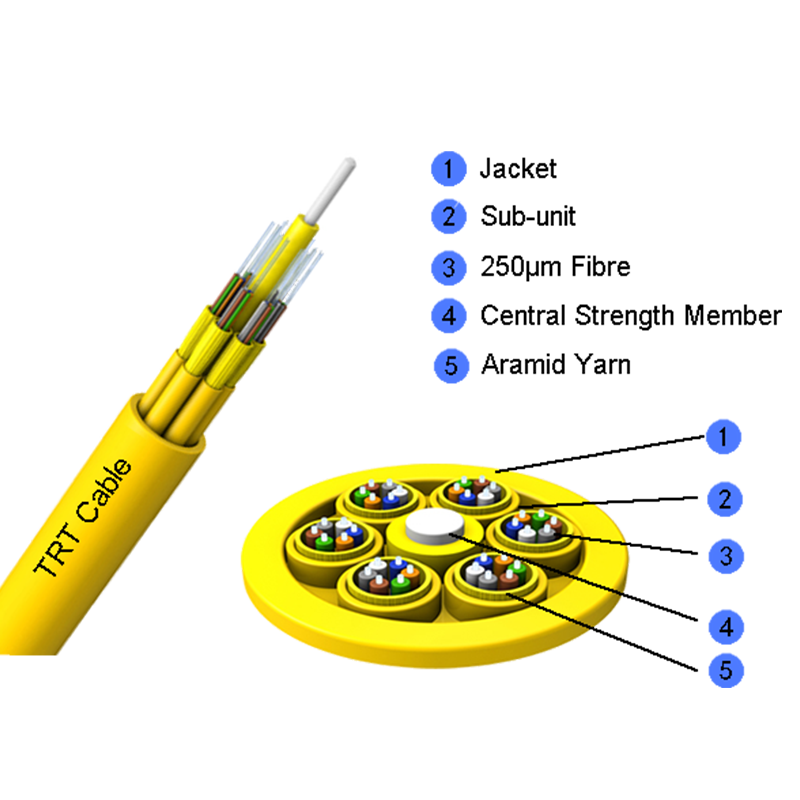
Core Structural Components
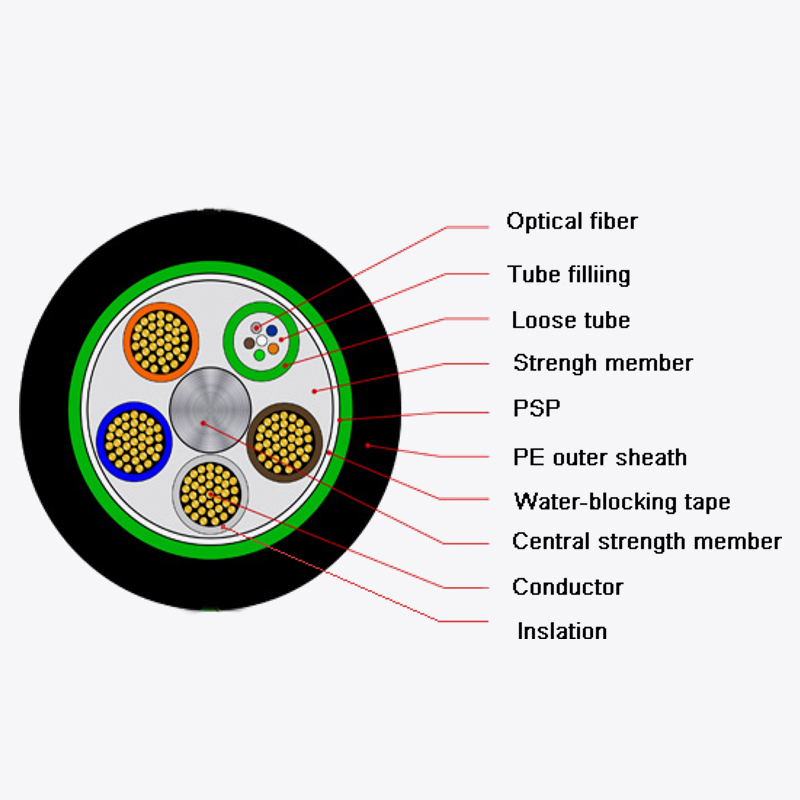
The complete structure of micro fiber indoor cable consists of multiple functional layers, each with clear technical purposes to ensure stable transmission performance and long service life. The main components include:
- Optical fiber core: the transmission medium of optical signals, including single-mode and multi-mode specifications
- Buffer layer: protects the fiber core from physical damage and ensures signal stability
- Loose tube or tight buffer structure: classifies and accommodates fiber units to improve wiring efficiency
- Strength member: provides tensile resistance and prevents cable deformation during installation
- Flame-retardant outer sheath: meets indoor fire safety standards and resists abrasion and corrosion
- Water-blocking components: enhances moisture resistance and adapts to various indoor environmental conditions
Key Performance Parameters
Micro fiber indoor cables comply with international and domestic communication industry standards, with stable and reliable performance parameters. The typical operating temperature range is -20℃ to +70℃, suitable for most indoor environments. The bending radius is 10 times the cable diameter under static conditions and 20 times the cable diameter under dynamic conditions, greatly reducing signal loss caused by bending during construction and use.
In terms of flame retardancy, mainstream products meet IEC 60332-1, IEC 60332-3, and GB/T 18380 standards, with low smoke, zero halogen, and flame-retardant properties to ensure safety in crowded indoor places. The tensile strength during installation is generally 100N to 600N depending on the fiber count, fully meeting the requirements of manual and mechanical wiring.
Classification of Standard Micro Fibre Indoor Cable by Fiber Count
The fiber count of standard micro fiber indoor cable is formulated based on industry common specifications, application scenarios, and construction convenience. Unlike customized high-fiber-count cables, standard products have unified dimensions, performance, and supporting accessories, making them suitable for large-scale batch procurement and universal indoor wiring projects.
Fiber count classification is the core basis for selecting micro fiber indoor cables. Different fiber counts correspond to different application scales, transmission capacities, and installation environments. The following is a detailed classification of standard fiber counts and their applicable scenarios.
Low Fiber Count Specifications (2F to 12F)
Low fiber count micro fiber indoor cables are the most widely used basic specifications, mainly for small-scale indoor wiring and terminal access scenarios. The fiber counts include 2 cores, 4 cores, 6 cores, 8 cores, and 12 cores. These products have the smallest outer diameter, lightest weight, and highest construction flexibility.
The outer diameter of 2-core to 8-core products is generally 2.0mm to 3.0mm, and 12-core products are 3.0mm to 4.0mm. They are suitable for home fiber access, office desktop connections, small equipment room jumper connections, and short-distance indoor wiring. The demand for such products is large in daily communication networks, and they have strong versatility and low procurement costs.
Medium Fiber Count Specifications (16F to 24F)
Medium fiber count micro fiber indoor cables are mainstream standard products, covering 16 cores, 20 cores, and 24 cores. Among them, 24-core is the most representative medium-high specification, widely used in medium-scale indoor optical distribution networks. The product linked above is a typical 24-core standard micro fiber indoor cable, which balances performance, size, and application range.
The outer diameter of 16-core to 24-core products is 4.0mm to 5.0mm, with moderate size and high fiber density. They are suitable for floor wiring in office buildings, vertical trunk lines in residential quarters, access points in small and medium-sized data centers, and backup fiber deployment. This type of cable can meet the needs of multi-user access and multi-service transmission, and is the core product in the standard product line.
High Fiber Count Specifications (36F to 72F)
High fiber count standard micro fiber indoor cables include 36 cores, 48 cores, 60 cores, and 72 cores. These products adopt multi-unit bundled design, maintaining miniaturization characteristics while achieving high-density fiber integration. They belong to the upper limit range of standard specifications and are different from customized ultra-high fiber count cables.
The outer diameter of 36-core to 48-core products is 5.0mm to 6.0mm, and 60-core to 72-core products are 6.0mm to 7.0mm. They are suitable for large-scale data centers, core equipment rooms, high-rise building trunk wiring, and industrial park integrated wiring. These specifications still comply with universal standards and can match conventional wiring pipes and connection accessories.
Maximum Fiber Count of Standard Micro Fibre Indoor Cable
After clarifying the classification of fiber counts, the core question can be accurately answered: the maximum fiber count of standard micro fiber indoor cable is 72 cores. This value is the upper limit of universal standard specifications in the global optical communication industry, formed by comprehensive balance of structural design, production process, installation conditions, application requirements, and supporting accessories.
72-core micro fiber indoor cable is defined as a standard product rather than a customized product because it has unified technical parameters, dimensional standards, flame-retardant grades, and supporting connection components, which can be produced in batches and meet the needs of most large-scale indoor wiring projects without personalized customization.
Technical Basis for 72-Core as the Standard Upper Limit
The 72-core upper limit is not arbitrarily set but determined by mature technical conditions and industry application practices. First, the miniaturized structure of micro fiber cable requires that the outer diameter cannot exceed 7.0mm to adapt to standard indoor wiring pipes and trunking. The 72-core design just reaches the critical value of space utilization, ensuring that the cable diameter is within the applicable range.
Second, fiber unit classification design supports 72-core standardization. The cable is usually composed of 6 groups of 12-core fiber units, each unit is independently buffered and bundled, which is convenient for branching, connection, and maintenance during construction. This modular structure is a mature technology in the industry and can realize large-scale stable production.
In addition, supporting optical connection equipment (such as fiber distribution frames, connectors, splitters) has universal 72-core matching specifications, which can realize seamless connection without customized accessories. This is a key factor for 72-core to become the maximum standard fiber count.
Difference Between Standard 72-Core and Customized Ultra-High Fiber Count Cables
It is necessary to distinguish standard 72-core micro fiber indoor cables from customized ultra-high fiber count cables (such as 96-core, 144-core, and above). Customized cables require personalized design of structure, materials, and dimensions, cannot be produced in batches, have long delivery cycles and high costs, and do not belong to the scope of standard products.
Standard 72-core cables have short production cycles, sufficient inventory, unified testing standards, and lower comprehensive costs. They can meet the needs of more than 95% of indoor high-density wiring projects, so they are defined as the maximum fiber count of standard micro fiber indoor cables.
Technical Design Advantages of Maximum Standard Fiber Count Cable
The 72-core standard micro fiber indoor cable, as the highest specification of universal products, has significant technical design advantages, which can meet the high-performance requirements of large-scale indoor optical communication networks while maintaining standardization and versatility. These advantages are the core reasons why it is widely recognized in the industry.
Ultra-High Fiber Density and Space Saving
Compared with traditional indoor optical cables, 72-core micro fiber cables increase fiber density by more than 60% under the same outer diameter. A single 7.0mm diameter cable can accommodate 72 optical fiber cores, replacing multiple traditional cables, greatly saving indoor pipeline, trunking, and equipment room space. This advantage is particularly prominent in high-rise buildings and large data centers with limited space resources.
Modular Structure for Easy Construction and Maintenance
The 72-core cable adopts a modular unit design, usually divided into 6 independent 12-core fiber units. Each unit has a separate color identification, which is convenient for rapid identification, branching, and connection during construction. Maintenance personnel can quickly locate faulty fiber units without affecting the normal operation of other units, reducing maintenance difficulty and network outage time.
Excellent Mechanical and Environmental Adaptability
Even at the maximum standard fiber count, the cable maintains excellent mechanical properties. The tensile strength reaches 600N, the compression resistance is 1000N/100mm, and the bending performance meets indoor dynamic wiring requirements. The operating temperature range is stable at -20℃ to +70℃, adapting to various indoor environments such as equipment rooms, basements, and office areas.
High Safety and Environmental Protection Performance
All 72-core standard micro fiber indoor cables use low-smoke zero-halogen flame-retardant sheath materials, complying with international indoor fire safety standards. In case of fire, they do not release toxic gas and dense smoke, ensuring the safety of personnel and equipment. The materials are environmentally friendly, non-polluting, and meet the requirements of green building and intelligent construction projects.
Application Scenarios of 72-Core Standard Micro Fibre Indoor Cable
As the maximum fiber count specification of standard micro fiber indoor cable, 72-core products are widely used in large-scale, high-capacity indoor optical communication scenarios. Their application covers multiple fields such as communication, construction, data center, and industrial control, providing stable transmission support for high-speed networks.
Large Data Center Internal Wiring
Data centers require high-density, high-bandwidth optical transmission connections. 72-core micro fiber indoor cables are suitable for interconnection between core switches, servers, and fiber distribution frames. A single cable can meet the transmission needs of multiple equipment nodes, reducing cable layout complexity and improving the heat dissipation and management efficiency of the data center.
High-Rise Building Vertical Trunk Wiring
In high-rise office buildings, commercial complexes, and residential buildings, vertical trunk lines need to carry fiber signals for all floors. 72-core cables can provide sufficient fiber resources for multi-floor shared access, with reserved backup fibers to meet the needs of later network expansion and upgrade, avoiding secondary wiring construction.
Industrial Park Integrated Optical Network
Industrial parks have a large number of enterprises and equipment, requiring a unified and high-capacity optical network support. 72-core standard micro fiber indoor cables are used for the main wiring of the park's internal communication system, connecting office areas, production workshops, and monitoring centers to realize integrated transmission of data, voice, and video services.
Communication Equipment Room Core Wiring
Telecom operator core equipment rooms and enterprise-level equipment rooms need high-density fiber connections between communication equipment. 72-core cables meet the standard equipment connection requirements, with stable performance and convenient maintenance, ensuring the safe and stable operation of core communication networks.
Selection Criteria of Micro Fibre Indoor Cable Fiber Count for B2B Buyers
For B2B buyers in the optical communication industry, selecting the appropriate fiber count of micro fiber indoor cable is a key decision related to project cost, network performance, and later expansion. The selection needs to combine project scale, transmission demand, installation environment, and budget to make a scientific choice.
Judge Based on Project Scale and User Capacity
Small-scale projects (less than 50 users) are suitable for 2-12 core low fiber count cables; medium-scale projects (50-200 users) choose 16-24 core medium specifications; large-scale projects (more than 200 users) adopt 36-72 core high standard specifications. The 72-core maximum standard specification is the best choice for super large-scale projects with high user density.
Reserve Expansion Space in Advance
B2B projects usually require long-term stable operation and later expansion. It is recommended to reserve 20%-30% of fiber cores as backup when selecting fiber count. For example, a project requiring 48 cores of actual use can select 72-core standard cables to meet the needs of business expansion and equipment upgrade in the next 5-10 years.
Match Installation Environment and Supporting Accessories
The selected fiber count must match the indoor wiring pipes, trunking, and optical connection equipment. Standard 24-core, 48-core, and 72-core cables can match universal accessories on the market, reducing procurement difficulty and cost. Customized fiber counts will lead to supporting accessories customization and increase the overall project investment.
Comprehensive Cost Control
Standard fiber count cables have lower unit price and shorter delivery time, which is conducive to B2B buyers' cost control and project progress management. The 72-core maximum standard specification has a higher cost-performance ratio in large-scale projects, reducing the number of cables and construction costs while meeting high-capacity needs.
Installation and Construction Specifications of Maximum Fiber Count Standard Cable
Although 72-core micro fiber indoor cable has high fiber density, its standard design ensures convenient construction. Strictly following installation specifications can ensure the transmission performance and service life of the cable, and avoid signal loss and damage caused by non-standard operation.
- Check the cable appearance and fiber integrity before construction to ensure no damage during transportation
- Control the tensile force within 600N during wiring, and do not pull forcibly to avoid fiber breakage
- Keep the bending radius above 20 times the cable diameter in dynamic wiring to prevent excessive bending loss
- Use special cable ties for fixing, do not tie too tightly to avoid cable deformation
- Fiber connection must be operated by professional personnel using standard tools to ensure connection quality
- Mark fiber units and cores clearly after construction for later maintenance and management
After installation, conduct full-link optical transmission testing to verify that the insertion loss, return loss, and other indicators meet the industry standards. The standard 72-core micro fiber indoor cable has stable test data and can quickly pass the project acceptance.
Comparison Table of Standard Micro Fibre Indoor Cable Specifications
The following table clearly shows the key parameters of standard micro fiber indoor cables from low to maximum fiber count, which is convenient for intuitive comparison and selection:
| Fiber Count | Outer Diameter (mm) | Tensile Strength (N) | Application Scenario |
| 2-12 Core | 2.0-4.0 | 100-300 | Small indoor wiring, terminal access |
| 16-24 Core | 4.0-5.0 | 300-400 | Medium office, floor trunk |
| 36-48 Core | 5.0-6.0 | 400-500 | Large buildings, equipment rooms |
| 72 Core (Max) | 6.0-7.0 | 600 | Data center, super large projects |
Frequently Asked Questions About Micro Fibre Indoor Cable Fiber Count
Q1: What is the maximum fiber count in a standard micro fiber indoor cable?
A: The maximum fiber count of standard micro fiber indoor cable is 72 cores, which is the universal upper limit in the industry.
Q2: Is 24-core micro fiber indoor cable a standard product?
A: Yes, 24-core is a mainstream medium standard specification, with high versatility and wide application.
Q3: Can standard micro fiber cables exceed 72 cores?
A: Cables exceeding 72 cores are customized products, not standard specifications, requiring personalized design and production.
Q4: What scenarios are 72-core standard micro fiber cables suitable for?
A: Suitable for large data centers, high-rise buildings, industrial parks, and core equipment room wiring.
Q5: Do standard fiber count cables match universal accessories?
A: Yes, 24F, 48F, 72F standard cables can match common optical connectors and distribution frames.
Q6: What is the flame retardant grade of standard micro fiber indoor cable?
A: It meets IEC and GB flame retardant standards, with low smoke zero halogen performance, suitable for indoor use.
Q7: How to choose the right fiber count for B2B projects?
A: Select according to project scale, reserve 20%-30% backup fiber cores, and give priority to standard specifications.
Q8: What is the service life of standard micro fiber indoor cable?
A: The normal service life is more than 20 years, with stable performance and low maintenance cost.
 Address:Zhong'an Road, Puzhuang Town, Suzhou City, Jiangsu Prov., China
 Phone:+86-189 1350 1815
 Tel:+86-512-66392923
 Fax:+86-512-66383830
 Email:[email protected]
 Wechat: xiaobin18913501815
 whatsapp: +86 18913501815

 0
0