
 English
 русский
 Español
 Português
 عربى
عربى


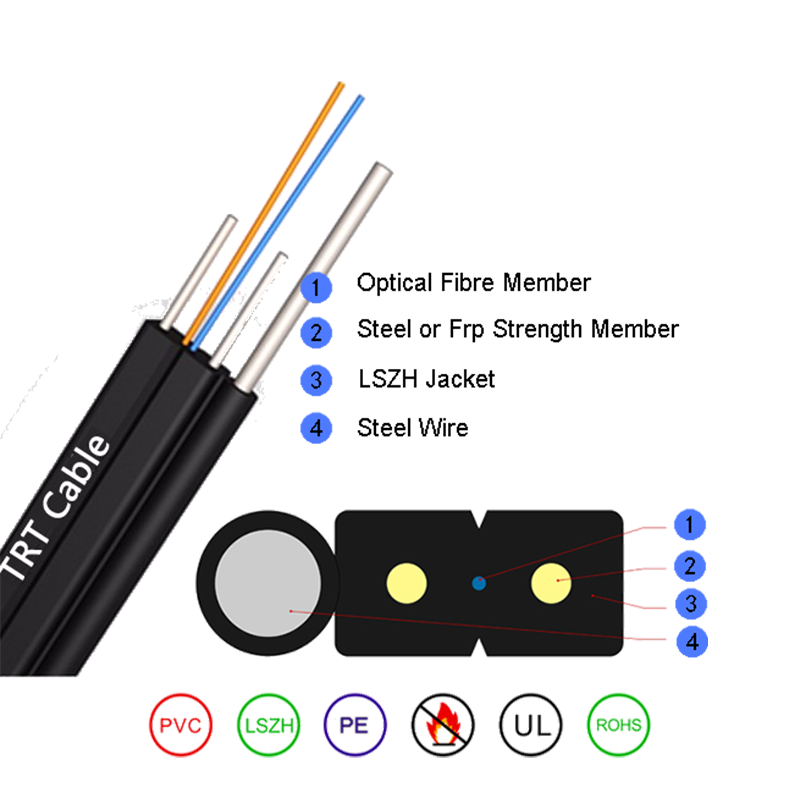
What are the key advantages of low friction FTTH indoor fiber optic cable in home networks?
Low friction FTTH indoor fiber optic cable has become an essential component in modern home networking solutions. As homeowners demand higher internet speeds, more stable connections, and easier installation processes, low friction FTTH indoor fiber optic cable provides a solution that addresses these needs efficiently.
Enhanced installation efficiency
One of the most significant advantages of low friction FTTH indoor fiber optic cable is its ease of installation. Traditional fiber optic cables often face challenges such as high pulling tension, microbending, and snagging within conduits, particularly in complex home layouts with multiple bends and tight spaces. The low friction coating or sheath of this cable reduces resistance, allowing installers to pull the cable through walls, conduits, and risers more smoothly.
Table 1 illustrates the comparative pulling efficiency between low friction and standard indoor fiber optic cables in typical home scenarios.
| Cable type | Average pulling tension (N) | Installation time (minutes per 10m) | Conduit bending difficulty |
|---|---|---|---|
| Standard indoor fiber optic cable | 25 | 15 | Moderate |
| Low friction FTTH indoor fiber optic cable | 12 | 8 | Low |
The reduced pulling tension not only simplifies installation but also decreases the risk of cable damage during deployment, making low friction FTTH indoor fiber optic cable highly suitable for DIY home installations and professional installers alike.
Superior performance and signal stability
In addition to ease of installation, low friction FTTH indoor fiber optic cable offers enhanced signal reliability. Fiber optic performance can degrade due to microbends or macrobends, which are common when cables are tightly routed through home conduits. The low friction design minimizes these stresses, preserving the integrity of the optical fibers and maintaining low attenuation levels.
Moreover, these cables are compatible with various fiber types, including G.657A2 bend-insensitive fiber, which further reduces the likelihood of signal loss in tight installation environments. Home networks benefit from consistent bandwidth delivery and reduced latency, especially when multiple devices are connected simultaneously.
Durability and long-term reliability
Durability is another core advantage of low friction FTTH indoor fiber optic cable. The cables often incorporate high-strength aramid yarns, reinforced jackets, and advanced polymer coatings such as PE, LSZH, or PVC. These materials provide protection against mechanical stress, abrasion, and environmental factors such as humidity and temperature fluctuations.
Table 2 compares key durability factors between standard indoor fiber optic cables and low friction alternatives.
| Feature | Standard indoor fiber optic cable | Low friction FTTH indoor fiber optic cable |
|---|---|---|
| Abrasion resistance | Moderate | High |
| Tensile strength | Medium | High |
| Environmental tolerance | Limited | High (temperature & humidity resistant) |
| Bend radius compliance | Moderate | Excellent (supports tight-radius bends) |
The enhanced durability ensures a longer service life, reduces maintenance needs, and prevents costly repairs or replacements in home networking environments.
Compatibility with home network systems
Modern homes often feature a mixture of Wi-Fi access points, media streaming devices, and smart home components. Low friction FTTH indoor fiber optic cable is fully compatible with these systems due to its standard connector interfaces and bend-insensitive fibers. The cable supports high-speed internet, VoIP systems, and 4K/8K video streaming, making it suitable for a wide range of residential applications.
Additionally, the low friction design reduces installation time in structured home wiring systems, allowing for easier deployment in wall-mounted cable channels, ceilings, or floor conduits without the need for specialized tools.
Safety and environmental considerations
Home network installations often require cables that meet fire safety and environmental standards. Low friction FTTH indoor fiber optic cables typically feature LSZH jackets, which minimize smoke generation and toxic gas emission in the event of fire. This characteristic ensures compliance with residential building codes and contributes to a safer home environment.
The use of environmentally friendly materials also aligns with sustainability goals, as these cables reduce the environmental footprint compared to traditional indoor cabling solutions.
Cost-effectiveness and efficiency
While low friction FTTH indoor fiber optic cable may have a higher initial cost than standard indoor cables, the overall cost-effectiveness is significant. Reduced installation labor, lower risk of cable damage, and decreased maintenance requirements translate into long-term savings for homeowners.
Moreover, the cable’s compatibility with high-speed internet services ensures that future upgrades, such as transitioning to 10G PON or beyond, can be accommodated without replacing the cabling infrastructure, further enhancing return on investment.
Application scenarios in home networks
The versatility of low friction FTTH indoor fiber optic cable makes it suitable for various home networking scenarios:
- Single-family homes: Efficiently routes through walls and ceilings to connect multiple rooms with minimal signal degradation.
- Multi-dwelling units (MDUs): Supports high-density installations with multiple units sharing common risers and conduits.
- Home offices and smart homes: Maintains consistent bandwidth for simultaneous streaming, video conferencing, and smart device operation.
By supporting diverse installation environments, these cables provide flexibility and long-term reliability for residential networking needs.
Maintenance and troubleshooting advantages
Maintenance of home networks can be challenging if cable damage occurs or performance degrades. Low friction FTTH indoor fiber optic cable simplifies this process by reducing the likelihood of stress points and fiber breaks during installation. Additionally, the robust outer jacket protects fibers from accidental abrasion or impact, ensuring that troubleshooting efforts are minimized.
Homeowners and technicians benefit from reduced service interruptions and fewer repair requirements, contributing to overall network stability.
Table of technical specifications
| Specification | Value | Notes |
|---|---|---|
| Fiber type | Single-mode G.657A2 | Bend-insensitive fiber |
| Jacket material | LSZH / PVC | Fire-resistant and low smoke |
| Fiber count | 1 to 24 | Customizable based on installation needs |
| Operating temperature | -20°C to 70°C | Suitable for indoor environments |
| Min bend radius | 15 mm | Supports tight conduit routing |
| Tensile strength | 150 N | High pulling tension tolerance |
Conclusion
Low friction FTTH indoor fiber optic cable provides multiple advantages for home networks, including enhanced installation efficiency, superior signal stability, durability, compatibility, safety compliance, and long-term cost-effectiveness. Its design addresses common challenges faced during indoor fiber deployments, ensuring reliable performance in various residential scenarios. As high-speed internet and smart home adoption continue to rise, low friction FTTH indoor fiber optic cable represents a critical infrastructure component for future-proof home networking.
FAQ
Q1: Can low friction FTTH indoor fiber optic cable be installed in existing conduits?
A1: Yes, the low friction design allows for easier pulling through pre-existing conduits, reducing the risk of damage during retrofitting.
Q2: What is the maximum recommended pull length for home installations?
A2: Typically, it depends on the cable construction and conduit layout, but low friction cables allow longer pull distances compared to standard indoor fiber cables.
Q3: Are low friction FTTH indoor fiber optic cables suitable for high-density installations?
A3: Yes, their smooth surface and bend-insensitive fiber allow multiple cables to coexist in tight risers or wall ducts without compromising performance.
Q4: How do these cables contribute to network safety?
A4: LSZH jackets reduce smoke and toxic gas emission, ensuring compliance with fire safety standards.
Q5: Can low friction FTTH indoor fiber optic cables support future high-speed upgrades?
A5: Yes, their compatibility with single-mode, bend-insensitive fibers makes them suitable for advanced networks like 10G PON or higher.
References
- ITU-T Recommendation G.657: Characteristics of a bending-insensitive single-mode optical fiber and cable.
- Fiber Optic Association (FOA). Fiber Optic Installation Guidelines.
- National Electrical Manufacturers Association (NEMA). Indoor Fiber Optic Cable Standards.
 Address:Zhong'an Road, Puzhuang Town, Suzhou City, Jiangsu Prov., China
 Phone:+86-189 1350 1815
 Tel:+86-512-66392923
 Fax:+86-512-66383830
 Email:[email protected]
 Wechat: xiaobin18913501815
 whatsapp: +86 18913501815

 0
0