
 English
 русский
 Español
 Português
 عربى
عربى


-1.png "How Does Indoor Fiber Optic Cable Work?")
How Does Indoor Fiber Optic Cable Work?
How Indoor Fiber Optic Cable Works: The Core Principle
Indoor fiber optic cable transmits data as pulses of light through thin strands of glass or plastic fiber, enabling speeds up to 100 Gbps over distances from a few meters to several kilometers — far beyond what copper cables can achieve. The fundamental working principle relies on a physics concept called total internal reflection: light entering the fiber core at the correct angle bounces repeatedly along the fiber walls without escaping, traveling from one end to the other with minimal signal loss.
Each indoor fiber optic cable consists of a light-carrying core, a surrounding cladding layer with a lower refractive index, a protective coating, and an outer jacket designed for indoor environments. The light source (typically a laser or LED) converts electrical signals into light pulses, which are then decoded by a photodetector at the receiving end back into electrical data.
Key Structural Components of Indoor Fiber Optic Cable
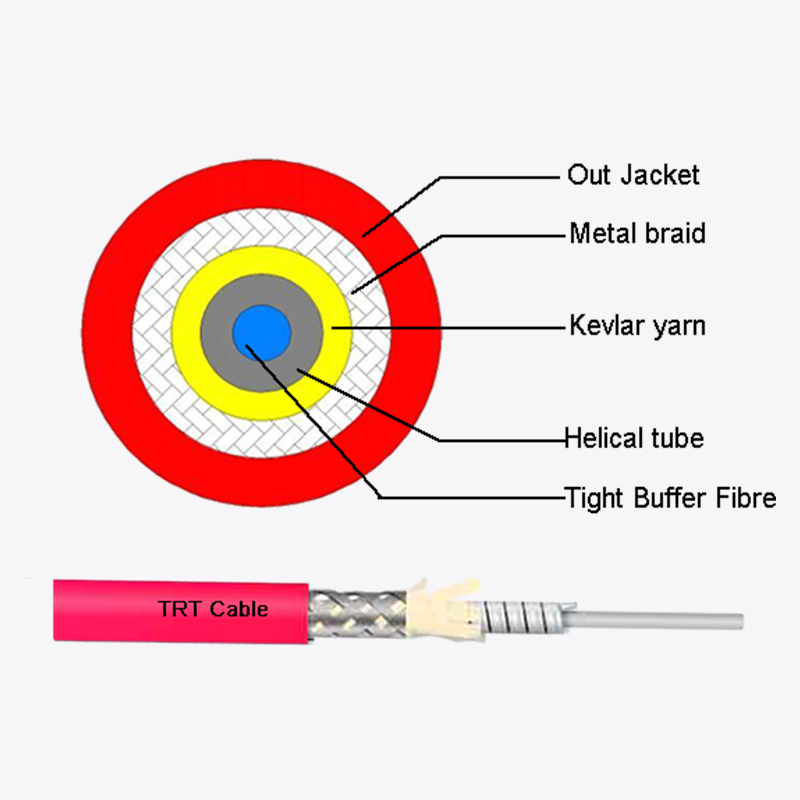
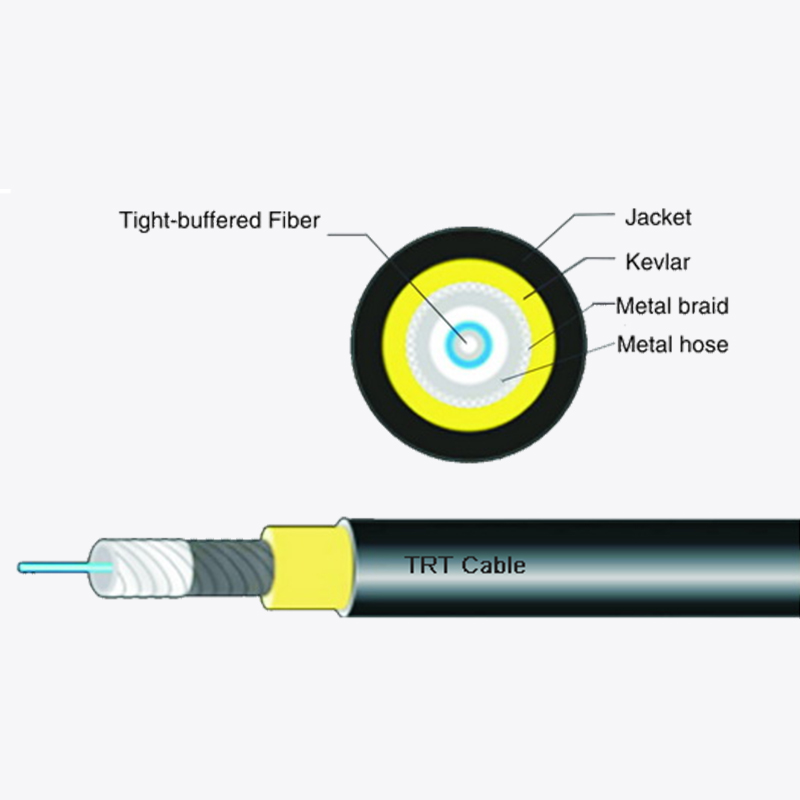
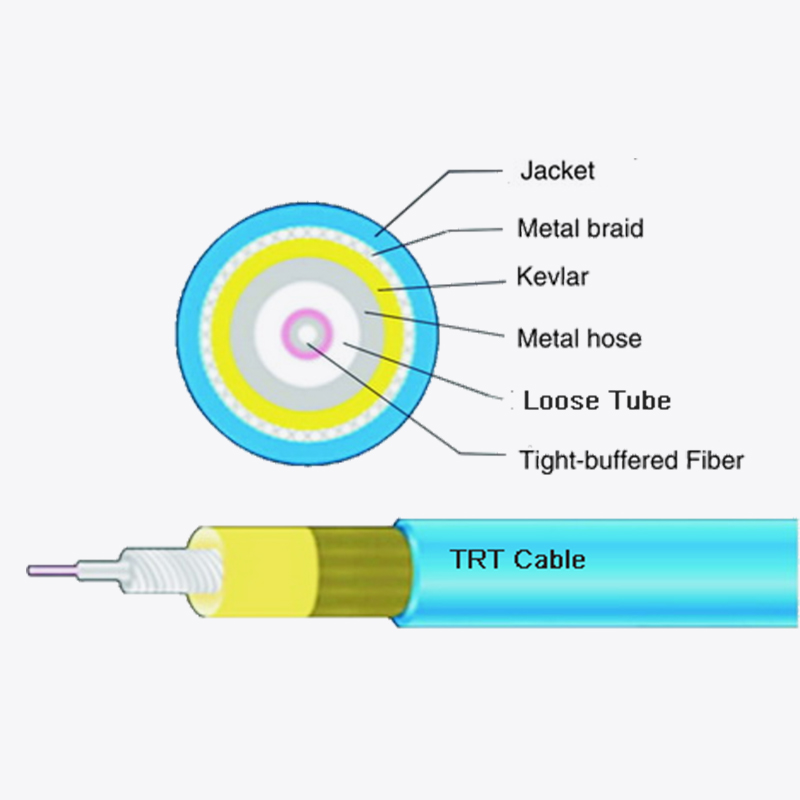
Understanding how the cable works starts with knowing what it's made of. Each layer serves a specific functional purpose:
| Component | Material | Function |
|---|---|---|
| Core | Ultra-pure glass or plastic | Carries light signals via total internal reflection |
| Cladding | Glass with lower refractive index | Reflects light back into the core, prevents signal leakage |
| Coating (Buffer) | Acrylate polymer | Protects fiber from moisture and physical damage |
| Strength Member | Aramid yarn (Kevlar) or fiberglass | Provides tensile strength during installation |
| Outer Jacket | LSZH, PVC, or Plenum-rated material | Fire resistance, mechanical protection for indoor use |
The core diameter is a critical specification: single-mode fibers typically have a 9 µm core, while multimode fibers use 50 µm or 62.5 µm cores. This size difference directly determines how light travels and how far a signal can travel without amplification.
Single-Mode vs. Multimode: Two Different Light Paths
The type of fiber determines how light propagates through the cable, which affects bandwidth, distance, and cost.
Single-Mode Fiber (SMF)
Single-mode fiber allows only one mode (path) of light to travel through the narrow 9 µm core. Because there is no modal dispersion, the signal remains sharp and coherent over long distances. Indoor single-mode cables can support transmission distances of up to 10 km at 10 Gbps or beyond, making them suitable for backbone connections between floors or buildings on a campus.
Multimode Fiber (MMF)
Multimode fiber has a larger core that allows multiple light modes to travel simultaneously. This makes it easier to couple light into the fiber using lower-cost LEDs or VCSELs. However, modal dispersion (different modes arriving at slightly different times) limits both speed and distance. OM3 multimode fiber supports 10 Gbps up to 300 m, while OM4 supports 10 Gbps up to 550 m and 40/100 Gbps up to 150 m — ideal for data centers and horizontal cabling within buildings.
| Fiber Type | Core Diameter | Typical Max Distance | Best Use Case |
|---|---|---|---|
| OS2 (Single-Mode) | 9 µm | Up to 10 km+ | Campus backbone, long runs |
| OM3 (Multimode) | 50 µm | 300 m @ 10G | Data centers, enterprise LAN |
| OM4 (Multimode) | 50 µm | 550 m @ 10G / 150 m @ 100G | High-density data centers |
| OM5 (Multimode) | 50 µm | 150 m @ 400G (WDM) | Next-gen data centers |
How Light Signals Are Generated and Received
The optical transmission system involves three main components working together:
- Optical Transmitter: Converts electrical signals into light pulses. Lasers (used in single-mode systems) produce coherent, narrow-wavelength light, while VCSELs and LEDs are common in multimode systems.
- Fiber Medium: The indoor cable itself guides the light signal from source to destination with minimal attenuation. Typical attenuation for indoor single-mode fiber is ≤0.4 dB/km at 1310 nm.
- Optical Receiver: A photodetector (photodiode) at the far end converts light pulses back into electrical signals that networking equipment can interpret.
Wavelength-division multiplexing (WDM) allows multiple data streams to be carried simultaneously on different wavelengths of light within a single fiber, dramatically multiplying the effective bandwidth of a single indoor cable run.
Indoor Jacket Types and Their Specific Functions
Indoor fiber optic cables are designed with specific jacket materials to meet building codes and environmental requirements. The jacket type is not cosmetic — it directly impacts safety and installation location.
- LSZH (Low Smoke Zero Halogen): Produces minimal toxic smoke when burned. Required in enclosed spaces with limited ventilation such as tunnels, subways, and confined equipment rooms.
- Plenum-rated (CMP): Designed for installation in air-handling spaces (plenums) in commercial buildings. Meets strict flame and smoke propagation standards per NFPA 262.
- Riser-rated (CMR): Suitable for vertical runs between floors through riser conduits. Resists flame spread but does not meet the higher plenum standard.
- General-purpose (CM/OFN): For use in conduit or in areas not requiring riser or plenum ratings; the most common type for basic horizontal runs.
Common Indoor Fiber Optic Cable Configurations
Indoor fiber cables come in several physical designs optimized for different deployment scenarios:
Tight-Buffered Distribution Cable
Each fiber is individually coated with a 900 µm tight buffer directly over the 250 µm fiber coating. This makes fibers easy to terminate individually without breakout kits, commonly used for horizontal runs and patch panel connections inside buildings.
Breakout (Fan-Out) Cable
Multiple tight-buffered fibers are each enclosed in their own sub-jacket, making them rugged enough for direct termination and plug-in connections. Ideal for short equipment room runs where cables connect directly to ports without patch panels.
Ribbon Cable
Fibers are arranged in flat ribbons of 4, 8, or 12 fibers, enabling mass fusion splicing of up to 12 fibers simultaneously. This reduces splice time by up to 90% compared to individual splicing, making ribbon cable highly efficient for high-fiber-count backbone installations.
Armored Indoor Cable
A corrugated steel or aluminum armor layer is added between the fiber bundle and the outer jacket. This provides crush and rodent resistance for cables run under raised floors or in industrial indoor environments.
Signal Loss in Indoor Fiber: What Causes It and How It's Managed
Even though fiber optic cable has extremely low loss compared to copper, attenuation still occurs and must be accounted for during system design. The main sources of signal loss include:
- Intrinsic absorption: Caused by impurities in the glass, particularly hydroxyl (OH) ions that absorb specific wavelengths. Modern fibers are manufactured with extremely low water peak attenuation.
- Scattering (Rayleigh scattering): Microscopic variations in glass density scatter a small amount of light in all directions. This is the dominant loss mechanism at short wavelengths.
- Bending losses: Macro-bends (bends below the minimum bend radius) and micro-bends (small mechanical deformations) cause light to escape the core. Most indoor cables specify a minimum installation bend radius of 10× the cable diameter.
- Connector and splice losses: Each connector adds approximately 0.3–0.5 dB, and fusion splices typically add less than 0.1 dB. These must be budgeted into the total link loss calculation.
An optical power budget calculation is performed during network design to ensure total link loss (fiber attenuation + connector losses + splice losses) remains within the transceiver's maximum supported loss, maintaining reliable signal quality.
Typical Applications of Indoor Fiber Optic Cable
Indoor fiber cables are deployed across a wide range of environments where high bandwidth, low latency, and immunity to electromagnetic interference are required:
- Data centers: High-density server and switch interconnects using OM4/OM5 multimode or OS2 single-mode cables for top-of-rack, end-of-row, and core switching layers.
- Enterprise LAN backbone: Connecting communications rooms on different floors using riser-rated or plenum-rated distribution cables.
- Healthcare facilities: Fiber's EMI immunity is critical in environments with MRI and other medical equipment that generate strong electromagnetic fields.
- Educational campuses: High-bandwidth backbone cabling to support video streaming, cloud services, and high-density wireless access points.
- Industrial facilities: Armored indoor fiber provides EMI immunity and mechanical durability in factory floors with heavy machinery.
- FTTH/FTTB last drop: Single-mode indoor drop cables bring fiber from the building entrance point to individual apartments or offices.
Frequently Asked Questions
Q1: What is the maximum distance for indoor fiber optic cable?
It depends on fiber type and data rate. OM4 multimode supports 10 Gbps up to 550 m; OS2 single-mode supports 10 Gbps up to 10 km or more. For most indoor building applications, runs are well within these limits.
Q2: Can indoor fiber optic cable be used outdoors?
No. Indoor cables lack UV protection and moisture barriers required for outdoor conditions. Using indoor cable outdoors will lead to jacket degradation and signal failure. Use outdoor-rated or indoor/outdoor dual-rated cables for mixed routes.
Q3: What is LSZH and when is it required?
LSZH stands for Low Smoke Zero Halogen. It is required in enclosed or poorly ventilated spaces — such as tunnels, ships, and confined equipment rooms — where toxic fumes from burning PVC would pose a serious health hazard.
Q4: Is fiber optic cable affected by electromagnetic interference (EMI)?
No. Because fiber transmits light rather than electrical current, it is completely immune to EMI and radio frequency interference. This makes it ideal for installations near motors, MRI machines, power lines, and other interference sources.
Q5: How is indoor fiber optic cable terminated?
It is terminated using connectors (SC, LC, ST, MTP/MPO) either by fusion splicing a pre-terminated pigtail onto the fiber or by field-polishing connectors directly. Fusion splicing is the most common method for permanent installations due to its low loss and reliability.
Q6: What is the difference between tight-buffered and loose-tube fiber cable for indoor use?
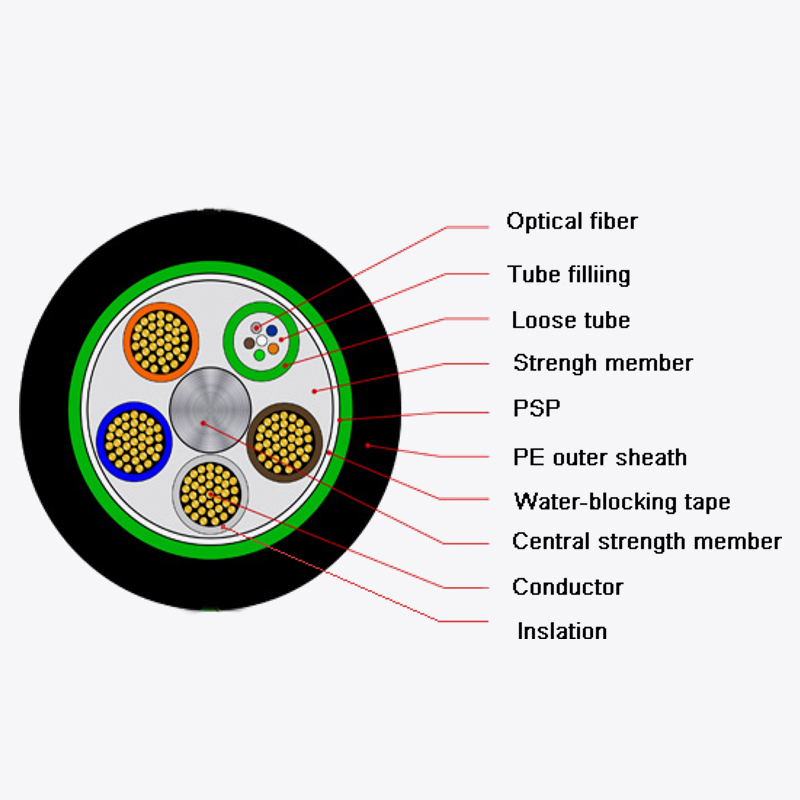
Tight-buffered cable has each fiber coated in a 900 µm buffer, making it easier to handle and terminate — best for indoor use. Loose-tube cable places fibers inside gel-filled tubes for moisture protection, which is better suited for outdoor or direct-burial applications.
 Address:Zhong'an Road, Puzhuang Town, Suzhou City, Jiangsu Prov., China
 Phone:+86-189 1350 1815
 Tel:+86-512-66392923
 Fax:+86-512-66383830
 Email:[email protected]
 Wechat: xiaobin18913501815
 whatsapp: +86 18913501815

 0
0