
 English
 русский
 Español
 Português
 عربى
عربى


-1.png "How do you splice tight buffer fiber optic cable effectively?")
How do you splice tight buffer fiber optic cable effectively?
Splicing tight buffer fiber optic cable is a fundamental process in fiber optic network installations. The process ensures continuous optical signal transmission and minimizes insertion loss and back reflection, which are critical for maintaining high-performance networks. Proper splicing enhances the reliability and longevity of fiber optic links, making it essential for engineers, technicians, and network planners to understand both the theoretical and practical aspects of the process.
Understanding tight buffer fiber optic cable
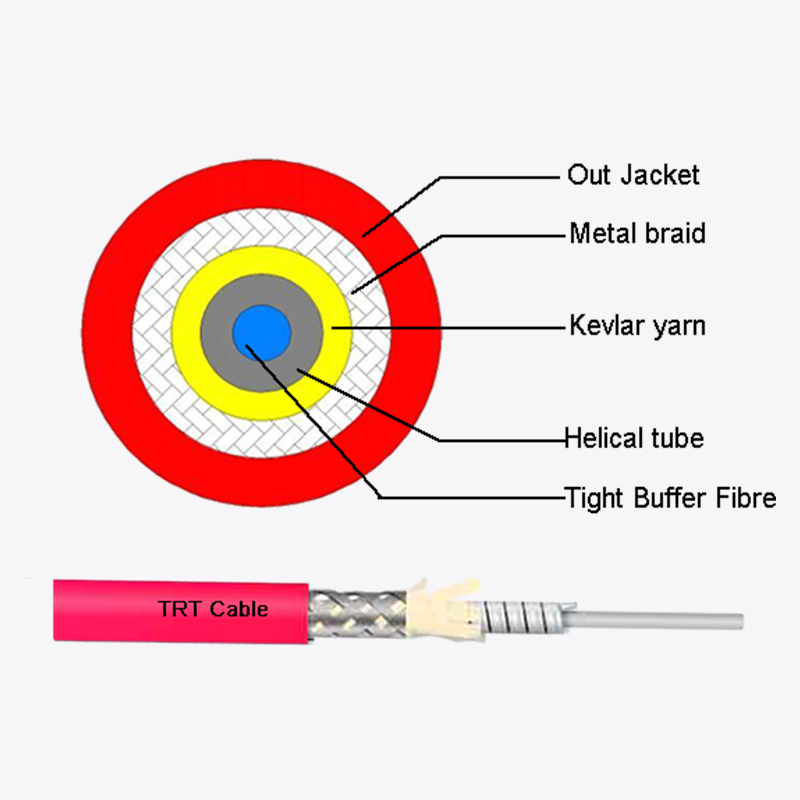
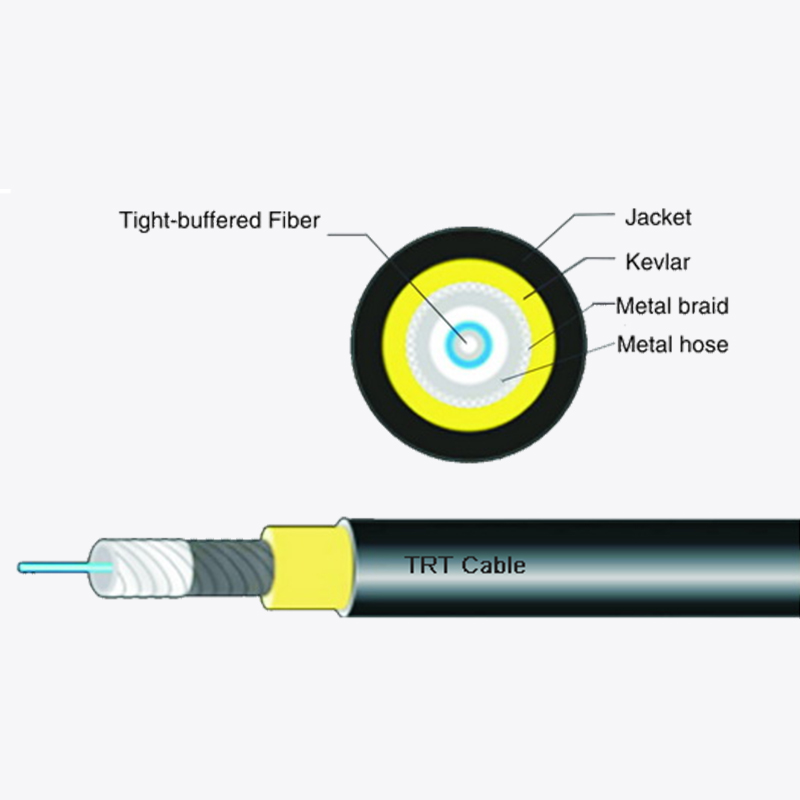
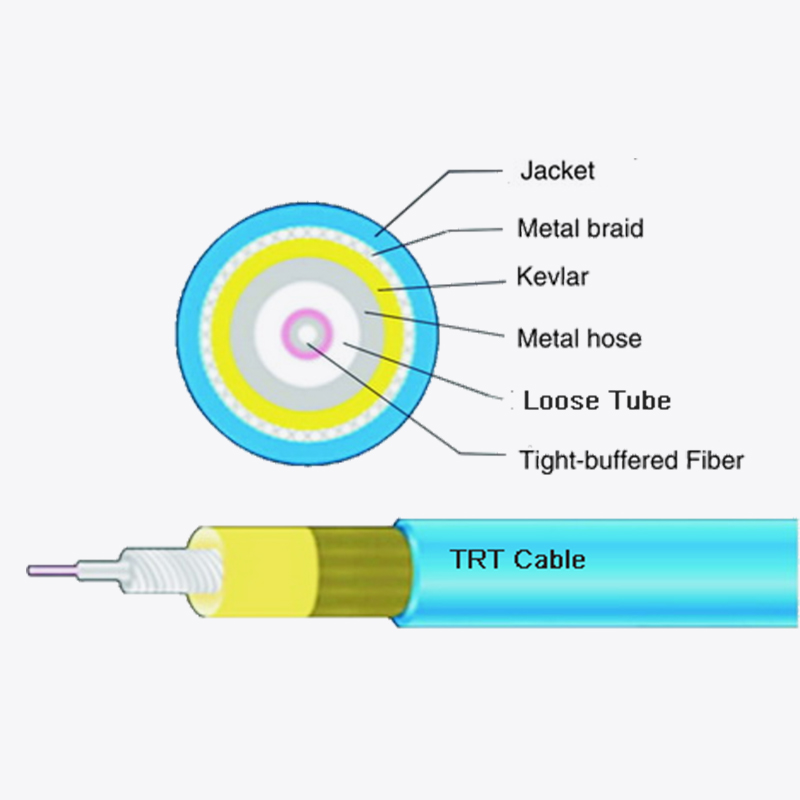
Tight buffer fiber optic cable is a type of fiber optic cable where each fiber is individually coated with a protective layer. This design contrasts with loose tube fiber optic cables, in which multiple fibers are enclosed within a single tube. Tight buffer fiber optic cable is commonly used in indoor applications, including LAN installations, data centers, and telecommunication closets, due to its flexibility and ease of handling. The design allows direct termination and splicing without additional buffering or protection, making it suitable for short-distance runs and high-density environments.
The main components of tight buffer fiber optic cable include:
- Optical fiber: The core and cladding that carry the optical signal.
- Tight buffer coating: Provides mechanical protection to the fiber.
- Strength members: Materials such as aramid yarn enhance tensile strength.
- Outer jacket: Protects the fiber from environmental factors such as moisture and abrasion.
Table 1 summarizes the typical characteristics of tight buffer fiber optic cable.
| Characteristic | Description |
|---|---|
| Fiber type | Single-mode or multi-mode |
| Coating | Tight buffer, typically 900 μm |
| Strength members | Aramid yarn or other synthetic fibers |
| Jacket material | PVC, LSZH, or flame-retardant options |
| Application environment | Indoor, patch panels, and structured cabling |
| Bend radius | Typically 10× the fiber diameter |
| Maximum fiber count | Usually up to 12 fibers per cable |
Understanding these properties is crucial for selecting the correct splicing technique and equipment.
Preparing for splicing
Preparation is a critical step in ensuring a reliable splice of tight buffer fiber optic cable. It involves careful handling, precise stripping, and proper cleaning to avoid contamination, which can cause signal degradation.
Cable handling
Proper handling of tight buffer fiber optic cable reduces the risk of microbends and fiber damage. Key considerations include:
- Avoid sharp bends; maintain a minimum bend radius as specified by the manufacturer.
- Use protective sleeves or trays during handling.
- Minimize tension when pulling the cable through conduits or racks.
Fiber stripping
Stripping the tight buffer fiber optic cable involves removing the outer jacket and buffer coating to expose the bare fiber. Precision is crucial to avoid scratching or nicking the fiber, which can lead to high attenuation. Stripping tools designed for tight buffer fibers are recommended for consistent results.
Cleaning
Cleaning is essential before splicing to remove dust, oils, or residues. Typically, isopropyl alcohol and lint-free wipes are used. Any contamination can significantly increase insertion loss and reduce splice reliability.
Fiber preparation checklist
| Step | Purpose |
|---|---|
| Cable inspection | Identify damage or defects |
| Outer jacket removal | Expose buffer coating without damaging fiber |
| Buffer stripping | Remove tight buffer to access bare fiber |
| Cleaning | Eliminate dust and oils from fiber surfaces |
| Cleaving | Create a precise fiber end for fusion or mechanical splicing |
Splicing methods for tight buffer fiber optic cable
There are two primary splicing methods: fusion splicing and mechanical splicing. The choice depends on application requirements, equipment availability, and network specifications.
Fusion splicing
Fusion splicing is widely regarded as the most reliable method for joining tight buffer fiber optic cable. This process uses an electric arc to fuse the fiber ends, creating a continuous optical path with minimal loss.
Advantages of fusion splicing:
- Low insertion loss and minimal back reflection.
- High mechanical strength and durability.
- Suitable for long-distance and high-performance networks.
Key steps in fusion splicing:
- Strip the fiber and remove the buffer coating.
- Clean the bare fiber with alcohol and lint-free wipes.
- Cleave the fiber end to achieve a precise, flat surface.
- Align the fiber ends in the fusion splicer.
- Apply the fusion arc to join the fibers.
- Protect the splice using a splice sleeve or heat-shrink tube.
Table 2 provides a comparison of key fusion splicing parameters.
| Parameter | Typical Range for Tight Buffer Fiber Optic Cable |
|---|---|
| Splice loss | 0.02–0.05 dB for single-mode, 0.05–0.1 dB for multi-mode |
| Tensile strength | 0.5–1 N (after protection sleeve) |
| Alignment tolerance | ±1 µm for core alignment |
| Arc duration | 1–2 seconds |
| Protection type | Heat-shrink sleeve or reinforced tube |
Mechanical splicing
Mechanical splicing is an alternative method that physically aligns fibers within a splice holder. It is generally easier to perform in the field and does not require specialized fusion equipment.
Advantages of mechanical splicing:
- No fusion splicing equipment required.
- Quick installation for temporary or emergency repairs.
- Minimal skill requirement compared to fusion splicing.
Considerations:
- Slightly higher insertion loss than fusion splicing.
- Requires precise alignment of fiber cores.
- Less durable under repeated handling or mechanical stress.
Testing and quality assurance
After splicing tight buffer fiber optic cable, rigorous testing ensures the splice meets performance standards. The following tests are commonly performed:
Insertion loss testing
Measures the amount of signal lost at the splice point. Low insertion loss indicates proper alignment and clean fiber surfaces.
Return loss testing
Assesses the amount of reflected light at the splice. High return loss is a positive indicator of splice quality, reducing signal degradation in sensitive networks.
Visual inspection
A microscope or fiber inspection scope is used to examine the splice for defects such as cracks, chips, or contamination.
Environmental testing
In critical installations, spliced cables may be tested for temperature and humidity tolerance to ensure long-term reliability.
Maintaining spliced tight buffer fiber optic cable
Maintenance plays a key role in the performance of spliced tight buffer fiber optic cable. Recommendations include:
- Avoid excessive bending near splices.
- Keep splices in protective enclosures.
- Inspect splices periodically for signs of wear or contamination.
- Clean and reterminate connectors if signal quality degrades.
Best practices for effective splicing
To maximize splice effectiveness in tight buffer fiber optic cable, the following practices are recommended:
- Always handle fibers with care to avoid microbends.
- Ensure cleaving tools are precise and well-maintained.
- Use protective sleeves to maintain mechanical strength.
- Perform multiple tests (insertion loss, return loss, visual inspection) before final installation.
- Document splice locations and test results for future maintenance and troubleshooting.
Applications of spliced tight buffer fiber optic cable
Spliced tight buffer fiber optic cable is extensively used in:
- Data centers: High-density fiber interconnects.
- Telecommunication networks: Indoor backbone cabling.
- Campus networks: Short-distance fiber runs connecting multiple buildings.
- Industrial settings: Control systems requiring reliable optical links.
The versatility and ease of splicing make tight buffer fiber optic cable a preferred choice in these environments.
Common mistakes in splicing
Even experienced technicians may encounter errors. Frequent mistakes include:
- Inadequate fiber cleaning.
- Improper cleaving angles.
- Excessive cable tension.
- Neglecting environmental factors.
- Using inappropriate splice protection.
Avoiding these pitfalls ensures consistent performance and reduces network downtime.
Conclusion
Effective splicing of tight buffer fiber optic cable requires attention to preparation, precise techniques, and rigorous testing. By understanding the cable characteristics, using the correct splicing method, and adhering to best practices, network professionals can achieve low-loss, high-reliability connections essential for modern communication systems.
FAQ
Q1: Can I splice tight buffer fiber optic cable without a fusion splicer?
A1: Yes, mechanical splicing is an alternative, though it generally results in higher insertion loss than fusion splicing.
Q2: How long does a properly spliced tight buffer fiber optic cable last?
A2: With correct installation and maintenance, splices can last many years without significant signal degradation.
Q3: Is it necessary to clean fibers before splicing?
A3: Absolutely. Dust, oil, or residue can drastically increase insertion loss and reduce splice quality.
Q4: Can tight buffer fiber optic cable splices be reused?
A4: No, once a fiber is fused or mechanically spliced, the splice should be considered permanent. Re-splicing requires cutting and re-cleaving the fiber.
Q5: What equipment is essential for effective splicing?
A5: Cleaving tools, fiber strippers, fusion or mechanical splicers, cleaning supplies, and protective splice sleeves are necessary.
References
- Kashyap, R. Fiber Bragg Gratings. Academic Press, 2010.
- Senior, J. M. Optical Fiber Communications: Principles and Practice. Pearson, 2010.
- Hecht, J. Understanding Fiber Optics. 5th Edition, Pearson, 2015.
 Address:Zhong'an Road, Puzhuang Town, Suzhou City, Jiangsu Prov., China
 Phone:+86-189 1350 1815
 Tel:+86-512-66392923
 Fax:+86-512-66383830
 Email:[email protected]
 Wechat: xiaobin18913501815
 whatsapp: +86 18913501815

 0
0