
 English
 русский
 Español
 Português
 عربى
عربى


-1.png "What’s the Difference Between Tight Buffer and Loose Tube Fiber Optic Cables?")
What’s the Difference Between Tight Buffer and Loose Tube Fiber Optic Cables?
Introduction
Fiber optic cables are the backbone of modern communication networks, enabling high-speed data transmission over long distances. Two of the most commonly used types of fiber optic cables are tight buffer fiber optic cables and loose tube fiber optic cables. Each of these types offers specific benefits depending on the application, installation environment, and the nature of the network.
Understanding the unique characteristics of each cable type can help professionals in network design, installation, and maintenance make informed decisions that align with their project requirements.
1. Cable Construction: Tight Buffer vs. Loose Tube
1.1 Tight Buffer Fiber Optic Cable Construction
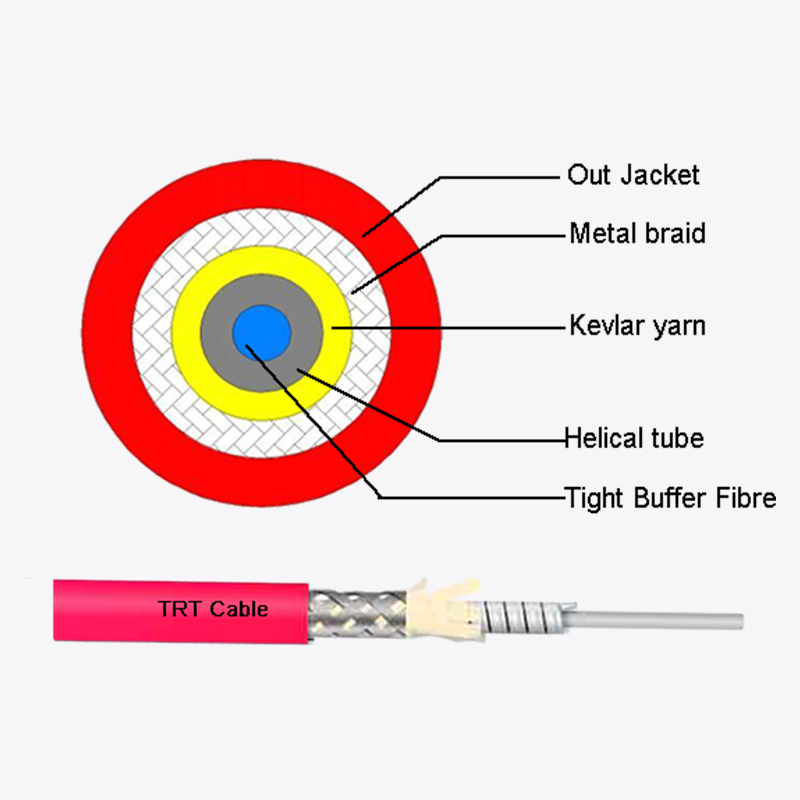
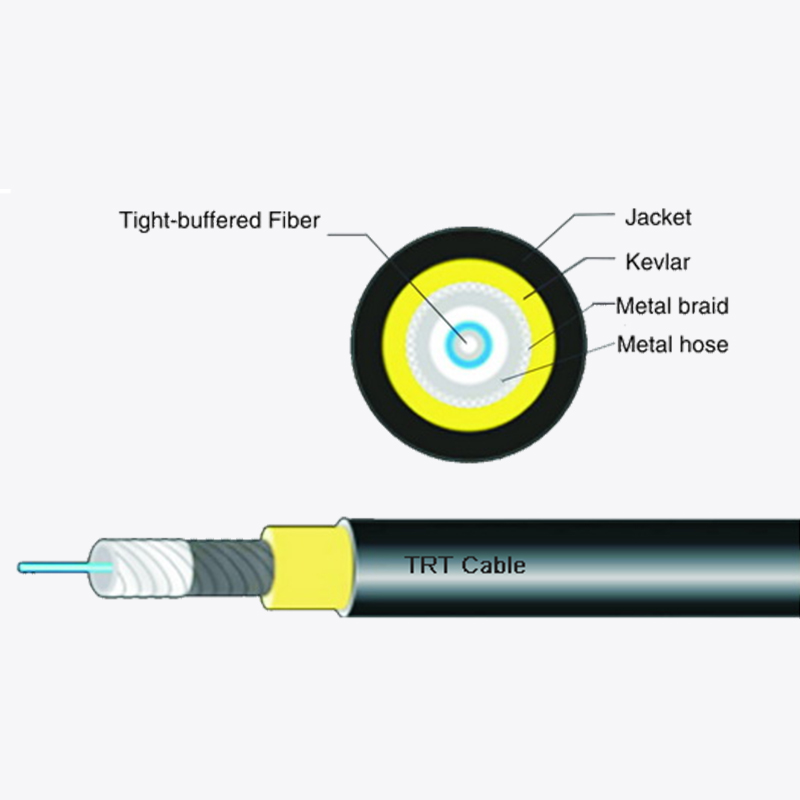
A tight buffer fiber optic cable consists of a core of optical fibers that are tightly buffered, meaning that each individual fiber is coated with a protective layer, often made of a polymer material. This buffer layer is in direct contact with the fiber, providing mechanical strength and protecting it from physical damage. Tight buffer cables are generally designed for indoor use or environments where the cable will experience minimal exposure to harsh conditions.
Key Characteristics:
- Protection: Each fiber is individually buffered, making it resistant to damage from external forces.
- Application: Ideal for environments where cables are installed in controlled indoor settings or where the fiber may need to be flexed or handled frequently.
- Size: Typically smaller in diameter due to the direct buffering around the fiber.
1.2 Loose Tube Fiber Optic Cable Construction
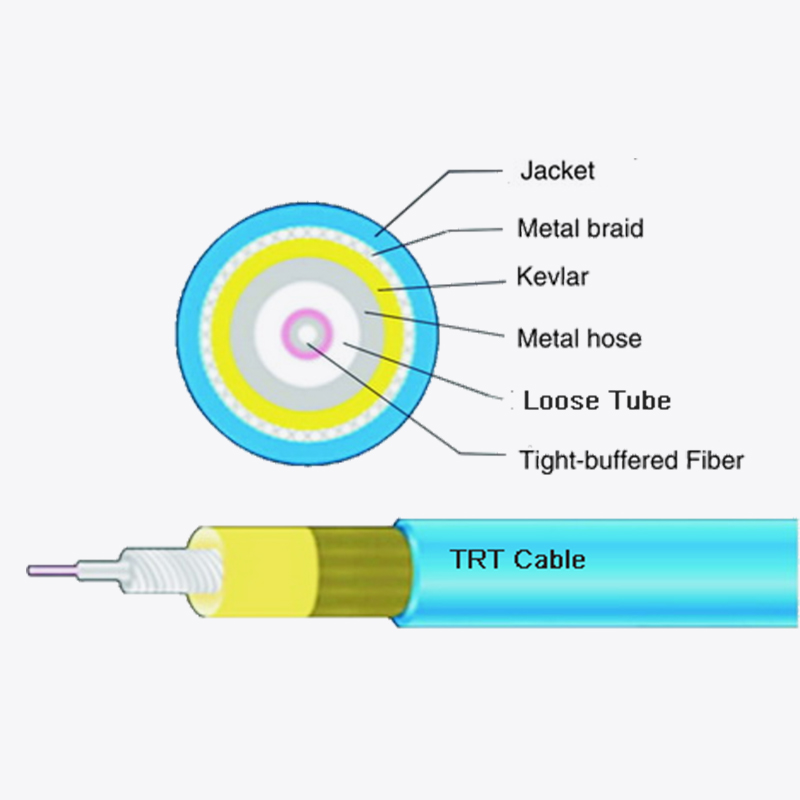
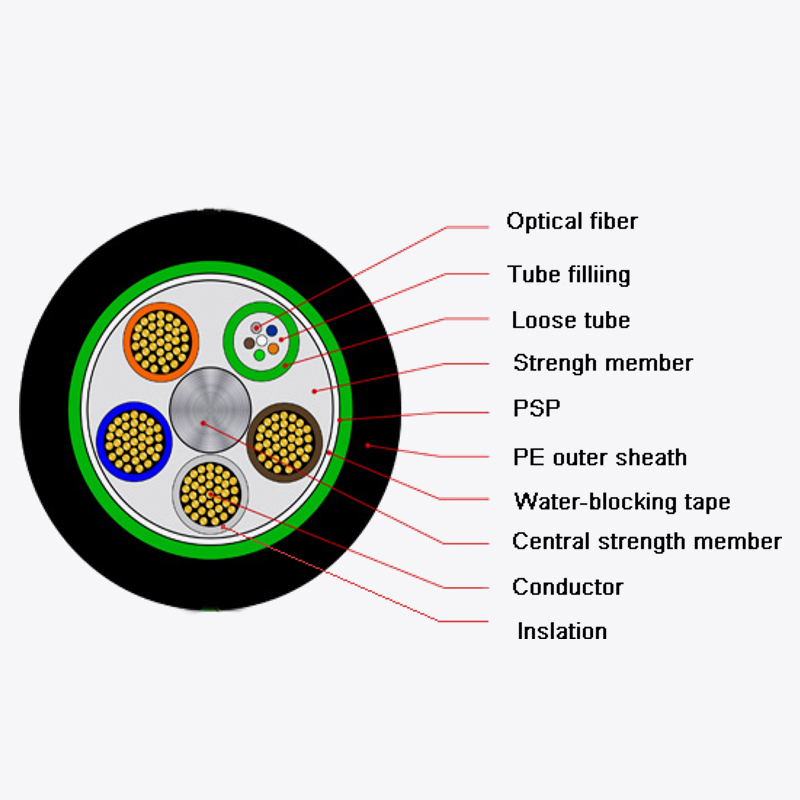
In contrast, loose tube fiber optic cables have fibers that are not directly buffered. Instead, the optical fibers are housed within a protective tube, which is typically filled with a gel or water-resistant material to prevent water ingress. This design allows for more flexibility and is better suited for outdoor or harsh environments, where the cable might be exposed to temperature fluctuations or moisture.
Key Characteristics:
- Protection: The fibers are loosely arranged within the tube, which allows them to move freely, providing additional protection from environmental changes such as temperature and mechanical stress.
- Application: Primarily used in outdoor or underground installations where the cables are exposed to harsh weather conditions, moisture, or chemical exposure.
- Size: The diameter of loose tube cables is typically larger due to the extra protection provided by the tube.
2. Performance Characteristics
2.1 Mechanical Strength
-
Tight Buffer Fiber Optic Cable: The mechanical strength of tight buffer cables comes from the direct coating of each fiber. This makes them well-suited for environments where mechanical stress is less of a concern. However, tight buffer cables have less flexibility compared to loose tube cables.
-
Loose Tube Fiber Optic Cable: Loose tube cables are more flexible because the fibers are free to move within the tube. This added flexibility allows loose tube cables to perform better in installations where the cable will be subjected to mechanical stress or temperature-induced expansion and contraction.
2.2 Environmental Resistance
-
Tight Buffer Fiber Optic Cable: While tight buffer cables offer a good level of protection against environmental factors such as moisture, they are less suited for extreme outdoor conditions. Tight buffer cables may be vulnerable to temperature-induced expansion and contraction, which could affect their performance in harsh outdoor environments.
-
Loose Tube Fiber Optic Cable: Loose tube cables are designed for tougher environments. The protective gel or water-resistant filling in the tube helps to prevent water ingress and makes them more suitable for outdoor applications. Loose tube cables can also handle large temperature fluctuations, making them ideal for use in underground or aerial installations.
2.3 Installation Considerations
-
Tight Buffer Fiber Optic Cable: These cables are more straightforward to install in controlled environments. Their small size and flexibility make them easier to route and terminate in offices, data centers, or buildings where there is limited space and fewer external threats.
-
Loose Tube Fiber Optic Cable: Installation of loose tube cables can be more complex due to their larger size and the need to protect them from potential moisture exposure. However, their robustness makes them ideal for long-distance installations, such as those running underground or between buildings in outdoor conditions.
3. Cost and Maintenance Considerations
3.1 Cost
-
Tight Buffer Fiber Optic Cable: Due to their simpler construction, tight buffer cables are often less expensive compared to loose tube cables. This makes them a cost-effective option for short-distance, indoor applications.
-
Loose Tube Fiber Optic Cable: Loose tube cables are generally more expensive due to their enhanced protection and construction materials, which are specifically designed to withstand more challenging environments.
3.2 Maintenance and Longevity
-
Tight Buffer Fiber Optic Cable: The maintenance of tight buffer cables is relatively simple, especially when used in indoor environments. However, these cables may not perform as well in extreme conditions, and damage to the cable could potentially affect the entire length of the fiber.
-
Loose Tube Fiber Optic Cable: Loose tube cables require more extensive maintenance due to their complex design and the potential for water ingress. However, their durability in outdoor settings and ability to handle mechanical stress make them more reliable for long-term use in harsh conditions.
4. Applications: Choosing the Right Cable
4.1 Tight Buffer Fiber Optic Cable Applications
Tight buffer cables are ideal for:
- Indoor Networks: Particularly in offices, data centers, and buildings with controlled environments.
- High-Density Areas: Where space is limited, and the cable needs to be flexible and compact.
- Shorter Distances: When the fiber optic cable does not need to withstand significant environmental stresses.
4.2 Loose Tube Fiber Optic Cable Applications
Loose tube cables are best suited for:
- Outdoor and Underground Installations: Where exposure to moisture, temperature fluctuations, and physical stress is likely.
- Long-Distance Fiber Optic Links: Ideal for spanning large distances between locations, especially in rugged terrains.
- Telecommunication Networks: Used in aerial or underground systems where cables are exposed to challenging environmental conditions.
5. Comparison Table: Tight Buffer vs. Loose Tube Fiber Optic Cables
| Feature | Tight Buffer Fiber Optic Cable | Loose Tube Fiber Optic Cable |
|---|---|---|
| Construction | Each fiber individually buffered | Fibers in protective tubes |
| Flexibility | Less flexible, suited for indoor use | More flexible, suited for outdoor use |
| Environmental Protection | Limited protection from environmental factors | High resistance to moisture, temperature fluctuations, and physical stress |
| Application Area | Indoor installations, data centers, short distances | Outdoor, underground, and long-distance installations |
| Installation | Easier to install in controlled environments | More complex, suitable for harsh environments |
| Cost | Generally lower cost | Typically more expensive |
| Maintenance | Simple, minimal maintenance | Requires more care due to complex design |
Conclusion
In summary, both tight buffer fiber optic cables and loose tube fiber optic cables offer distinct advantages and are suited for different applications. Tight buffer cables excel in indoor environments where space is constrained and mechanical stress is minimal. On the other hand, loose tube cables are designed for outdoor or challenging installations where environmental resilience and flexibility are paramount.
Understanding these differences ensures that engineers and systems integrators can select the right type of fiber optic cable based on the specific needs of their network infrastructure, whether it be for short-distance, indoor use or long-distance, outdoor applications.
FAQ
-
What’s the main difference between tight buffer and loose tube fiber optic cables?
- The main difference lies in the construction. Tight buffer cables have individual fibers coated with protective buffering material, whereas loose tube cables contain fibers housed within protective tubes.
-
Can tight buffer cables be used outdoors?
- While tight buffer cables offer some environmental protection, they are generally not suitable for outdoor or harsh environments due to their limited resistance to temperature fluctuations and moisture.
-
What are the cost differences between tight buffer and loose tube cables?
- Tight buffer cables are generally more cost-effective due to their simpler construction, whereas loose tube cables are more expensive due to their enhanced protection features.
-
Which cable type is better for long-distance installations?
- Loose tube cables are better suited for long-distance applications, especially in outdoor environments, due to their flexibility and ability to withstand harsh conditions.
References
- Fiber Optic Association. (2021). Fiber Optic Cables: Construction, Installation, and Maintenance. FOA Publications.
- Smith, J. (2019). Outdoor Fiber Optic Cables: Applications and Considerations. Fiber Tech Press.
- Anderson, M. (2020). A Guide to Fiber Optic Cable Types and Their Applications. Network Solutions Journal.
 Address:Zhong'an Road, Puzhuang Town, Suzhou City, Jiangsu Prov., China
 Phone:+86-189 1350 1815
 Tel:+86-512-66392923
 Fax:+86-512-66383830
 Email:[email protected]
 Wechat: xiaobin18913501815
 whatsapp: +86 18913501815

 0
0