
 English
 русский
 Español
 Português
 عربى
عربى


Is fiber optic cable flat or round?
Flat or Round: The Direct Answer
Fiber optic cables are most commonly round in cross-section. The round shape is the standard construction used across the vast majority of fiber optic deployments worldwide — from long-haul telecommunications to data centers and premises installations. However, flat fiber optic cables do exist and serve specific niche purposes. Understanding the difference helps you choose the right cable for your application.
What Is a Round Fiber Optic Cable?
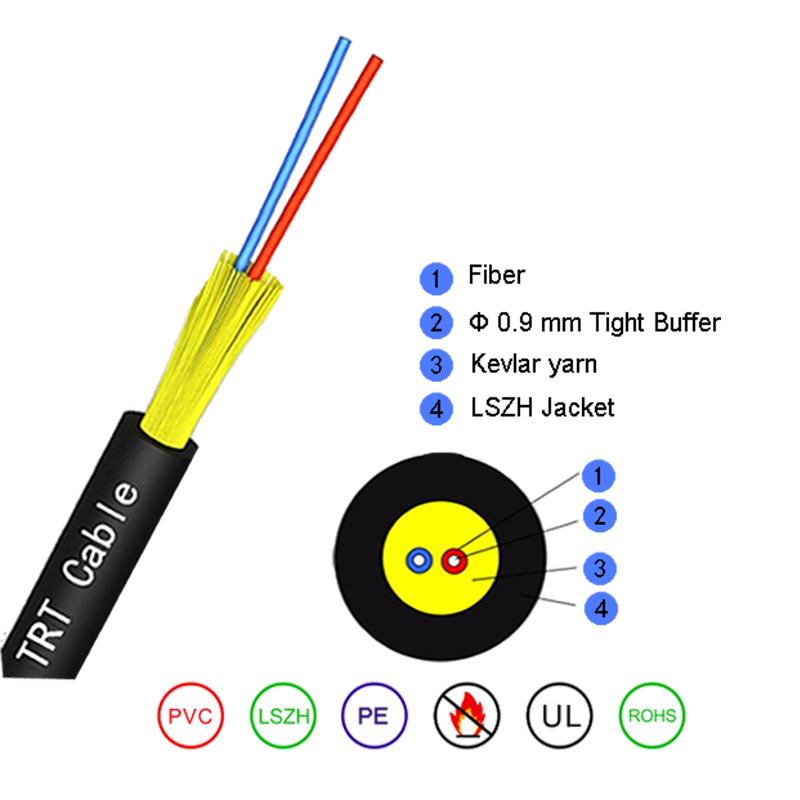
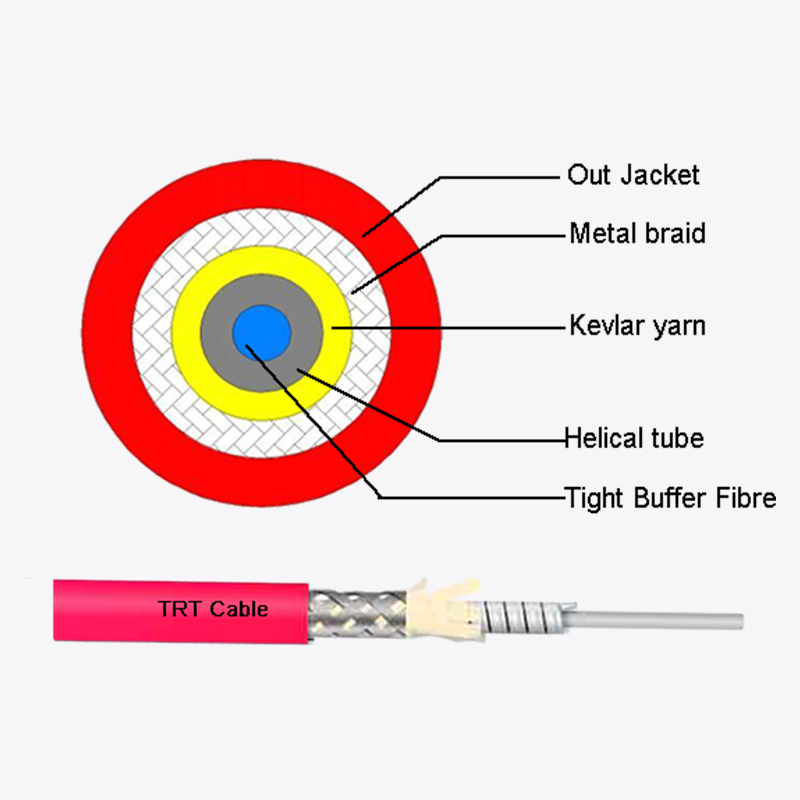
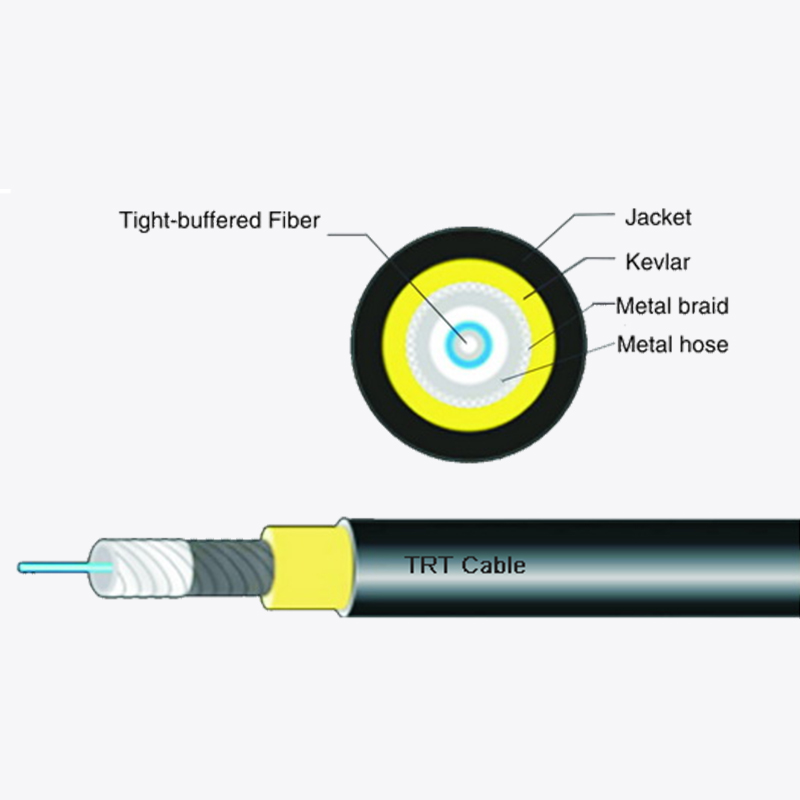
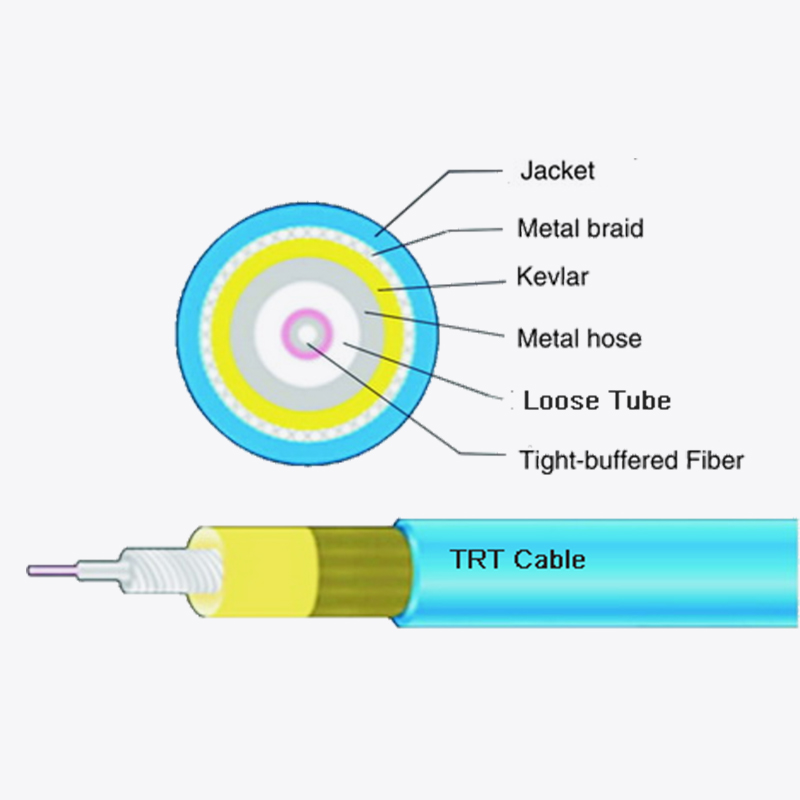
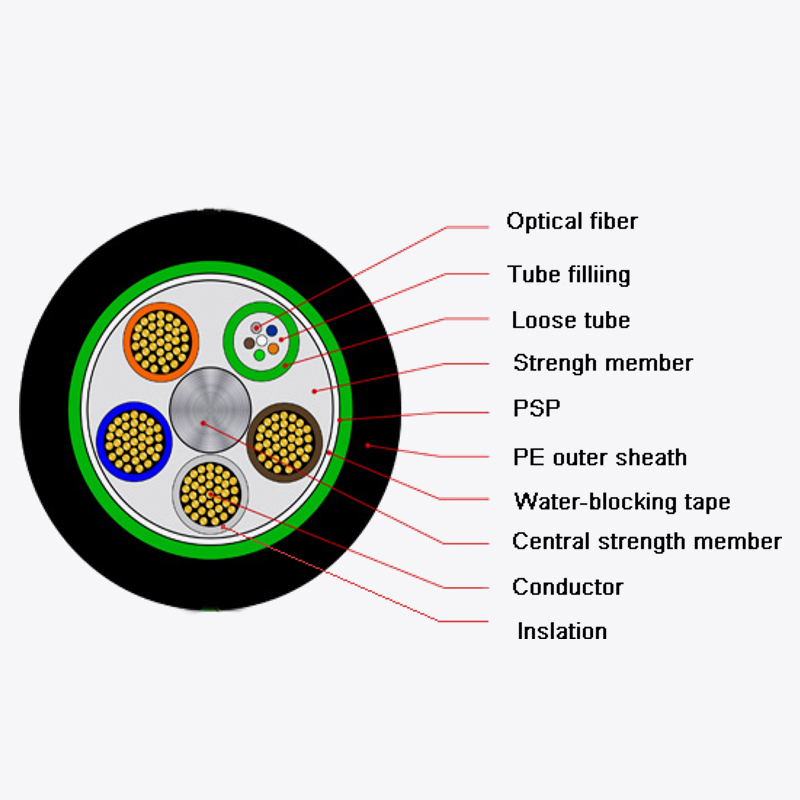
A round fiber optic cable features a cylindrical outer jacket encasing one or more optical fibers, along with strength members (such as aramid yarn or fiberglass rods) and protective buffer layers. This circular construction distributes mechanical stress evenly around the cable, offering superior resistance to crushing, bending, and tensile forces.
Typical structural layers from inside out include:
- Optical fiber core and cladding (glass or plastic)
- Primary coating (acrylate, ~250 µm diameter)
- Tight buffer or loose tube (900 µm or larger)
- Strength members (aramid yarn, FRP rod)
- Outer jacket (PVC, LSZH, or polyethylene)
Round cables are available in single-fiber (simplex/duplex) and multi-fiber configurations, ranging from 2 cores up to 144 cores or more in a single round jacket. Outer diameters typically range from 2 mm for slim patch cords to over 20 mm for heavy armored outdoor cables.
What Is a Flat Fiber Optic Cable?
Flat fiber optic cables — sometimes called ribbon cables or flat drop cables — arrange multiple fibers in a side-by-side planar configuration rather than a cylindrical bundle. The result is a cable with a noticeably rectangular or oval cross-section.
Key characteristics of flat fiber optic cables:
- Ribbon structure: Fibers are bonded in parallel rows, commonly in multiples of 12 (e.g., 12, 24, 48 fibers per ribbon)
- High fiber density: A single flat ribbon cable can pack hundreds of fibers into a compact, low-profile form factor
- Mass fusion splicing: The ribbon format enables simultaneous splicing of 12 or more fibers at once, drastically reducing installation time
- Limited flexibility: The flat structure is less flexible than round cables and more susceptible to damage if bent at sharp angles
Round vs Flat Fiber Optic Cable: Side-by-Side Comparison
| Feature | Round Fiber Optic Cable | Flat Fiber Optic Cable |
| Cross-section shape | Circular | Rectangular / oval |
| Typical fiber count | 1–144+ cores | 12–3456+ cores (ribbon) |
| Flexibility | High | Moderate to low |
| Mechanical protection | Excellent (even stress distribution) | Moderate |
| Installation ease | Versatile, easy to route | Requires careful handling |
| Splicing method | Individual fiber splicing | Mass fusion splicing (12+ at once) |
| Common application | Indoor/outdoor general use | High-density data centers, CO |
| Connector compatibility | All standard connectors (LC, SC, MPO…) | Primarily MPO/MTP connectors |
| Relative cost | Standard | Higher (specialized tooling needed) |
Why Round Fiber Optic Cables Are the Industry Default
Round fiber optic cables dominate the market for good reason. Their geometry provides inherent structural advantages that make them suitable for nearly every environment:
- Uniform bend radius management: Circular construction allows the cable to be bent in any direction without preferential stress, protecting fibers from microbending losses
- Compatibility with standard hardware: Round cables fit easily into conduits, cable trays, patch panels, and standard conduit fittings — typically circular conduits sized to IEC or TIA standards
- Wide environmental range: With appropriate jacket materials (LSZH, PE, armored), round cables operate reliably from -40°C to +70°C and withstand UV, moisture, and rodent threats
- Ease of termination: Individual fibers can be terminated with any standard connector type at field or factory level
- Broad availability: Available in singlemode (OS2), multimode (OM3, OM4, OM5), and specialty variants globally
When Flat Fiber Optic Cable Makes More Sense
Flat ribbon cables offer compelling advantages in specific, high-demand scenarios where fiber density and splicing speed are prioritized over routing flexibility:
High-Density Central Offices and Data Centers
When a facility requires thousands of fiber connections within a limited footprint, flat ribbon cables can deliver up to 3,456 fibers in a single 4-inch duct — a density level unachievable with conventional round designs. This is critical for hyperscale data center operators managing exponential bandwidth growth.
Rapid Mass Splicing Deployments
In large fiber-to-the-home (FTTH) rollouts or backbone upgrades, flat ribbon cables allow mass fusion splicers to join 12 fibers in a single splice cycle of approximately 10–15 seconds, compared to individual splicing of round cables. A contractor deploying a 96-fiber cable can complete all splices roughly 8 times faster using ribbon construction.
Under-Carpet and Low-Profile Indoor Runs
Some flat fiber drop cables are designed to sit discretely under carpet tiles or along baseboards in office environments, where a round cable's profile would be obtrusive. These are typically 2–4 mm thick and carry 1–2 fibers.
Indoor Round Fiber Optic Cable: Key Specifications to Know
For most building infrastructure and premises cabling projects, indoor round fiber optic cables are the go-to solution. Here are the specification parameters that matter most:
- Fiber type: OS2 singlemode (9/125 µm) for long runs; OM3/OM4 multimode (50/125 µm) for short high-speed links up to 400 m
- Jacket material: LSZH (Low Smoke Zero Halogen) is required in plenum or public spaces per fire safety codes such as IEC 60332
- Fiber count: 2, 4, 6, 8, 12, 24 cores are the most common configurations for indoor distribution cables
- Minimum bend radius: Typically 10× cable outer diameter under load; 20× outer diameter for long-term static bends
- Tensile strength: Standard indoor cables handle 200–600 N depending on strength member design
- Operating temperature: Most rated for -20°C to +60°C in standard indoor environments
How to Choose Between Round and Flat Fiber Optic Cable
Use the following decision criteria to select the right cable type for your project:
- Fiber count under 144: Round cable is almost always the practical choice — easier to route, terminate, and maintain.
- Fiber count 288 and above: Evaluate flat ribbon cables if your pathway space is constrained and you have access to mass fusion splicing equipment.
- Frequent moves, adds, changes: Round cables with individually buffered fibers are far more manageable in active environments.
- Budget sensitivity: Round cables require less specialized tooling. Mass fusion splicers for ribbon cable can cost 3–5× more than standard single-fiber splicers.
- Outdoor or armored requirements: Round cables are the only practical option — flat cables lack the robust mechanical protection needed for direct burial or aerial deployment.
FAQ
Q1: Are all fiber optic cables round?
No. While round cables are the dominant form factor, flat ribbon cables exist for high-density and mass-splicing applications. However, for the vast majority of installations, round cables are used.
Q2: Can flat fiber optic cable be used outdoors?
Generally no. Flat ribbon cables are designed for controlled indoor or duct environments. Outdoor applications require the robust mechanical protection that round armored cables provide.
Q3: What is the standard outer diameter of an indoor round fiber optic cable?
It varies by fiber count and construction. A 2-core tight-buffered round cable is typically 3–5 mm in diameter, while a 24-core distribution cable may be 8–12 mm.
Q4: Is round or flat fiber optic cable better for data centers?
Both are used. Round cables with MPO connectors handle most structured cabling. Flat ribbon cables are preferred in ultra-high-density zones where thousands of fibers must be managed in minimal space.
Q5: Does the shape of the cable affect optical performance?
No. The shape of the outer jacket does not affect the optical transmission characteristics. Performance is determined by fiber type, quality, and proper installation — not cable geometry.
Q6: Can round fiber optic cables be used under carpet?
Standard round cables are generally too thick and rigid for under-carpet use. Specialty flat or micro fiber drop cables (2–3 mm thin) are designed specifically for that purpose.
 Address:Zhong'an Road, Puzhuang Town, Suzhou City, Jiangsu Prov., China
 Phone:+86-189 1350 1815
 Tel:+86-512-66392923
 Fax:+86-512-66383830
 Email:[email protected]
 Wechat: xiaobin18913501815
 whatsapp: +86 18913501815

 0
0