
 English
 русский
 Español
 Português
 عربى
عربى


How to Choose the Right Ethernet Cable for Your Network Needs
Understanding Ethernet Cables and Their Role in Modern Networks
The foundation of any reliable network infrastructure begins with selecting the appropriate connectivity solution. Whether you are establishing a home network, upgrading a corporate office, or deploying a data center, understanding the distinctions between different cable types is essential. Traditional copper-based ethernet cables have served as the backbone of networking for decades, but as bandwidth demands continue to escalate, the industry is increasingly turning toward fiber-based solutions for superior performance and future-proofing.
Network cables serve as the physical medium through which data travels across your infrastructure. The choice between conventional copper ethernet cables and advanced fiber optic cable for internet applications depends on numerous factors including transmission distance, environmental conditions, budget constraints, and performance requirements. Each cable type possesses distinct advantages that make it suitable for specific applications and scenarios.
The Evolution of Network Connectivity
Network technology has evolved dramatically over the past two decades. Early ethernet implementations operated at speeds of 10 Megabits per second, a standard that seemed revolutionary at the time. Today, gigabit ethernet delivering 1,000 Megabits per second has become the minimum expectation for most applications. As organizations demand increasingly higher speeds—10 gigabits, 25 gigabits, and beyond—the limitations of copper-based transmission become apparent, creating the necessity for superior alternatives.
Why Cable Selection Matters
Selecting the wrong cable type can result in performance degradation, increased latency, and potential system failures. Additionally, improper cable selection can lead to costly infrastructure replacements and extended downtime. Understanding your specific requirements ensures that your network investment provides reliable service and scales effectively as your organization grows.
Traditional Copper Ethernet Cables: Types and Specifications
Copper-based ethernet cables remain the most widely deployed networking medium globally. These cables transmit data through electrical signals traveling across twisted pair conductors, a design that has proven effective for moderate distances and speeds. Understanding the different categories of copper ethernet cables is crucial for making informed decisions about network infrastructure.
Common Ethernet Cable Categories
The ethernet cable category system provides a standardized framework for classifying cables based on their performance capabilities. Each category iteration represents improvements in bandwidth capacity, shielding effectiveness, and interference resistance. The following categories represent the most relevant options for contemporary network deployments:
Category 5e (Enhanced Category 5)
Category 5e cables support data transmission at speeds up to 1 gigabit per second over distances reaching 100 meters. These cables feature four twisted pairs of copper wire enclosed in a protective sheath and offer adequate performance for general office environments and residential applications. While relatively economical, Category 5e cables are becoming obsolete as organizations seek higher bandwidth capacity. The cable structure provides basic protection against electromagnetic interference through twisted pair design, eliminating the need for additional shielding in most standard environments.
Category 6 (Cat 6)
Category 6 cables represent a significant advancement over Cat 5e, supporting transmission speeds up to 10 gigabits per second over shorter distances of approximately 55 meters. These cables feature enhanced shielding and improved conductor construction that reduces crosstalk and external interference. Cat 6 cables are manufactured with a separator that maintains proper spacing between twisted pairs, contributing to superior signal integrity. This category has become the standard for new installations in educational institutions, commercial facilities, and modern residential environments where future-proofing is a consideration.
Category 6A (Augmented Category 6)
Category 6A cables support 10 gigabit speeds across the full 100-meter distance, making them suitable for demanding applications including data center infrastructure and high-performance computing environments. The enhanced shielding in Cat 6A cables provides superior protection against electromagnetic interference from nearby power lines and radio frequency sources. This category represents a substantial investment compared to Cat 6, but proves economical when supporting mission-critical applications where speed and reliability directly impact operational efficiency and profitability.
Category 7 and Beyond
Category 7 cables support 10 gigabit transmission with enhanced shielding characteristics that make them particularly suitable for environments with high electromagnetic activity. These cables feature individual shielding around each twisted pair, providing exceptional protection against signal degradation. Emerging categories continue to push the boundaries of copper-based technology, but for most organizations seeking maximum future-readiness, the performance ceiling of copper technology becomes increasingly apparent as bandwidth requirements escalate beyond the several hundred gigabit threshold.
Shielded Versus Unshielded Cables
Ethernet cables are available in both shielded (STP) and unshielded (UTP) configurations. Unshielded cables rely entirely on twisted pair design for interference protection and offer advantages in cost and installation simplicity. Shielded cables add metallic foil or braided shielding around the twisted pairs, providing enhanced protection against electromagnetic interference. The selection between shielded and unshielded cables depends on environmental factors, with shielded cables recommended for installations in close proximity to high-power electrical equipment, industrial machinery, or radio transmission systems.
Fiber Optic Cables: The Next Generation of Network Infrastructure
As network demands escalate beyond the practical limitations of copper technology, fiber optic technology represents the future of telecommunications infrastructure. Fiber optic cables transmit data using light signals traveling through glass or plastic cores, enabling dramatically higher speeds, greater distances, and superior immunity to electromagnetic interference. Understanding the advantages and applications of fiber optic solutions is essential for organizations planning long-term network strategies.
Fundamental Advantages of Fiber Optic Technology
Fiber optic cables offer several compelling advantages that justify their increasing adoption across diverse applications. These benefits extend beyond raw speed, encompassing factors that impact total cost of ownership, reliability, and long-term scalability. Organizations investing in fiber infrastructure today position themselves to meet bandwidth demands for decades without requiring complete infrastructure replacement.
- Exceptional bandwidth capacity: Modern fiber cables support terabit-scale transmission, far exceeding copper limitations
- Extended transmission distances: Fiber signals travel kilometers without signal regeneration, compared to meter-scale copper limitations
- Complete electromagnetic immunity: Light signals eliminate vulnerability to electromagnetic interference from power lines and radio sources
- Superior security characteristics: Light-based transmission eliminates risk of signal interception through conventional methods
- Reduced physical footprint: Fiber cables deliver higher bandwidth using significantly smaller cable diameters than equivalent copper solutions
- Improved longevity: Glass fiber cores resist corrosion and degradation, providing multi-decade service life
Types of Fiber Optic Cables
Fiber optic cables are categorized based on their core characteristics and deployment environments. Understanding these distinctions enables proper cable selection for specific applications and environmental conditions.
Single-Mode Fiber (SMF)
Single-mode fiber features an extremely small core diameter, typically around 8 to 10 micrometers, allowing only one light path to propagate through the cable. This design eliminates modal dispersion, the phenomenon where multiple light paths traveling at different speeds cause signal degradation over long distances. Single-mode fiber enables transmission distances exceeding 40 kilometers without signal regeneration, making it the preferred choice for long-distance telecommunications, backbone infrastructure, and metropolitan area networks. The technology achieves transmission speeds ranging from 10 gigabits to terabit-scale capacities, depending on the optical transmission equipment employed.
Multi-Mode Fiber (MMF)
Multi-mode fiber features a larger core diameter, typically 50 or 62.5 micrometers, permitting multiple light paths to propagate simultaneously. While this design supports shorter transmission distances compared to single-mode fiber—typically up to 2 kilometers—multi-mode fiber offers advantages in cost and installation simplicity due to less stringent connector requirements. Multi-mode fiber serves effectively for campus networks, building backbones, and data center interconnections where distance requirements remain moderate. The larger core diameter accommodates light sources with lower costs and broader spectral characteristics, reducing overall system expenses compared to single-mode deployments.
Indoor Fiber Optic Cables
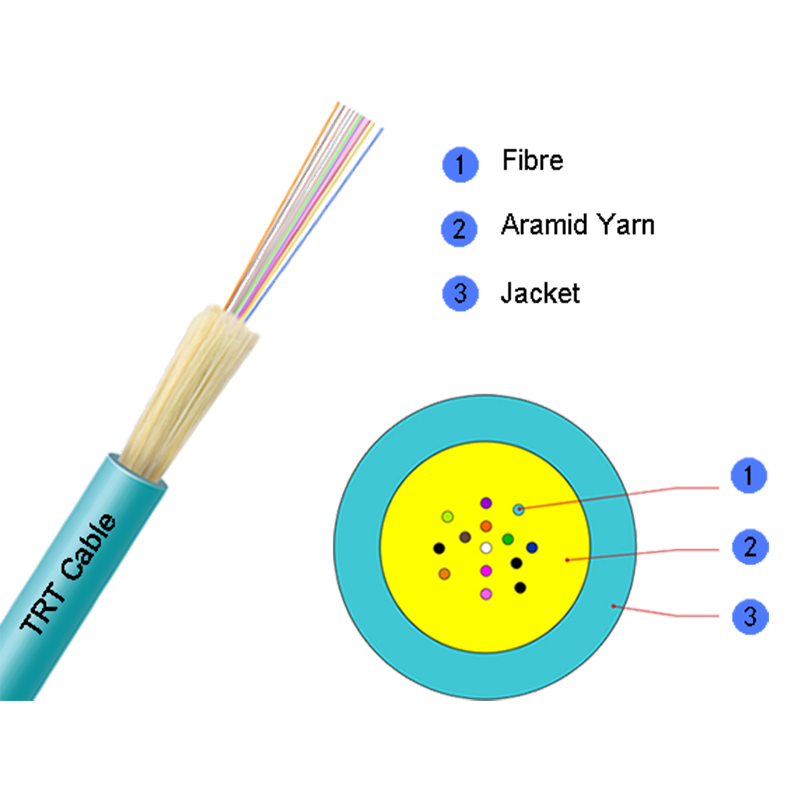
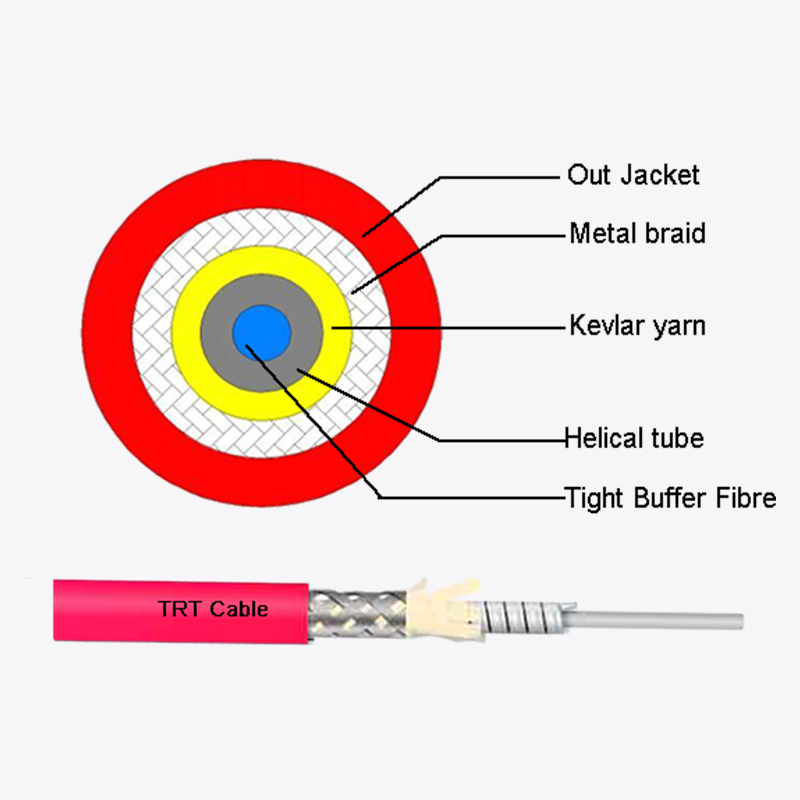
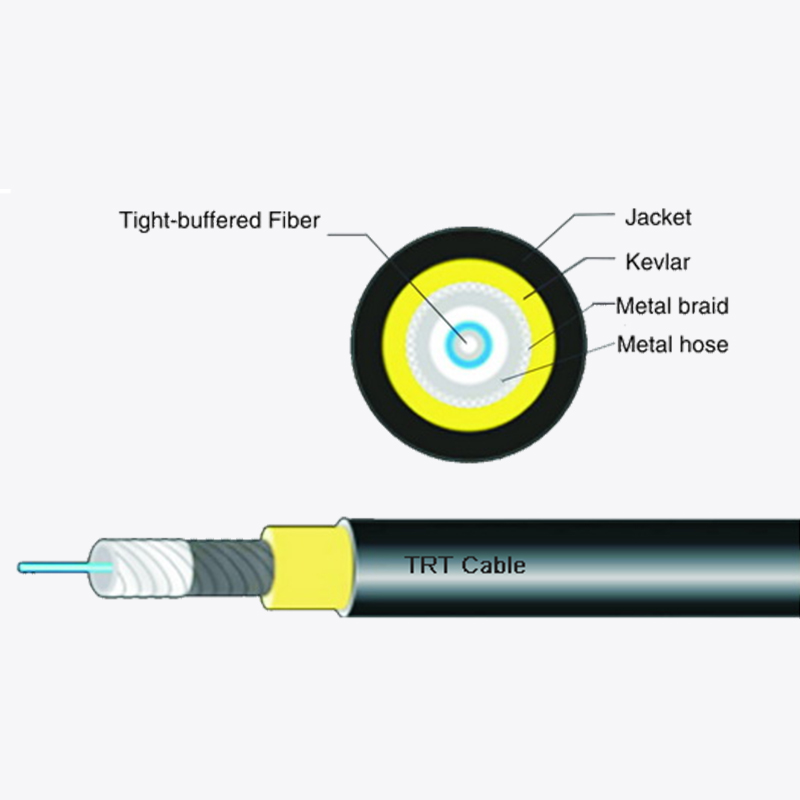
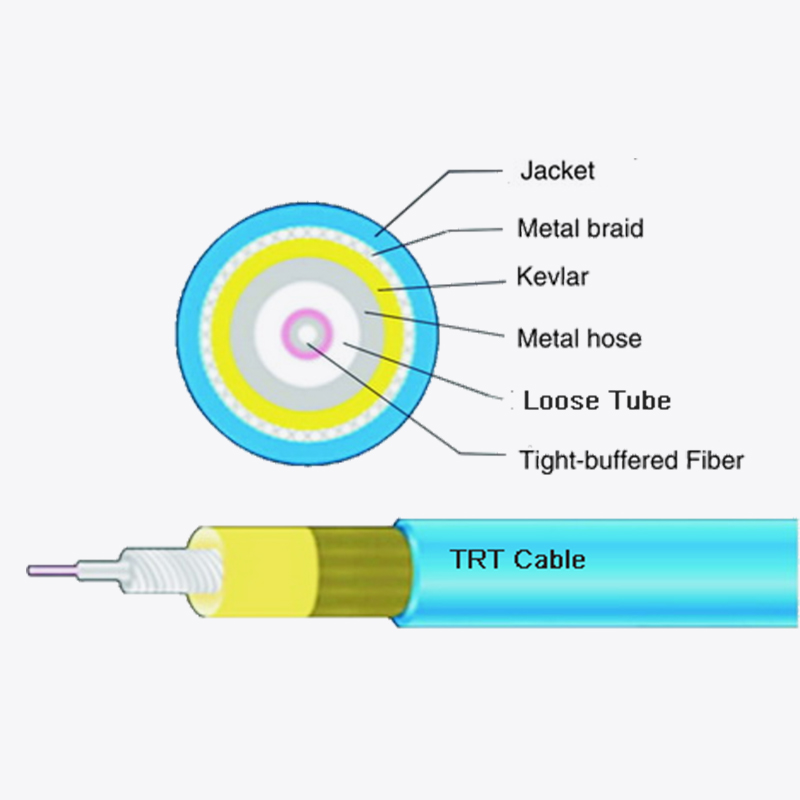
Indoor fiber optic cables are engineered specifically for deployment within building environments, featuring flame-retardant jacket materials that comply with building fire safety codes. These cables typically feature tighter bend radius characteristics compared to outdoor cables, enabling installation through conduit systems and cable trays common in commercial buildings. Indoor fiber cables come in various configurations including tight buffer designs for individual fiber protection and loose tube designs for applications requiring enhanced fiber protection. The optic fiber cable solutions designed for indoor use balance performance requirements with practical installation constraints, making them ideal for enterprise networks, educational institutions, and modern commercial facilities.
Outdoor Fiber Optic Cables
Outdoor fiber optic cables incorporate protective features designed to withstand environmental stressors including ultraviolet radiation, temperature fluctuations, moisture ingress, and mechanical stress. These cables feature reinforced jacket materials, armor protection, and moisture barriers that maintain signal integrity under challenging conditions. Outdoor fiber cables serve applications including inter-building backbone connections, campus networks spanning multiple facilities, and provider-grade telecommunications infrastructure. The enhanced protective characteristics of outdoor cables justify additional costs when exposure to environmental elements is anticipated, protecting network investments from premature degradation and costly service interruptions.
Selecting the Right Cable for Your Specific Application
Choosing appropriate network cables requires systematic evaluation of multiple factors specific to your deployment scenario. This decision impacts not only immediate network performance but also the scalability and longevity of your infrastructure investment.
Distance Considerations
Transmission distance represents a critical factor influencing cable selection. Copper ethernet cables experience signal degradation with distance, limiting practical transmission to 100 meters in standard configurations. For installations exceeding these distances—common in campus environments, industrial facilities, or large commercial buildings—fiber optic technology becomes the appropriate solution. Fiber cables support transmission distances measured in kilometers, enabling network architectures previously impossible with copper-only solutions. When planning network infrastructure, calculating accurate distance requirements prevents costly infrastructure upgrades or signal regeneration equipment installations.
Bandwidth and Speed Requirements
Current and anticipated bandwidth requirements should drive cable selection. Organizations currently operating at gigabit speeds should consider that bandwidth demands typically increase at 50 percent annually, suggesting that cables adequate today may prove limiting within 2-3 years. Selecting Category 6A copper cables or fiber optic solutions provides insurance against premature technological obsolescence. For data centers, content delivery networks, and bandwidth-intensive applications, fiber optic cables offer future-proofing extending 10-20 years into the future without requiring core infrastructure replacement.
Environmental Factors
Environmental conditions significantly impact cable performance and longevity. Indoor office environments with controlled temperature and humidity enable the use of standard unshielded copper cables. Industrial facilities with heavy electrical machinery, radio frequency sources, or significant electromagnetic noise necessitate shielded copper cables or fiber optic solutions offering complete electromagnetic immunity. Outdoor installations require cables with enhanced environmental protection, including UV-resistant jackets, moisture barriers, and mechanical armor. Evaluating environmental factors prevents premature cable failure and associated service disruptions.
Budget Constraints and Total Cost of Ownership
While fiber optic cables involve higher initial material costs compared to copper alternatives, total cost of ownership analysis frequently favors fiber technology. Fiber cables support greater distances without amplification, reducing the need for expensive repeater equipment. The reduced maintenance requirements and extended service life of fiber infrastructure—often exceeding 25 years—distribute costs across significantly longer periods compared to copper systems typically requiring replacement every 10-15 years. Organizations should evaluate not only cable material costs but also installation labor, connector equipment, maintenance requirements, and anticipated replacement cycles when comparing alternatives.
Installation and Maintenance Considerations
Installation complexity varies significantly between cable types. Copper cables offer simpler installation with fewer connector requirements and greater tolerance for field termination errors. Fiber cable installation requires more precision, specialized tools, and trained technicians, increasing labor costs. However, once installed, fiber cables require minimal maintenance, while copper cables may require ongoing signal monitoring and occasional replacement due to environmental degradation. For organizations with limited technical expertise, copper solutions may prove practical for smaller deployments, while larger or mission-critical installations justify the investment in professional fiber infrastructure.
Network Cable Performance Comparison and Practical Applications
Comparing the performance characteristics of different cable types within specific application contexts enables data-driven decision-making. The following table presents key performance metrics across commonly deployed cable types, illustrating the practical differences between solutions:
| Cable Type | Maximum Speed | Distance | EMI Immunity | Installation Complexity |
| Category 5e | 1 Gbps | 100m | Moderate | Low |
| Category 6 | 10 Gbps (55m) | 100m | Good | Low |
| Category 6A | 10 Gbps | 100m | Excellent | Medium |
| Multi-Mode Fiber | 10-40 Gbps | 2km | Perfect | High |
| Single-Mode Fiber | 40+ Gbps | 40km+ | Perfect | High |
Small Office and Home Network Installations
Small office and home network environments typically feature distances under 100 meters with moderate bandwidth requirements. Category 6 or Category 5e copper ethernet cables adequately serve these applications, balancing performance with cost-effectiveness. These installations rarely expose cables to significant electromagnetic interference, eliminating the need for expensive shielded alternatives. Standard unshielded twisted pair cables deliver gigabit speeds suitable for web browsing, email, video conferencing, and general productivity applications. Only in scenarios where very high-bandwidth activities—such as local video editing or large file transfers—dominate network usage should organizations consider fiber optic upgrades for small installations.
Enterprise and Data Center Deployments
Large enterprise networks and data center facilities benefit substantially from fiber optic infrastructure. These environments demand high bandwidth, feature distances exceeding copper limitations, and justify the expense of professional fiber installations. Multi-mode fiber serves effectively for intra-data-center connections and campus backbone networks, while single-mode fiber enables long-distance connections between geographically dispersed facilities. Organizations deploying fiber infrastructure position themselves to support bandwidth-intensive applications including virtualization, cloud computing, and real-time data analytics without requiring core infrastructure replacement as technology evolves. The investment in professional fiber installation pays dividends through improved reliability, reduced maintenance costs, and extended infrastructure lifespan.
Industrial and Harsh Environment Installations
Industrial facilities, manufacturing plants, and outdoor environments present electromagnetic and environmental challenges that severely stress copper-based networking. Heavy electrical machinery generates electromagnetic interference that degrades copper cable signals, while outdoor exposure subjects cables to UV radiation, temperature extremes, and moisture ingress. Fiber optic cables excel in these environments, offering complete immunity to electromagnetic interference and superior protection against environmental degradation. The investment in fiber infrastructure proves economical in harsh environments, where frequent copper cable replacement and network troubleshooting would otherwise consume maintenance budgets. Industrial automation, remote facility monitoring, and process control systems increasingly rely on fiber connectivity for reliable operation.
Installation Best Practices and Maintenance Guidelines
Proper cable installation and maintenance directly impacts network reliability and longevity. Following established best practices prevents performance degradation and extends infrastructure lifespan significantly.
Copper Cable Installation Practices
Copper ethernet cables tolerate installation conditions more forgivingly than fiber alternatives, but proper procedures remain essential. Cables should maintain minimum bend radius specifications—typically 4-5 times the cable diameter—to avoid conductor damage and signal degradation. Avoiding tight bundling with power cables prevents electromagnetic interference coupling. Cable runs should utilize cable trays or conduit systems that protect against mechanical damage. Termination connections require proper compression or punch-down techniques ensuring secure contact without damaging conductors. Cable testing following installation verifies performance specifications before placing systems into production, identifying installation errors before they impact operations.
Fiber Optic Cable Installation Practices
Fiber installation requires greater attention to detail but rewards proper execution with superior reliability. Cable bend radius specifications—typically 20-30 times the cable diameter—must be respected strictly to avoid fiber core microbending that causes signal loss. Professional installation by trained technicians experienced with fiber systems prevents costly mistakes. Cable pulling requires specific pulling lubrication and controlled tension techniques protecting fiber integrity. Connector termination demands specialized tools and meticulous cleanliness standards, as microscopic dust particles on connector faces cause unacceptable signal loss. Field testing using optical loss measurement equipment verifies cable performance immediately following installation, identifying problems before systems enter production.
Ongoing Maintenance and Monitoring
Network cable infrastructure requires periodic inspection and testing to identify emerging problems before service interruptions occur. Copper cable installations should be inspected annually for signs of physical damage, moisture ingress, or connector corrosion. Cable testing equipment should periodically verify performance against original baseline measurements, identifying degradation trends. Fiber optic systems benefit from scheduled optical loss measurements that detect developing problems long before total signal failure. Maintaining detailed cable documentation including route maps, splice locations, and performance baseline data significantly streamlines troubleshooting when problems arise.
Future Trends in Network Cable Technology
Network technology continues evolving rapidly, with emerging standards and installation practices reshaping infrastructure requirements. Awareness of these trends enables forward-thinking investment decisions that maximize infrastructure longevity.
Higher-Speed Fiber Deployments
Telecommunications standards bodies continuously develop specifications supporting higher transmission speeds. Current deployments reaching 400 gigabits per second already exist in advanced networks, with specifications supporting terabit-scale transmission under active development. Fiber optic cables provide the physical foundation enabling these advances, as copper technology approaches fundamental physical limitations preventing further speed increases. Organizations deploying fiber infrastructure today position themselves to leverage these advances through equipment upgrades alone, without requiring cable infrastructure replacement.
Increased Fiber Adoption in Enterprise Networks
Industry trends demonstrate accelerating fiber adoption in enterprise networks traditionally reliant on copper technology. Cost reductions in fiber equipment, increased standardization of fiber connectivity, and improved technician training are democratizing fiber technology for organizations of all sizes. Forward-thinking enterprises implementing fiber infrastructure today reduce long-term operational costs while positioning themselves to leverage advanced network capabilities driving competitive advantage.
Sustainable Infrastructure Development
Environmental considerations increasingly influence infrastructure decisions. Fiber optic cables, with their multi-decade service life and reduced replacement frequency, demonstrate superior environmental profiles compared to copper alternatives requiring more frequent replacement. The reduced energy consumption of fiber-based data transmission compared to electrical alternatives contributes to sustainability objectives. Organizations prioritizing environmental responsibility increasingly recognize fiber infrastructure as aligned with long-term corporate sustainability commitments.
Frequently Asked Questions About Network Cables
Q1: What is the practical difference between Category 6 and Category 6A cables?
Category 6A cables support 10 gigabit transmission across the full 100-meter distance, while Category 6 supports 10 gigabits only up to 55 meters. Category 6A features enhanced shielding reducing crosstalk and electromagnetic interference, justifying higher costs when full-distance gigabit transmission is required. For most office installations under 55 meters, Category 6 cables provide adequate performance at lower cost.
Q2: Can fiber optic cables be installed in standard conduit alongside copper cables?
Yes, fiber optic cables can be installed in shared conduit with copper cables. The light-based transmission of fiber cables makes them immune to electromagnetic interference generated by copper cables, eliminating the concerns that prevent copper cables from sharing conduit with high-power electrical lines. However, separate conduit remains preferable during new installations to prevent future complications and simplify maintenance activities.
Q3: How do I know if my current cables can support the speeds my network equipment provides?
Cable testing equipment specifically designed for your cable category should be deployed to verify performance compliance. Professional technicians using appropriate testing tools can identify whether cables meet original specifications or have degraded due to age or environmental factors. Documentation identifying cable category types installed in your infrastructure—available from building plans or installation records—provides the baseline for determining capability, though actual performance testing remains essential before upgrading network equipment.
Q4: What is the practical lifespan of ethernet cables?
Properly installed copper ethernet cables typically remain serviceable for 10-15 years before environmental degradation, obsolescence of supported speeds, or physical damage necessitates replacement. Fiber optic cables frequently exceed 25-30 years of serviceable life due to superior material characteristics and resistance to environmental factors. The actual service life depends heavily on environmental conditions, installation quality, and maintenance practices.
Q5: Is it worth upgrading my network infrastructure to fiber technology?
Upgrade decisions depend on specific organizational circumstances including current bandwidth utilization trends, anticipated growth, environmental challenges, and available capital budget. Organizations experiencing regular bandwidth constraints, planning significant growth, or operating in electromagnetically challenging environments typically benefit from fiber infrastructure investment. Organizations with stable bandwidth requirements and favorable operating conditions may defer fiber upgrades until business changes drive adoption decisions.
Q6: Can copper and fiber cables be mixed in the same network infrastructure?
Yes, mixed deployments are common and frequently optimal. Fiber cables typically comprise the backbone connecting buildings and network equipment rooms, while copper cables serve individual workstations and office areas where distance limitations are not a constraint. Media conversion equipment seamlessly bridges copper and fiber segments, enabling organizational networks to leverage the advantages of both technologies in appropriate applications.
Q7: What makes fiber optic cables suitable for harsh industrial environments?
Fiber optic cables transmit data using light rather than electrical signals, making them completely immune to electromagnetic interference from industrial machinery, welding equipment, radio transmitters, and electrical power distribution systems. Additionally, glass fiber cores resist moisture, temperature extremes, and chemical exposure far better than copper conductors. These characteristics make fiber technology ideal for factory automation, outdoor installations, and any environment where electromagnetic or environmental challenges would degrade copper cable performance.
Q8: Are there specific safety considerations when installing fiber optic cables?
Fiber installation requires awareness that light signals traveling through fiber cores present potential eye safety hazards if cables are accidentally broken or improperly terminated. Proper training ensures technicians understand these hazards and implement appropriate safety procedures. Additionally, the specialized pulling equipment and tension monitoring required for proper fiber installation requires training to prevent equipment damage or personal injury.
 Address:Zhong'an Road, Puzhuang Town, Suzhou City, Jiangsu Prov., China
 Phone:+86-189 1350 1815
 Tel:+86-512-66392923
 Fax:+86-512-66383830
 Email:[email protected]
 Wechat: xiaobin18913501815
 whatsapp: +86 18913501815

 0
0