
 English
 русский
 Español
 Português
 عربى
عربى


What are the primary applications for breakout cables in data center environments?
Understanding Multi-Purpose Breakout Fiber Optic Cable in Modern Infrastructure
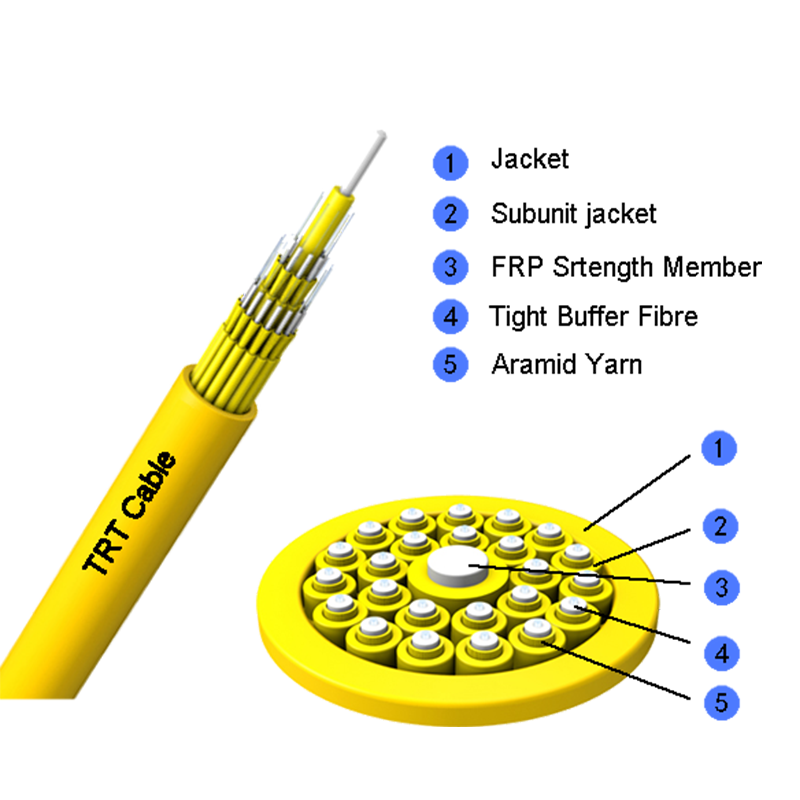
In the rapidly evolving landscape of data center technology, the demand for high-speed data transmission and efficient space utilization has never been higher. A Multi-Purpose Break-out fiber optic cable serves as a critical component in meeting these demands. Unlike traditional ribbon or loose-tube cables, breakout cables are designed with individually buffered fibers, each protected by its own aramid yarn strength member and a dedicated sub-jacket. This unique construction allows for direct connectorization without the need for additional patch panels or breakout kits at every junction.
For B2B procurement specialists and data center architects, choosing the right cabling infrastructure is not just about signal integrity; it is about operational longevity and scalability. Multi-purpose breakout cables offer the flexibility required for both horizontal and vertical routing, making them an ideal solution for complex environments where durability and ease of termination are paramount.
Primary Applications in High-Density Data Centers
Data centers are transitioning from 10G and 40G architectures to 100G, 400G, and even 800G frameworks. This shift requires cabling that can handle massive throughput while remaining manageable within confined spaces. The breakout cable is specifically engineered to bridge the gap between high-fiber-count backbones and individual hardware ports.
Direct Server-to-Switch Connectivity
One of the most common applications is connecting high-speed switches to multiple servers or storage arrays. In a Top-of-Rack (ToR) or End-of-Row (EoR) configuration, a single high-bandwidth port (such as a 400G QSFP-DD) can be "broken out" into several lower-speed ports (such as 4x100G or 8x50G). This reduces the number of cables required in the cable tray, improving airflow and cooling efficiency within the rack.
Intra-Rack and Inter-Rack Distribution
Breakout cables excel in short-to-medium distance distribution. Because each fiber is ruggedized, they can be routed directly from a distribution hub to individual equipment without the risk of fiber micro-bending or damage during installation. This is particularly useful in modular data center designs where rapid deployment is a key performance indicator.
Technical Advantages for Infrastructure Longevity
When evaluating cabling for long-term investment, the physical characteristics of the fiber must align with the environmental stressors of a data center. Multi-purpose breakout cables are designed to withstand mechanical pressure and repeated handling.
| Feature | Technical Benefit | Operational Impact |
| Individual Sub-jackets | Enhanced mechanical protection | Direct termination without kits |
| Aramid Yarn Strength | High tensile strength | Safe for vertical/riser routing |
| Flame Retardant Outer Jacket | Meets LSZH or Plenum standards | Compliance with safety regulations |
| Flexibility | Small bend radius | Easier management in tight trays |
Optimization of Network Architecture
Effective network design focuses on reducing latency and minimizing points of failure. The use of breakout cables supports these goals by streamlining the physical layer. By integrating these cables into the "Spine-Leaf" architecture, data centers can achieve more predictable performance and easier troubleshooting.
- Reduction in Hardware Ports: By utilizing breakout configurations, a data center can maximize the utility of high-density line cards, reducing the total cost of ownership (TCO).
- Streamlined Cable Management: Fewer main trunks lead to less congestion in overhead raceways, which is vital for maintaining appropriate temperature levels.
- Future-Proofing: High-quality multi-purpose cables installed today are often compatible with next-generation transceivers, protecting the initial capital expenditure.
Environmental and Safety Considerations
Data center environments are strictly controlled, but they are also subject to rigorous fire safety codes. Multi-purpose breakout cables are often manufactured with Low Smoke Zero Halogen (LSZH) or Plenum-rated materials. These materials ensure that in the event of a fire, smoke emission is minimal and non-toxic, protecting both the equipment and personnel.
Furthermore, the ruggedized nature of breakout cables makes them suitable for use in industrial-grade data centers or edge computing facilities where environmental conditions might be less controlled than in a traditional Tier 4 facility. The internal aramid yarn provides the necessary pull strength for long vertical runs in riser shafts, ensuring the fibers do not stretch or break under their own weight.
Selection Criteria for B2B Buyers
Procuring fiber optic cables for large-scale operations involves more than just looking at the price per meter. Buyers must consider several technical parameters to ensure the product meets the specific needs of their facility.
Fiber Type and Core Count
Decide between Single-mode (OS2) for long-distance transmissions or Multi-mode (OM3, OM4, OM5) for short-reach data center applications. The core count typically ranges from 2 to 48 fibers depending on the breakout requirements. For most high-density switch-to-server links, 8-core or 12-core configurations are standard.
Jacket Durability and Installation Ease
The "multi-purpose" designation often implies that the cable can transition from indoor to outdoor-protected environments or handle both horizontal and vertical pathways. Buyers should verify that the outer diameter (OD) of the cable is compatible with existing conduit systems and that the minimum bend radius allows for tight turns within server cabinets.
Installation Best Practices
To maximize the lifespan of a multi-purpose breakout cable, following standardized installation procedures is essential. Improper handling is the leading cause of fiber failure in high-speed networks.
- Proper Tensioning: Never exceed the maximum pulling tension specified by the manufacturer. Use the aramid yarn as the primary pulling member.
- Connector Protection: If the cable is pre-terminated, use pulling socks to protect the delicate connectors from dust and physical impact during the pull.
- Cleanliness: Fiber optic connectors must be cleaned and inspected with a scope before every connection to prevent signal loss caused by microscopic contaminants.
- Labeling: In a breakout environment, clear labeling at both the trunk and the individual breakout legs is mandatory to avoid configuration errors during maintenance.
Strategic Value in Edge Computing
As edge computing grows, decentralized data centers are being placed closer to the end-user. These facilities often have limited space and fewer on-site technicians. The plug-and-play nature of breakout cables allows for rapid deployment and easier replacement by local staff. By reducing the complexity of the fiber termination process, companies can lower their operational expenses (OPEX) in these distributed environments.
Frequently Asked Questions (FAQ)
Q1: What makes a breakout cable different from a distribution cable?
A breakout cable features individually buffered and jacketed fibers, allowing them to be terminated directly. A distribution cable typically has multiple fibers bundled under a single jacket, requiring a breakout kit or patch panel for termination.
Q2: Can I use breakout cables for vertical riser installations?
Yes, multi-purpose breakout cables often include aramid yarn strength members that provide the necessary tensile strength for vertical runs, provided they meet the required fire safety ratings (such as OFNR or LSZH).
Q3: How many fibers are typically in a breakout cable?
Common configurations include 4, 8, 12, or 24 fibers. The choice depends on the number of ports being served by a single high-speed switch port.
Q4: Is a breakout cable more expensive than other fiber types?
While the initial cost per meter may be higher due to the complex construction and individual fiber jacketing, the total installation cost is often lower because it eliminates the need for extra hardware like breakout kits and specialized termination enclosures.
Q5: Does using breakout cables affect network speed?
No, the cable itself does not limit the speed. The speed is determined by the fiber grade (e.g., OM4 vs. OS2) and the transceivers used. Breakout cables simply provide the physical pathway to organize and distribute that speed effectively.
 Address:Zhong'an Road, Puzhuang Town, Suzhou City, Jiangsu Prov., China
 Phone:+86-189 1350 1815
 Tel:+86-512-66392923
 Fax:+86-512-66383830
 Email:[email protected]
 Wechat: xiaobin18913501815
 whatsapp: +86 18913501815

 0
0