
 English
 русский
 Español
 Português
 عربى
عربى


How Fiber Optic Splice Closure and Cabinet Systems Keep Long-Distance Networks Running
Signal Integrity Depends on What Happens Outside the Cable
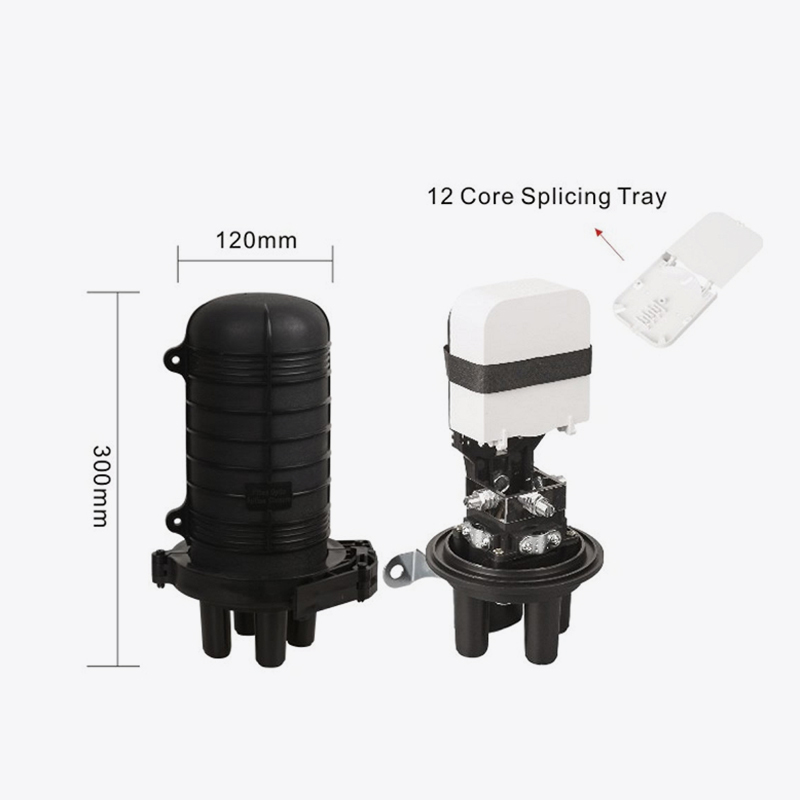
A long distance fiber optic cable can carry light across dozens or even hundreds of kilometers with remarkably little loss, but the cable itself is only half of the story. Every point where a route bends, terminates, branches, or gets repaired becomes a potential weak spot. This is where enclosure hardware takes over. A well-built fiber optic splice closure keeps fusion splices sealed against moisture and physical stress, while distribution and cross-connect points rely on housings built to organize fiber counts that can run into the hundreds.
For network operators managing a long range fiber optic cable route, the enclosure strategy is not an afterthought. It directly affects attenuation budgets, mean time to repair, and how long the network stays serviceable before fibers degrade from environmental exposure. Understanding how these components work together gives engineers a clearer picture of where reliability is actually won or lost.
Why Long-Range Fiber Routes Are Vulnerable at Connection Points
Fiber itself is a stable transmission medium, but the environments it passes through are not. Underground vaults flood, aerial spans experience wind and ice loading, and pedestal cabinets sit exposed to temperature swings that a buried cable rarely feels to the same degree. The table below summarizes the most common stress factors and their typical consequence if left unmanaged.
| Stress Factor | Common Location | Consequence If Unmanaged |
|---|---|---|
| Moisture ingress | Underground vaults, handholes | Increased splice attenuation, corrosion |
| Thermal cycling | Aerial closures, outdoor cabinets | Micro-bending loss, seal fatigue |
| Mechanical vibration | Roadside cabinets, bridge crossings | Connector wear, fiber stress |
| Rodent or pest intrusion | Buried duct runs | Sheath breach, total fiber cut |
| UV exposure | Aerial and pole-mounted units | Housing embrittlement over time |
Each of these risks compounds over a long haul route because a single weak enclosure can affect every downstream customer on that segment. This is why splice closures and cabinets are rated and selected with the same rigor as the cable itself, rather than treated as generic hardware.
How a Fiber Optic Splice Closure Protects the Fusion Point
A splice point is, by definition, a place where the cable's outer protection has been opened. The enclosure has to restore that protection while still allowing technicians to reopen it for maintenance. Two structural families dominate current deployments.
Dome Splice Closures
Dome closures use a mechanical or heat-shrink seal around a central base plate. They are favored in aerial and pedestal applications because they can be reopened repeatedly without replacing the entire sealing system, which matters on routes where re-entry for capacity upgrades is expected.
Horizontal (Inline) Splice Closures
Horizontal closures use a butterfly or clamshell shell that closes flat, which suits direct burial and duct installations where space is limited and the closure needs a low profile. Gel or gasket sealing along the shell edge keeps groundwater out even under intermittent submersion.
| Attribute | Dome Closure | Horizontal Closure |
|---|---|---|
| Typical use | Aerial, pedestal, handhole | Direct burial, duct |
| Re-entry ease | High | Moderate |
| Fiber capacity range | Up to 288 fibers | Up to 144 fibers |
| Typical IP rating | IP68 | IP68 |
Regardless of shape, the internal splice tray design matters as much as the outer shell. Trays that separate fibers by ribbon or bundle reduce the chance that a technician disturbs unrelated splices while servicing one strand, which is a common cause of unplanned outages on shared routes.
The Role of a Fiber Optic Cabinet in Cross-Connect Architecture
While a splice closure protects a single fusion point, a fiber optic cabinet functions as an organized distribution hub. It brings multiple fiber routes together so that operators can patch, test, and reroute service without disturbing sealed splices further down the line.
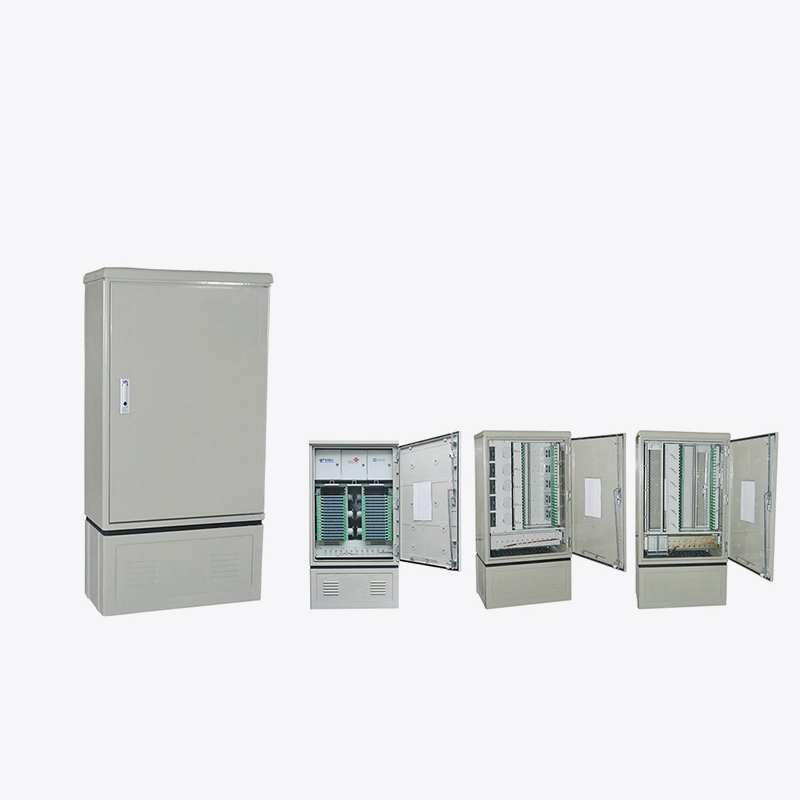
Cabinets are typically deployed at three points along a network:
- Feeder-to-distribution transition points, where trunk fiber counts split into smaller branch counts
- Cross-connect nodes, where fibers from different service providers or network segments meet
- Test access points, where technicians take optical measurements without touching live splices
Outdoor cabinets generally use a double-wall or thermally insulated design to keep internal temperature swings smaller than the ambient environment, protecting connector performance and reducing the frequency of re-termination caused by thermal stress on patch cords.
Splice Closure vs. Cabinet: Choosing the Right Enclosure for the Job
These two enclosure types are complementary rather than interchangeable. The comparison below highlights where each one fits best on a long distance fiber optic cable route.
| Factor | Splice Closure | Cabinet |
|---|---|---|
| Primary function | Seal and protect fusion splices | Organize and cross-connect fiber routes |
| Access frequency | Low, planned maintenance only | Moderate to high, routine service work |
| Typical placement | Underground, aerial midspan | Street level, pedestal, wall-mount |
| Fiber management style | Fixed splice trays | Patch panels and adapters |
On most long haul designs, both are used in sequence: a cross-connect fiber cabinet at a serving area boundary, followed by one or more splice closures along the outside plant run between cabinets. Understanding this sequence helps network planners budget splice loss accurately rather than treating the whole segment as a single unbroken run.
Where Enclosures Sit Along a Long-Range Fiber Route
The diagram below illustrates a simplified long-haul segment, showing how splice closures and cabinets are distributed between a central office and a customer serving area.
Each splice closure in this chain represents a controlled loss point rather than a random risk, provided it is rated correctly for its environment and installed following manufacturer sealing procedures.
Installation and Maintenance Practices That Preserve Signal Quality
Enclosure hardware only performs as well as its installation. The following practices are consistently associated with lower long-term attenuation and fewer repeat service calls on long distance fiber optic cable routes.
- Verify seal integrity before closing every dome or horizontal closure, including gasket seating and cable port grommets
- Maintain minimum bend radius inside trays, since tight bends are a leading cause of localized signal loss
- Ground metallic cabinet enclosures according to local electrical code to reduce surge-related damage
- Label every fiber and port inside cabinets to reduce technician error during future cross-connect work
- Schedule periodic re-inspection of underground closures in flood-prone areas, even when no fault has been reported
- Use desiccant or gel filling in closures deployed in high-humidity climates to slow moisture accumulation
Operators who treat these steps as routine, rather than reactive, tend to see splice-related trouble tickets drop noticeably within the first year of a new route going into service.
Typical Performance Benchmarks for Enclosure Systems
The figures below reflect commonly cited industry benchmarks for outside plant enclosure performance. Actual results vary by product design and installation quality, but they provide a useful reference range for planning.
A network segment is only as reliable as its weakest sealed joint. Enclosure selection is a design decision, not a procurement afterthought.
Frequently Asked Questions
Q1: What is the main difference between a splice closure and a cabinet?
A splice closure seals and protects fusion splice points along a cable run, while a cabinet organizes multiple fiber routes for patching, testing, and cross-connection at a distribution point.
Q2: How many times can a fiber optic splice closure be reopened?
Dome-style closures using mechanical seals are generally designed for repeated re-entry, while some gel-sealed horizontal closures are better suited to fewer, planned openings to preserve seal quality.
Q3: Does the enclosure affect signal loss on a long range fiber optic cable?
Yes. Each splice, connector, and seal point contributes a small amount of loss, and enclosure quality affects how stable that loss remains over years of temperature cycling and moisture exposure.
Q4: How often should outdoor fiber cabinets be inspected?
Most operators schedule annual visual inspections, with more frequent checks in coastal, flood-prone, or high-vibration locations such as roadside or bridge-mounted installations.
Q5: Can one cabinet serve multiple splice closures on the same route?
Yes. A single cross-connect cabinet commonly serves as the distribution boundary for several splice closures placed further along the route toward end customers.
 Address:Zhong'an Road, Puzhuang Town, Suzhou City, Jiangsu Prov., China
 Phone:+86-189 1350 1815
 Tel:+86-512-66392923
 Fax:+86-512-66383830
 Email:[email protected]
 Wechat: xiaobin18913501815
 whatsapp: +86 18913501815

 0
0