
 English
 русский
 Español
 Português
 عربى
عربى


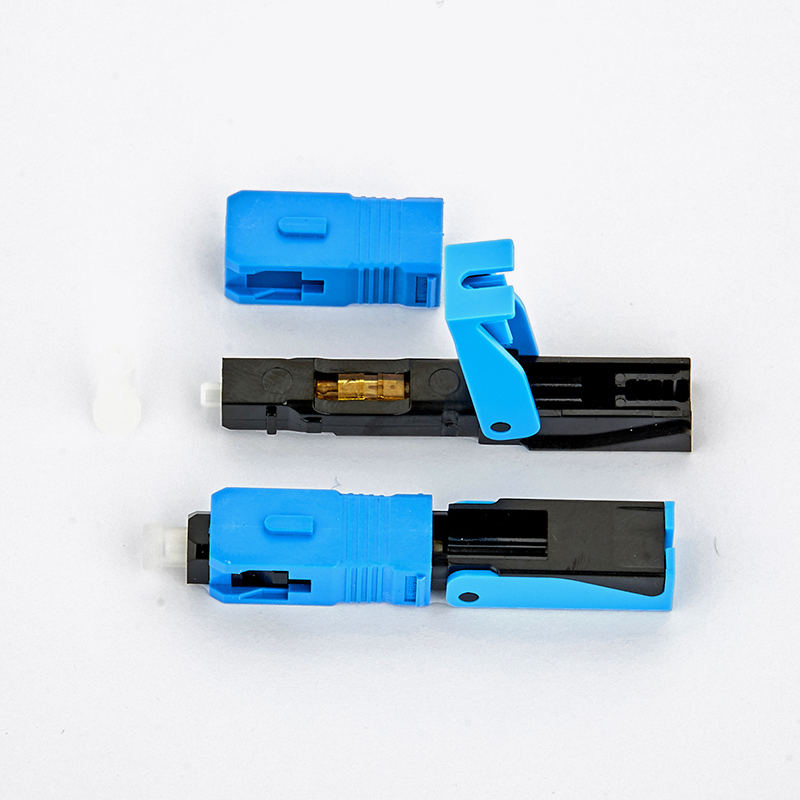
How FAST Connector Technology Simplifies Field Termination and Accelerates Fiber Deployment
Why Field Termination Bottlenecks Slow Down Fiber Rollouts
Every fiber network build eventually runs into the same wall: the last few meters of cable have to be terminated by hand, in the field, often in a cabinet, manhole, or rooftop cabinet with limited light and limited time. Traditional splicing and polishing workflows were designed for controlled factory or lab conditions, not for a technician working against a deployment schedule.
This gap between factory-grade precision and field-grade speed is exactly what modern fiber optic cable connectors are trying to close. Crews no longer have room for lengthy fusion splicing sessions on every drop cable, especially in FTTH, data center cross-connects, and small-cell backhaul projects where hundreds of terminations happen per week.
Field reality: a single fusion splice and polish cycle can take 10 to 15 minutes per fiber when done correctly, and that number multiplies quickly across multi-fiber cable runs.
What Makes fast connector Technology Different From Traditional Terminations
FAST Connector technology (sometimes labeled as a quick or rapid-terminate connector) replaces the fusion-splice-then-polish sequence with a mechanical alignment mechanism built directly into the connector housing. A pre-polished fiber stub sits inside the connector body, and the field fiber is cleaved, inserted, and clamped into alignment against that stub using an index-matching gel or a mechanical splice element.
The result is a termination that can be completed in roughly one to two minutes once a technician is trained on the tool, with no epoxy curing, no polishing film, and no fusion splicer battery to manage. This matters most in three situations:
- Outdoor cabinets where dust and moisture make open fusion splicing risky
- High-volume FTTH drop installations with tight labor budgets
- Emergency repairs where restoring service quickly outweighs squeezing out the last fraction of a decibel in loss
How preconnector Assemblies Change Cable Preparation Workflows
A Preconnector takes the same philosophy a step further by moving connector attachment out of the field entirely. The cable itself, often an armored or ruggedized outdoor cable, arrives from the factory with connectors already installed, tested, and protected by a pulling-safe boot or breakout kit.
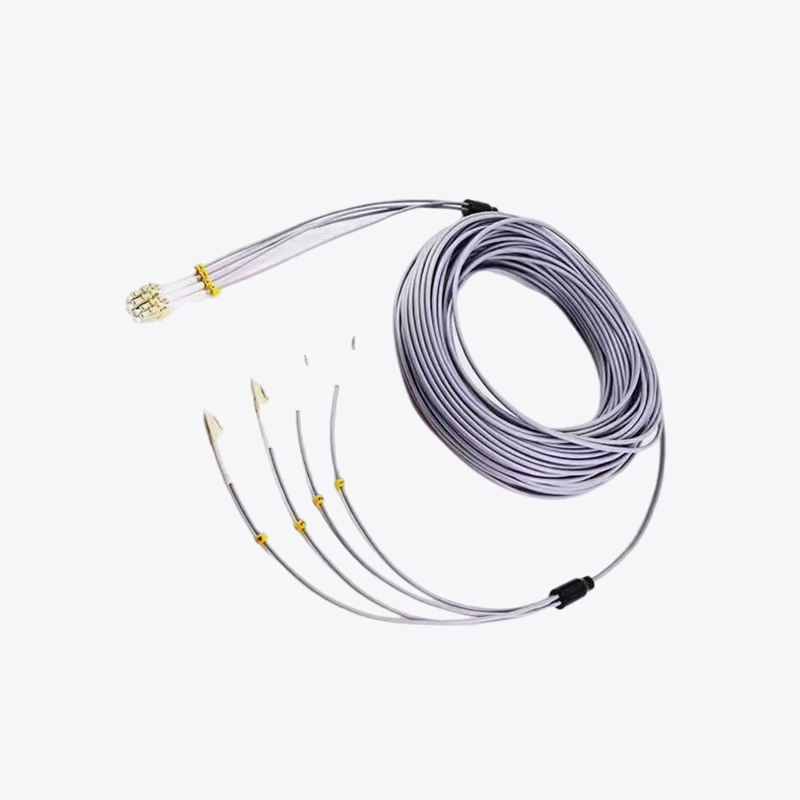
Instead of preparing raw fiber optic cable ends on site, the crew simply routes the cable, removes the protective boot, and plugs the connector directly into a panel, splitter, or wall outlet. This shifts the highest-precision work of alignment and polishing into a controlled factory environment where measurement equipment and cleanroom conditions produce more consistent insertion loss numbers.
| Workflow Step | Traditional Field Termination | Preconnector Cable |
|---|---|---|
| Connector attachment | Done on site by technician | Done at factory before shipping |
| Environmental risk | Dust, moisture, vibration exposure | Controlled cleanroom conditions |
| Typical crew time per run | 20 to 40 minutes | 5 to 10 minutes |
| Loss consistency | Depends on operator skill | Pre-tested before shipment |
Types of Fiber Optic Cable Connectors Used in Modern Field Deployment
Not every job calls for the same connector geometry or termination method. Understanding the trade-offs among common optical fiber cable connectors helps a crew pick the right tool before the truck rolls out.
| Connector Type | Termination Method | Best Fit |
|---|---|---|
| Fiber optic LC connector | Factory or fusion splice, small form factor | Data center patch panels, high-density racks |
| Field installable connector | Mechanical clamp with pre-polished stub | Drop cable termination, quick repairs |
| Mechanical splice connector | Index-matched fiber alignment, no fusion arc | Emergency restoration, low-fiber-count jobs |
| Preconnectorized assembly | Factory-terminated and tested | Armored outdoor trunk cables, tower drops |
Most networks end up using a mix of these rather than standardizing on one type. A fiber optic LC connector still dominates equipment-side connections because of its density, while a field installable connector or mechanical splice connector covers the unpredictable, time-pressured work happening at the customer premise or cabinet.
Step-by-Step: Preparing Fiber Optic Cable Ends for Quick Termination
The mechanics behind a clean, low-loss termination are simple once broken into stages. The diagram below outlines the typical sequence a technician follows when using a mechanical splice or quick-terminate style connector.
Skipping the cleave step or using a dull blade is the single biggest cause of high insertion loss in field-terminated connectors, regardless of which connector family is used. A clean, perpendicular cleave matters more than any other variable in the process.
Performance and Reliability Considerations
Speed only matters if the resulting connection holds up under real network conditions. A few practical benchmarks worth tracking on any project:
Insertion Loss
Well-executed mechanical or quick-terminate connections typically land in the same range as fusion splices for single connections, though variance across a large crew tends to be wider without consistent training.
Return Loss
Index-matching gel and angled or ultra-polished ferrule geometry both influence how much light reflects back toward the source, which matters more in analog or high-power links.
Long-Term Stability
Temperature cycling and vibration testing on outdoor-rated connector housings help confirm a termination will hold alignment over years, not just at the moment of installation.
A useful rule of thumb: any termination method is only as reliable as the weakest step in cleaning, cleaving, and clamping. Tool quality closes part of the gap, but operator habit closes the rest.
Choosing the Right Connector Type for Your Project
There is no single best answer across every project. The decision usually comes down to fiber count, environment, and how much control a project has over factory lead time versus field labor.
- High fiber count, indoor, planned build: factory preconnectorized cable reduces on-site labor and variability.
- Low fiber count, unplanned repair or drop: a field installable connector or mechanical splice connector gets service restored fastest.
- Dense equipment room connections: a fiber optic LC connector remains the space-efficient standard for patch panels and transceivers.
- Harsh outdoor or aerial runs: ruggedized preconnector assemblies with armored jacketing hold up better against pulling stress and moisture.
The fastest termination method is the one your crew can execute consistently at 6 pm in the rain, not just the one that looks best on a data sheet.
Frequently Asked Questions
Q1: What is the main difference between a fast connector and a standard fusion-spliced connector?
A fast connector uses a mechanical alignment mechanism and a pre-polished fiber stub inside the housing, so the field fiber only needs to be cleaved and clamped into place. A fusion-spliced connector requires melting the field fiber to a pigtail using an arc splicer, followed by a separate polishing step.
Q2: Is a preconnector assembly as reliable as a field-terminated connector?
Because preconnector assemblies are terminated and tested under factory conditions, loss and return loss values tend to be more consistent across units. Field-terminated connectors can match that performance but depend more heavily on cleave quality and technician training.
Q3: Which type of fiber optic cable connector is best for a data center rack?
A fiber optic LC connector is generally preferred in racks because of its compact footprint, which allows higher port density on patch panels and switches compared to larger connector formats.
Q4: Can a mechanical splice connector be reused if a mistake is made during termination?
Most mechanical splice connectors allow the clamp to be reopened a limited number of times, though repeated reuse can affect alignment precision. Following the cleave length and insertion steps carefully the first time reduces the need for rework.
Q5: How should fiber optic cable ends be stored before termination?
Cable ends should stay capped or sealed until the moment of termination to keep dust and moisture away from the fiber core, since contamination is one of the most common causes of high loss or intermittent connections.
 Address:Zhong'an Road, Puzhuang Town, Suzhou City, Jiangsu Prov., China
 Phone:+86-189 1350 1815
 Tel:+86-512-66392923
 Fax:+86-512-66383830
 Email:[email protected]
 Wechat: xiaobin18913501815
 whatsapp: +86 18913501815

 0
0