
 English
 русский
 Español
 Português
 عربى


Fiber Network Maintenance Checklist: Practical Steps for Reliable Optical Networks
A fiber link that tested perfectly at handover starts showing intermittent packet loss eighteen months later. The OTDR reveals a sharp loss event at a distance that matches a splice closure on the pole route; when the technician opens it, water has pooled around the tray and the fiber coating has begun to discolor. This is not an unusual story. Most fiber network faults are slow and preventable, and a structured maintenance checklist catches them long before subscribers notice.
The straightforward conclusion is that a fiber network maintenance checklist is the cheapest insurance an operator can buy. It converts reactive troubleshooting into planned inspection, keeps optical loss inside the design budget, and extends the life of every cable, closure, and connector. The practical checklist below is organized around the failure points that show up repeatedly in FTTH, metro, and campus networks.
Why a Fiber Network Maintenance Checklist Matters
Fiber fails differently from copper. Copper typically dies in a single dramatic event, while fiber degrades through a series of small problems. Connector end-face contamination, micro-bends from overtightened cable ties, water ingress into closures, and slack that slowly pushes fiber against a tray edge each add a fraction of a decibel. One day the accumulated loss exceeds the link margin, and a formerly stable service starts dropping packets or failing to synchronize.
A checklist makes the inspection repeatable. It forces the same measurements on every visit, so a 0.2 dB drift in a splice is compared against the previous OTDR trace instead of being ignored. It creates the documentation trail needed to distinguish a deteriorating closure from an acute cable break, and it gives field technicians a clear sequence of checks so nothing is left to memory.
Maintenance in fiber networks does not mean finding every fault; it means finding faults while they are still small enough to fix inside a normal work window.
The Core Fiber Network Maintenance Checklist
Use the table below as the backbone of a routine inspection program. It covers the elements most likely to degrade in a live network, the tools required, and the result you should record. Adapt the frequency column to the network type and environmental exposure.
| Checkpoint | What to Inspect | Tool | Acceptable Result |
|---|---|---|---|
| Connector end faces | Scratches, dust, oil film, burn marks | Fiber microscope, dry cleaner | No contamination visible; within 0.5 dB of baseline |
| Patch cords and pigtails | Kinks, tight wraps, crushed boots, dust on connector | Visual inspection | Bend radius above 30 mm; no damaged boot |
| Splice closures | Gasket condition, water, tray stacking, slack routing | Flashlight, torque wrench | Seal intact; no moisture; buffer tubes not compressed |
| Distribution and terminal boxes | Dust, debris, loose adapters, strained pigtails | Brush, blower, light source | Connectors seated firmly; no dust; slack stored neatly |
| Outdoor cable plant | Exposed jacket, sagging aerial drop, dig-up risk, rodent damage | Route patrol | No exposed strength members; duct seals in place |
| Splice loss stability | Current trace vs. commissioning OTDR trace | OTDR | No new event above 0.3 dB; total loss within budget |
| Active link power | Received power on live services | Optical power meter | Power above receiver sensitivity with at least 2 dB margin |
| Labels and records | Physical labels match fiber map and asset list | Map review | Every fiber, closure, and box identified |
The frequency of these checks depends on how critical the route is, but a practical starting point for outside plant is quarterly closure inspection and monthly connector checks in high-traffic patch areas.
Critical Inspection Points in the Cable Plant
The outside plant cable is the part of the network most exposed to weather, construction, and animals. Aerial routes need a check for sagging, jacket damage, and vegetation contact; duct routes need seal verification at every handhole; buried routes require patrols to spot excavation work before it becomes a fiber cut.
Splice closures deserve special attention because they combine fragile fiber, environmental sealing, and complicated slack management in one enclosure. A closure that tests perfectly on installation can fail silently as temperature cycling loosens a gasket or water seeps through an unterminated port. During maintenance, open a sample of closures on every route and verify the following:
- The gasket and sealing surface are clean and undamaged.
- No bare fiber touches the closure wall.
- Buffer tubes are not compressed against tray edges.
- Slack fiber is stored above the minimum bend radius.
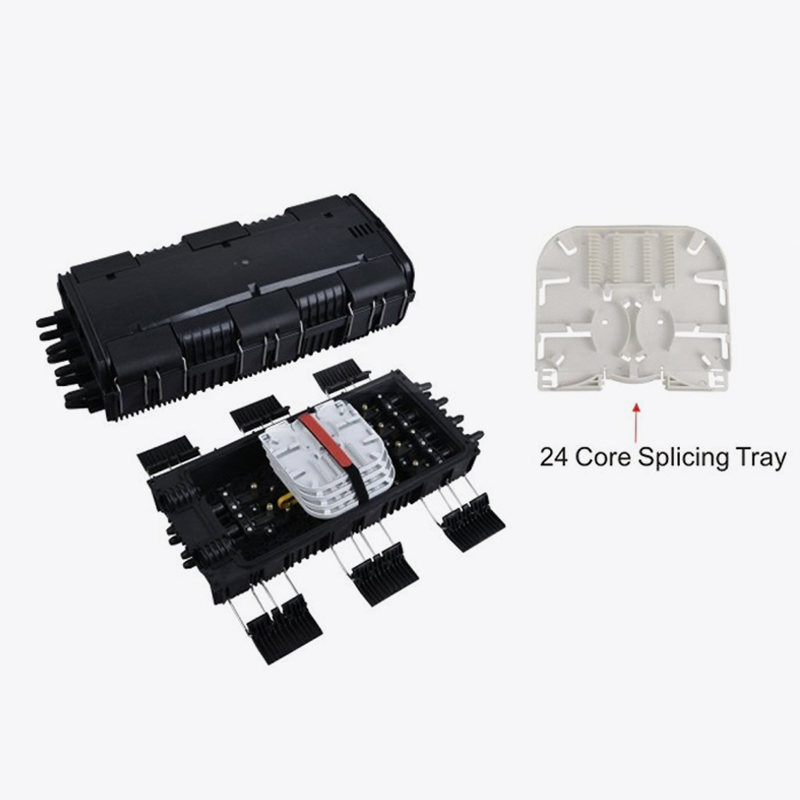
The design decisions made when selecting a splice closure determine whether it protects the joint for ten years or fails in three. For feeder and distribution sections, choose closures with re-enterable trays, clear cable entry sealing, and enough capacity for future splices. A 96-core closure is a practical choice for FTTH feeder segments because it supports both through-splices and tap-offs without stacking too many trays.
T6-018 96 Core Fiber Optic Splice Closure for FTTH Feeder SegmentsThis re-enterable 96-core closure supports through-splices and tap-offs with 2 inlet and 8 outlet ports, making it a practical choice for protecting feeder and distribution joints. Its waterproof rubber sealing helps ensure long-term reliability in frequently accessed outside plant locations.View Product →Distribution Boxes, Terminal Boxes, and Pigtails
FTTH distribution boxes and terminal boxes sit at the boundary between the outside plant and the subscriber home. They are opened repeatedly by different technicians, which makes dust ingress and connector contamination almost certain. A maintenance pass should include wiping the interior, checking adapter seating, measuring the pigtail bend radius, and confirming that stored slack follows a natural loop without sharp turns.
Water tightness is the second major concern. Boxes with degraded gaskets, missing screws, or incorrectly routed cables let humidity inside. The result is slow oxidation of connector ferrules and a creeping increase in insertion loss across every subscriber served by that box.
When a box cannot be cleaned effectively, or when a pigtail has been over-bent for a long time, replacement is faster and cheaper than restoration. Many operators keep pre-terminated pigtails and a spare distribution box at the hub for exactly this reason.
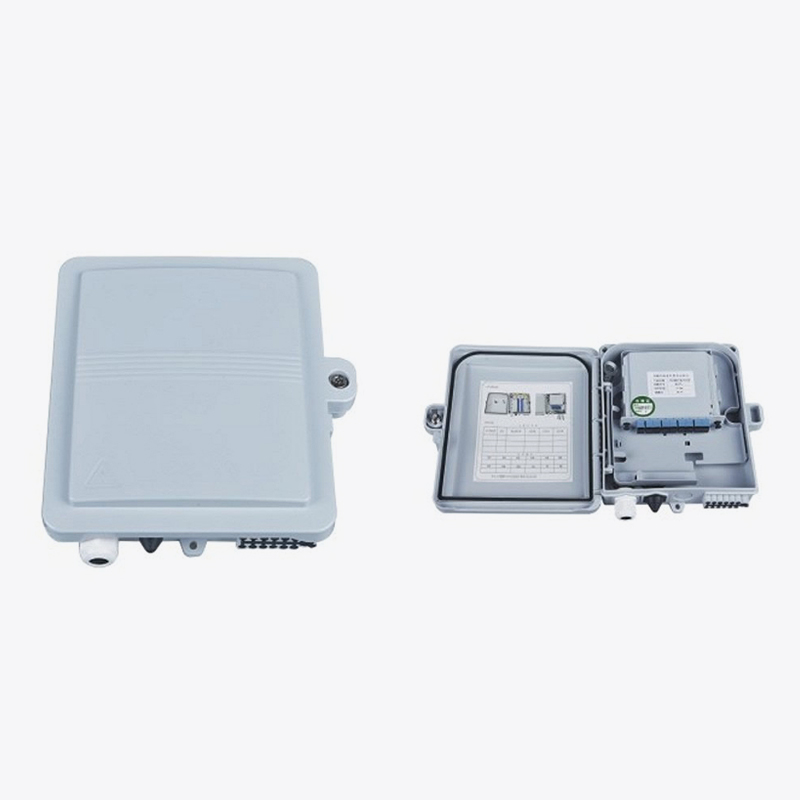 T7-210B-PLC 8 Core Fiber Optic Distribution Box with IP65 RatingWith an ABS housing, IP65 protection, and gland inlet, this compact 8-core distribution box is well suited for FTTH terminal installation. Given the emphasis on cleaning connectors during maintenance, this pre-terminated box can serve as a spare to enable faster replacement when restoration is impractical.View Product →
Connector Cleaning and Testing: The Highest-Value Maintenance Tasks
Contaminated connectors cause the majority of fiber link failures in live networks. A single dust particle on the core of a single-mode connector can create enough loss and reflection to destabilize a 10G link. Cleaning should be part of every maintenance visit, not only a response to an alarm. Use dry cleaning tools first, then a lint-free wipe with optical-grade alcohol if the contamination does not clear.
Testing turns the checklist into an objective report. An OTDR trace recorded during commissioning is the reference; every later trace must be compared against it. A new event above 0.3 dB should be investigated, and a gradual increase in splice loss usually points to a closure problem rather than a fiber fault. On active services, a power meter check confirms that the optical margin is still healthy.
Field repair note: For quickly restoring a broken drop cable, fast connectors terminate fiber in minutes without a fusion splicer. Select a model with a pre-polished ferrule for outside plant use, and choose a hot-melt version when the joint will face humidity.
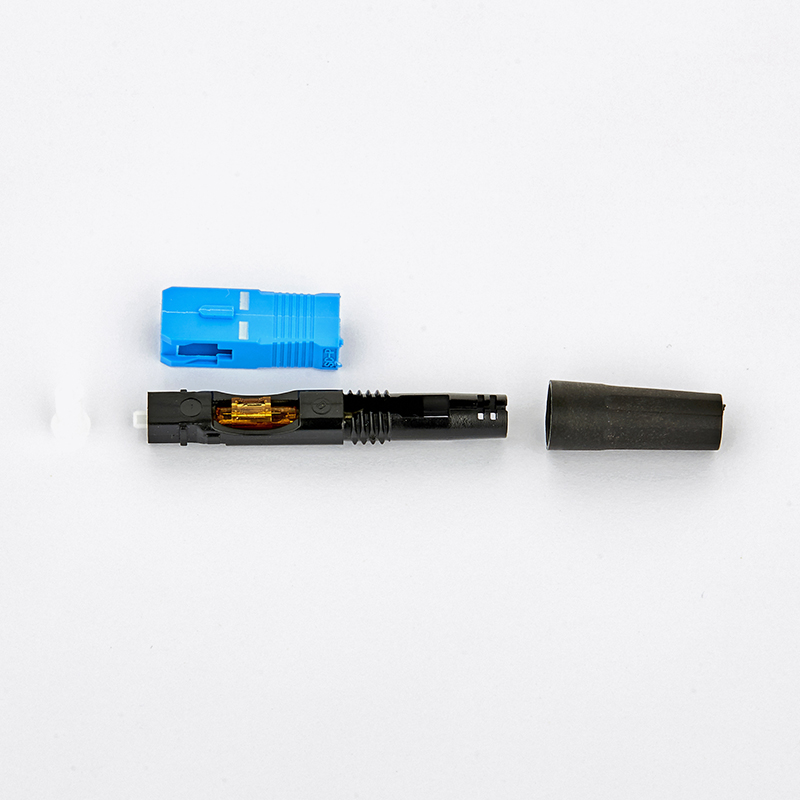 T4-02 Fast Connector for Quick Field Fiber TerminationThis pre-polished SC fast connector enables rapid termination of drop and indoor cables without fusion splicing, supporting single-mode or multi-mode fibers. With low loss and reliable locking force, it is suitable for quickly restoring broken drop cables in the field, including humid environments when using a hot-melt version.View Product →
How Often Should a Fiber Network Be Inspected?
There is no universal interval, but network type and environment give reliable clues. A buried long-haul route in a stable climate may need only annual inspection; an aerial FTTH network in a coastal area benefits from semi-annual patrols and quarterly closure sampling.
| Network Type | Suggested Frequency | Priority Checks |
|---|---|---|
| Long-haul backbone | Annual, plus post-incident | OTDR trace, closure sampling |
| Metro / distribution | Semi-annual | Cable patrol, duct seal, splice loss |
| FTTH access | Quarterly boxes, semi-annual plant | Box cleaning, connector check, drop cable condition |
| Data center | Monthly patch areas, quarterly all | End-face inspection, patch cord replacement |
Document the reason for every frequency change. A network with a history of water ingress or animal damage needs denser inspection, while a fully underground route with good records may extend the interval.
Documentation and Spare Parts: The Foundation of Repeatable Maintenance
A checklist without records is only a routine. Each inspection should update a simple database with the date, the technician's name, the OTDR trace file, measured power values, and any corrective action taken. Over time, this history is what allows you to compare this quarter's loss against the previous quarter and predict when a splice will exceed its loss budget.
Keep spare parts at every hub and major node:
- Pre-terminated pigtails
- A spare splice closure kit
- A pack of fast connectors
- A few patch cords in common lengths
When an inspection finds a marginal component, replacing it on the spot with a certified spare is far more efficient than ordering a part after the fault has already escalated.
For a consistent supply of closures, boxes, cables, and connectors that match the original network specification, review TRTCABLE's product range before building your spare inventory.
Common Questions About Fiber Network Maintenance
Q1: How often should I check connectors in a fiber network?
In active patch fields, inspect monthly. In boxes that are rarely opened, a quarterly check is enough. Contamination is cumulative, so connectors exposed to subscriber-side activity need more frequent attention.
Q2: What is the most common cause of fiber link failure?
Contaminated connectors rank first, followed by water ingress in closures and excessive bending of drop cables at termination points.
Q3: Do I need an OTDR for routine maintenance?
An OTDR is the most valuable tool for outside plant work because it locates the exact position of an event. For active link verification, a power meter may be enough, but every network should have a baseline OTDR trace on record.
The best fiber maintenance program runs on schedule, produces written records, and fixes small issues before they become outages. Start with baseline OTDR traces, inspect the closures and boxes that face the most environmental stress, clean every connector you touch, and replace damaged passives with components that match the original specification. These steps will keep your optical network stable for years.
 Address:Zhong'an Road, Puzhuang Town, Suzhou City, Jiangsu Prov., China
 Phone:+86-189 1350 1815
 Tel:+86-512-66392923
 Fax:+86-512-66383830
 Email:[email protected]
 Wechat: xiaobin18913501815
 whatsapp: +86 18913501815

 0